MAM
Trust, not transactions: Armour Entertainment’s Prarthana Ajmani on managing Hindi cinema’s rising stars
In an exclusive interview, the Founder & Partner speaks on 18 years of shaping careers, why she isn’t threatened by AI, and what it really takes to build a one-hit performer into a lasting star

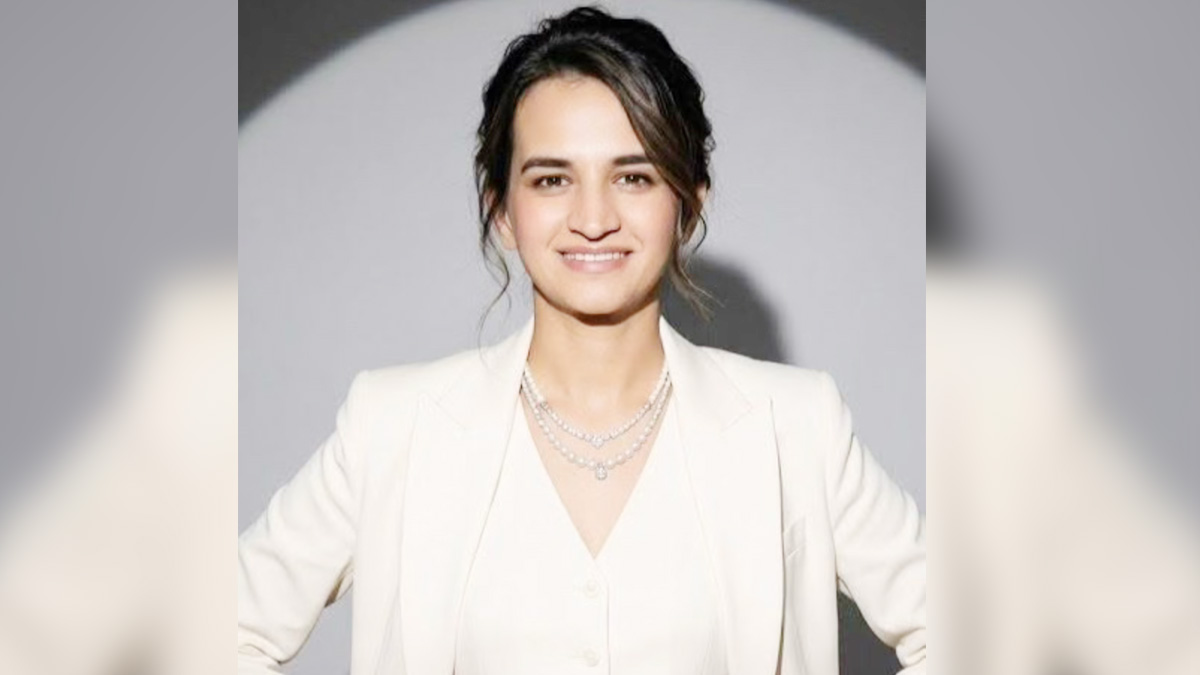
MUMBAI: Prarthana Ajmani, Founder & Partner at Armour Entertainment, has spent close to two decades building some of the most closely guarded careers in Indian entertainment. In this candid conversation, she speaks about how talent management has transformed from a secretarial job into a strategic partnership, why she isn’t threatened by AI, how brands are rethinking their equation with actors versus athletes, and what it really takes to build a one-hit performer into a lasting career.
After more than 15 years in this industry, how do you think talent management has evolved, and where do you see it heading next?
It has evolved dramatically. Earlier, the role of a manager was purely transactional — closing contracts, managing dates, keeping things cut and dried. Today, the way the industry works, and the way artists expect to be represented by people like us, is completely different. We get into strategy, planning, advisory roles; we help shape careers in a specialised way.
It’s no longer a transaction, it’s a personal relationship, because ultimately the artist is trusting us with their career, their business, their choices about which film, series or brand comes next, and whether it’s genuinely connecting with audiences. Positioning matters enormously.
It used to be very secretarial. Today, it’s the opposite — you have to actively shape an artist’s career. I’ve seen this industry from day one to where we are now, and it’s unrecognisable from where it began.
How do you select the talent you represent? What is the process?
Armour is a boutique agency, so we’re extremely selective about who we take on. The first requirement is connection — we have to genuinely be interested in and invested in the artist’s journey, because this can’t be spread thin. It can’t be transactional; it has to be about building something together.
The artist’s journey and the agency’s journey need to become one. When they do, success is close to inevitable. For instance, when a Netflix or OTT project comes in for one of our artists, we discuss it in detail — is the role substantial enough, how many days of work does it involve, does it position the artist correctly, does the age bracket fit? That level of scrutiny only comes from a seasoned agency. If this were purely transactional, we’d simply take our commission and move on. That isn’t how we operate.
Do you have any red flags when a young artist approaches the agency? Are there times you have to say no?
We say no far more often than we say yes. It’s wonderful that so many people want to act — the industry is full of opportunity for everyone. But because we’re a tight team, there’s a thorough analysis of where we could realistically position a person. If we can’t take someone a notch above where they currently stand, we won’t take the account, because once an artist signs with an agency, the expectation is that we’ll bring in more business, more brands, more films.
Unless we can add genuine value to an artist’s career, we won’t take them on. Our roster is deliberately small and specific — we work with a handful of very strong actors, and that selectiveness is exactly how we decide who we represent.
OTT has already changed the industry, and now micro-dramas are rising. How has this shift affected your work?
This is simply a new phase. Television came first, then bigger, more spectacular cinema — larger than life, glamorous, designed to make audiences feel they were being shown something they couldn’t see anywhere else. Then, largely thanks to the pandemic, OTT gave us the freedom to watch the same quality of content at home.
Now, because audience patience has shortened considerably, we’re moving into micro-dramas and vertical formats, where viewers want to reach the end of the story quickly. Personally, I still prefer the older style of filmmaking — my heart is in cinema and stronger, longer-form storytelling, because I’m old school. But micro-dramas haven’t changed anything fundamentally for us; they’ve simply created more opportunities. There’s nothing quite like the feeling of proper cinema, but the industry will keep evolving, and something new will likely follow this too.
Micro-dramas can be shot and produced within a week, compared to the many months a traditional project takes. How does this change things for the agency and for the artist?
For the agency, it’s always good when an artist is busy and working. Honestly, I haven’t yet had to navigate this directly, as none of the artists on our roster currently work in verticals or micro-dramas. I do love quick storytelling, and I’ll always encourage people to make more verticals and more cinema, to create more content for audiences.
It doesn’t affect our business in any real way — the only difference might be tighter numbers, since these projects are made on smaller budgets, which brings artist fees down accordingly. But I haven’t faced this personally yet, and I hope it works out well for everyone involved. If anything, it’s a positive development — more actors get discovered, and more people get opportunities.
Do you see AI as a threat to the filmmaking and talent industry?
I love this question, and I’ve been asked before whether I feel threatened by AI. My honest answer is no. We should always treat AI as a tool, never as competition. It’s no different from how we adapted from television to computers, from computers to the internet, from the internet to WhatsApp, and from WhatsApp to OTT, and now to verticals. AI should simply become part of that continuum — something that coexists with what we do.
If an actor genuinely can’t give their time for a particular scene, that’s where AI could step in. But human touch is human touch, and reality is reality. Acting is a craft — it’s a performance built on human blood, flesh, movement, genuine emotion. As long as AI remains a coexistent tool rather than a replacement, I’m entirely comfortable with it.
Brands have historically spent more on top cricketers than on top actors. Have you seen that gap closing?
I think brand endorsements have moved away from being purely about star status and are now about genuine connectivity — how much real communication a talent has with their audience. It’s increasingly data-backed too; social media has opened doors by giving brands direct insight into what’s working.
Social media has also given talent a direct, unfiltered connection with the public — there’s no longer anyone standing in between. Whether it’s a cricketer or an actor speaking directly to their audience, that connection is powerful. Cricket is enormous in India the way football might dominate in another country, so naturally cricketers will have more leverage in certain categories. Ultimately, it comes down to whether a person’s values align with the brand’s — and that’s exactly where an agent’s advisory role becomes essential, in assessing genuine fit rather than simply chasing scale. For a brand like a water purifier, for example, a sportsperson may well be a more believable fit — and that’s absolutely fine. The key is being consistent, credible and thoughtful before making the endorsement.
If one of your artists finds themselves in trouble — of any kind — how does the agency handle it?
The manager-artist or agency-artist relationship is built entirely on trust. You become part of their inner circle, effectively their family. Good or bad, we stand by them — that’s simply how it works. For us, it’s always talent first. Whatever support, consultancy or advice they need from us, that faith is already in place, and that’s exactly why we are where we are today.
When an actor like Sidhant Gupta suddenly breaks through, what’s your immediate strategy to ensure they aren’t a one-hit wonder?
We work in close parallel with the artist’s PR team — every artist has a distinct PR, management and agenting setup, and the only way to properly build momentum for an artist is when PR, management and digital teams move forward together.
With Sidhant specifically, I knew exactly where that account was heading when I met him two years ago, and I told him so at the time. We’ve made very deliberate, jointly discussed decisions for his career over the past couple of years, and you can see the results — a major series releasing on Amazon shortly, and genuinely outstanding work across his recent projects. Even a role as brief as ten to fifteen minutes, in a project like Black Warrant, stood out tremendously. Jubilee was an exceptional piece of work, and Freedom at Midnight was excellent too.
The approach is always the same: strategise closely with the PR team, build a rollout plan, and decide together what the defining moments of that career will be. Rishabh Sani is another example — he’s currently seen in the trailers for Nagabandham, a major South film, playing a negative role, having also played a similar part in Fighter. I believe he has enormous scope, and I intend to walk that journey with him too. Ultimately, the agency’s journey and the artist’s journey have to become one.
Actors sometimes have to compromise on their creative choices to meet a director’s vision — even major stars aren’t exempt from this. How do you help artists, particularly newer ones, navigate that without becoming demotivated?
This is exactly where we come in — we need to help the actor understand what they stand to gain from a role. If the project is eighty per cent aligned with what they want and twenty per cent is the director’s vision, that’s a good trade, and we talk them through why.
I don’t believe actors ever walk onto a set without creative alignment already established. There are readings, preparation and detailed conversations with the director well before filming begins. If an actor genuinely isn’t creatively aligned with a project, the actors we represent simply won’t take it. Every project that comes to us, or directly to the actor, is discussed thoroughly — what we gain, what we don’t gain — so that by the time an actor steps onto set, there’s no misalignment. If there is, that reflects poorly on the agent, not the process.
Have you ever advised an artist against taking on a project?
Absolutely. I don’t mind being the person who says no, and that’s probably what sets good representation apart. Whatever genuinely serves the actor’s career is what we advise — this will help you, this won’t, this is where it will position you after release. We paint a completely transparent picture and act as their advisory board. Because the trust between us runs so deep, the artist listens to that advice the vast majority of the time. It’s rarely, if ever, been a point of real disagreement so far.
And if you and an artist genuinely disagree on a project, how do you resolve that?
Good work is often born from agreeing to disagree. There are times I won’t agree with an actor’s view, or they won’t agree with mine, and that’s perfectly fine — they might have a logical reason for their choice, and I might have one for mine. Neither of us needs the other’s approval. A bit of healthy back-and-forth, and the occasional disagreement, is simply part of being a good agent.
Have you ever suggested a project that didn’t work out for an artist, leading to frustration?
In eighteen years of doing this every single day — waking up, getting ready, going into meetings, working with talent with essentially no days off — I can honestly say I’ve never faced that kind of situation. That, again, comes down to the quality of representation: we only take on an account when we’re genuinely, deeply invested in it, never simply to grow the size of the roster.
How did this 18-year journey begin for you? How did you know this was the path you wanted?
Honestly, I didn’t know. I was just a young person trying out different things. I was a fashion student by training, and I ended up joining a well-established agency, where I learned everything from the ground up over a ten-year stint. Talent management wasn’t really a recognised profession back then — very few people knew how to do it, and you simply learned from whoever was mentoring you.
It started as an entirely hands-on, on-the-ground role, which gradually grew into agenting, then into negotiating deals and endorsements, and eventually into the financial side of things — though money is genuinely the last part of this job, not the first. It always begins with logistics, and with trust.
I was handed a very large account early on and managed it for a long time. I remember being told I was doing something spectacular, and I genuinely didn’t see it that way — I was simply organising, thinking things through, anticipating what came next, and then executing. It’s as simple as that, and it’s carried me from that very first day to now.
It’s a glamorous job, without question — beautiful, stunning, exciting. But beneath that, it demands enormous organisation, because artists are trusting you with their business, their life, their entire career. You become everything to them. It’s genuinely the best job in the world.
Nearly two decades on, Prarthana Ajmani’s approach to talent management remains rooted in the same principle she started with: that trust, not transactions, builds careers that last. As Hindi cinema navigates an increasingly fragmented landscape of OTT platforms, micro-dramas and AI-assisted filmmaking, her insistence on selectivity, strategy and genuinely knowing her artists offers a quiet counterpoint to an industry often defined by speed and scale. For Ajmani, the job hasn’t changed in essence, only in complexity. It still comes down to the same thing it always has: showing up, being organised, and earning the kind of trust that makes an artist’s journey and an agency’s journey one and the same.