I&B Ministry
Centre signals dedicated AI law as India prepares regulatory framework
MeitY says time is ripe for standalone legislation amid deepfake and AI risks

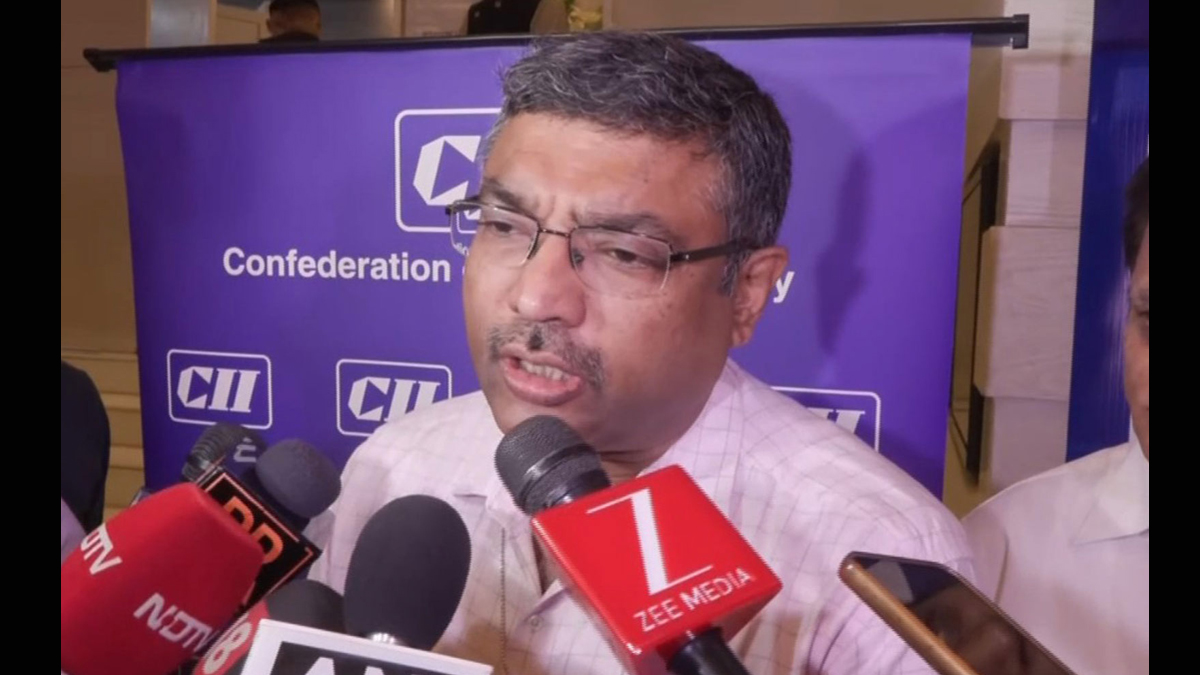
NEW DELHI: Looks like India’s AI rulebook is about to get its own algorithm. After relying on existing laws to keep pace with the fast-moving world of artificial intelligence, the Centre has indicated it is now preparing to draft a dedicated legal framework for the technology. The Ministry of Electronics and Information Technology (MeitY) has signalled that India could move towards standalone AI legislation, with MeitY Secretary S. Krishnan saying the government believes the time is “getting right” to begin work on a dedicated regulatory framework.
“We will look at AI regulation when the time is right. It appears the time is getting right and we will start,” Krishnan said on Friday. He added that while the government has so far relied on provisions under existing laws to deal with AI-related concerns, the rapid evolution of the technology now warrants a separate legal approach. “Probably the time has come now to look at a separate legislation for AI. At the Ministry level, what we can do is prepare a draft regulation for AI,” he said.
The remarks mark one of the clearest indications yet that India is considering a dedicated AI law, as policymakers confront growing concerns around generative AI, deepfakes, synthetic media, misinformation and online fraud. The proposed framework is also expected to be supported by advisory bodies that will help shape India’s long-term AI governance strategy as adoption accelerates across industries.
The government’s latest position builds on measures initiated over the past year to improve transparency around AI-generated content. In December 2025, Krishnan had said consultations with industry on the mandatory labelling of AI-generated content had concluded and revised rules would be notified soon.
Earlier, in October 2025, the government proposed amendments to the Information Technology Rules that would require AI-generated or AI-modified content to be clearly labelled while placing greater accountability on major digital platforms such as Facebook and YouTube to detect and flag such material.
According to the IT Ministry, advances in AI have made it increasingly easy to create convincing fake videos, synthetic voices and manipulated images that can spread misinformation, damage reputations, influence elections and enable financial fraud.
Under the proposed amendments, visual AI-generated content would need to carry a disclosure covering at least 10 per cent of the screen, while audio content would require an AI disclosure within the first 10 per cent of the clip. If implemented, the measures would establish one of India’s first mandatory transparency frameworks for AI-generated media, even as work begins on what could become the country’s first comprehensive AI legislation.
#WATCH | Delhi | Over draft AI regulations, S. Krishnan, Secretary, MeitY says, "Probably the time has come now to look at a separate legislation for AI. At the Ministry level, what we can do is prepare a draft regulation for AI." pic.twitter.com/UL19aFtVE2
— ANI (@ANI) July 3, 2026