Brands
Reliance’s 49th AGM: Ambani declares war on every front at once, from AI to avocados
Reliance’s record FY26 results land alongside Jio’s IPO filing, a sovereign AI push, a satellite play and a green energy empire built in the desert

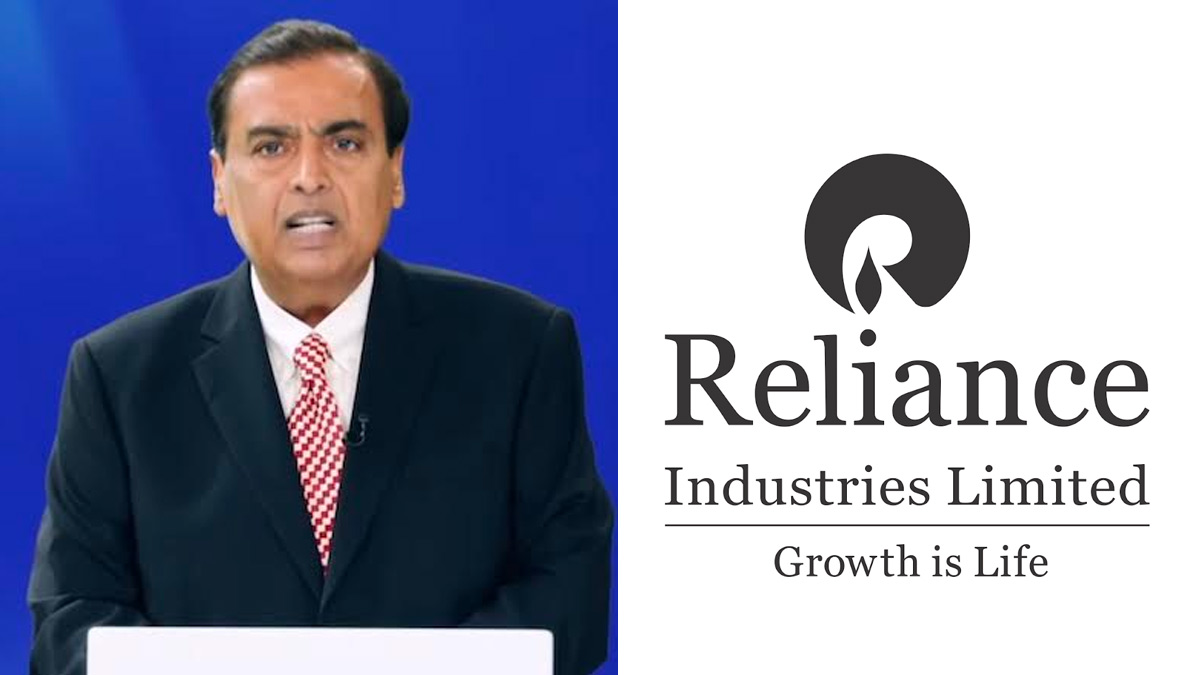
Mukesh Ambani didn’t deliver a chairman’s statement at Reliance’s 49th AGM on Friday so much as a manifesto for owning the next decade of India outright. Consolidated revenue hit a record Rs 11,75,919 crore ($124.0 billion), up 9.8 per cent on the year, with EBITDA at Rs 2,07,911 crore ($21.9 billion) and net profit climbing 17.8 per cent to Rs 95,754 crore ($10.1 billion). Capex for the year alone touched Rs 1,44,271 crore ($15.2 billion), and over five years the company has ploughed in Rs 6,48,428 crore, or $68.4 billion, claiming almost a third of all capital invested by India’s top 50 corporates. Reliance also remained the country’s biggest taxpayer, contributing Rs 2,16,472 crore ($22.8 billion) to the exchequer, and the largest single-company CSR spender at Rs 2,248 crore ($237 million).
The headline event, though, was Jio. The board has cleared the draft red herring prospectus, filed with SEBI the same day, and Ambani confirmed that Isha, Akash and Anant Ambani are personally running the IPO process, a generational handover dressed up as the country’s biggest listing. Jio’s own FY26 numbers do the heavy lifting: revenue of Rs 1,46,885 crore ($15.5 billion), up 14.6 per cent, EBITDA of Rs 76,255 crore ($8.0 billion) with margins improving to 51.9 per cent, and profit after tax crossing Rs 30,000 crore ($3.2 billion) for the first time, up 15.1 per cent. The subscriber base has passed 524 million, with 268 million now on 5G, the largest such base outside China, while JioAirFiber has reached 13 million connected homes installing at nearly 60,000 a day. Total data traffic hit 241 exabytes, up 30.8 per cent, with per capita usage at 42.3 GB a month. Jio also revealed it had leapt from rank 340 to 20 globally on patent-filing velocity, per the World Intellectual Property Organisation, the only Indian company in that league’s top 20.
Reliance Intelligence, the AI arm announced last year, is now moving into what Ambani called the execution phase. The centrepiece is a sovereign AI compute backbone in Jamnagar, powered entirely by Reliance’s own solar generation, with the first 120 megawatts due online by the end of 2026. An initial fleet of NVIDIA GB300 GPUs is already running, with inference capacity equivalent to more than 75,000 H100 chips, scaling towards 2 lakh H100-equivalents once the full 120 megawatts is live. Partnerships with Google, Meta and NVIDIA underpin the build, alongside services in the works under the JioBharatIQ, AI Vyapar, JioHealthIQ, JioLearnIQ and JioKrishiIQ banners, all promised in 22 Indian languages. On stage, Jio also unveiled the Jio Call Agent, an AI voice assistant built natively into the network rather than as an app, capable of multi-speaker transcription, call summaries and live actions like booking a cab, launching later this year for Jio’s 500-million-plus user base. MyJio, with over 600 million users, is being rebuilt as an agentic AI advisor, while JioHome will offer up to 5 Gbps download and 1 Gbps upload speeds, alongside a 24-hour install promise and a new AI operating system for the connected home called Jio TeleFrame.
On satellites, Jio confirmed it is evaluating a sovereign low-earth-orbit constellation while simultaneously leasing capacity from established global players and building its own ground station infrastructure, a dual-track approach Ambani framed as extending Atma Nirbharta into space.
JioStar, the media combine spanning JioStar, Jio Studios and Network18, posted full-year revenue of Rs 34,917 crore ($3.7 billion), EBITDA of Rs 5,842 crore ($616 million) and net profit of Rs 3,434 crore ($362 million). It commands a 34.7 per cent television viewership share, nearly matching its next three rivals combined, reaching 389 million viewers daily. JioHotstar averaged 451 million monthly active users, hit a world-record 72.5 million concurrent viewers during the T20 World Cup, and now holds nine of the ten highest global concurrency records ever recorded. IPL 2026 alone drew over 700 million viewers on the platform, which became the first Indian paid OTT service to cross 1 billion downloads and now sits on 99 per cent of connected TVs in India. New launches included ChatGPT-powered conversational discovery, the micro-content hub Tadka (100 million users in under two months), in-app Swiggy ordering during IPL matches, and a new AI content production pipeline called JAMS. Jio Studios, meanwhile, became India’s number one studio by revenue and catalogue, with the Dhurandhar franchise crossing Rs 3,000 crore ($318 million) globally, the first Indian film duology where each instalment topped Rs 1,000 crore.
Reliance Retail crossed 20,000 stores in the fourth quarter, a scale unmatched by any retailer in Asia in such a timeframe. Gross revenue reached Rs 3,70,026 crore ($39.0 billion), up 11.8 per cent, EBITDA grew 7.9 per cent to Rs 27,033 crore ($2.9 billion), 3.4 times its nearest competitor, and profit after tax rose 12 per cent to Rs 13,838 crore ($1.5 billion). The registered customer base hit 387 million, with transactions up 39 per cent to 1.93 billion, driven by a quick-commerce boom; JioMart now runs over 3,100 stores across 5,100-plus pin codes. AJIO grew sevenfold in five years, while Shein crossed 11 million app installs. New brand additions ranged from Stella McCartney and Kurt Geiger on the premium end to homegrown buys like Pahadi Local, alongside a 900-artisan craft programme under Swadesh.
Reliance Consumer Products (RCPL), now a direct subsidiary after its December 2025 demerger, doubled revenue to Rs 22,000 crore ($2.3 billion). Campa crossed Rs 4,700 crore ($496 million) to become India’s fourth-largest carbonated soft drink brand; Independence delivered Rs 2,600 crore in revenue. Acquisitions during the year included Udhaiyam Agro Foods, Southern Health Foods, Australia’s Goodness Group Global, and global rights to heritage names Brylcreem, Toni & Guy, Badedas and Matey. RCPL is targeting Rs 1 lakh crore ($10.5 billion) in revenue by FY30.
The Oil-to-Chemicals business, still Reliance’s financial backbone, grew revenue 5.7 per cent to Rs 6,62,401 crore ($69.8 billion) and EBITDA 10.1 per cent to Rs 60,546 crore ($6.4 billion), even as the Strait of Hormuz disruption in March drove up freight and insurance costs. Exploration & Production delivered revenue of Rs 23,861 crore ($2.5 billion) with gas output near 26 MMSCMD, around 30 per cent of India’s domestic natural gas production. The New Energy business, anchored by the Dhirubhai Ambani Green Energy Giga Complex at Jamnagar, has begun commissioning solar and battery lines, with a landmark $3 billion green ammonia supply deal signed with Samsung C&T. The Kutch renewable hub, spanning 5,50,000 acres, is targeted to eventually generate over 40 billion units of green electricity annually, roughly 3 per cent of India’s total demand, and the combined Giga Complex and Kutch projects are expected to create two lakh green jobs.
Reliance Foundation, marking sixteen years of operation, said it has reached over 97 million Indians across nearly a hundred thousand villages. Ambani also detailed three flagship social projects: a new private university at Dronagiri spanning 410 acres with seven specialised schools, a 130-acre Coastal Road Gardens project promising over 60,000 trees, and a planned 1,500-bed medical city built around the modernisation of Seven Hills Hospital, including 450 beds reserved for economically weaker sections.
Looking ahead, Ambani laid out five value-creation pathways: reinventing O2C into materials and chemicals, scaling New Energy into one of the group’s largest earnings engines, building Reliance Intelligence into a multi-trillion-dollar AI business, growing FMCG into India’s largest such company, and an export platform targeting $125-150 billion in shipments by 2032. He also confirmed Isha, Akash and Anant now run consumer, technology and energy businesses respectively, backed by 500 newly groomed leaders, as part of what he called a five-point institutional succession plan.
It was, in short, not so much an AGM as a blueprint for a country, with Ambani positioning Reliance not as a conglomerate chasing growth but as the load-bearing wall of India’s next twenty-five years, telecom, television, retail, energy and artificial intelligence, all stitched into a single, relentless pitch: bet big, bet now, bet on Reliance.