Hollywood
Martin Scorsese bets on AI, redrawing Hollywood’s creative future
Veteran director uses FLUX to visualise scenes as Hollywood debates AI’s role

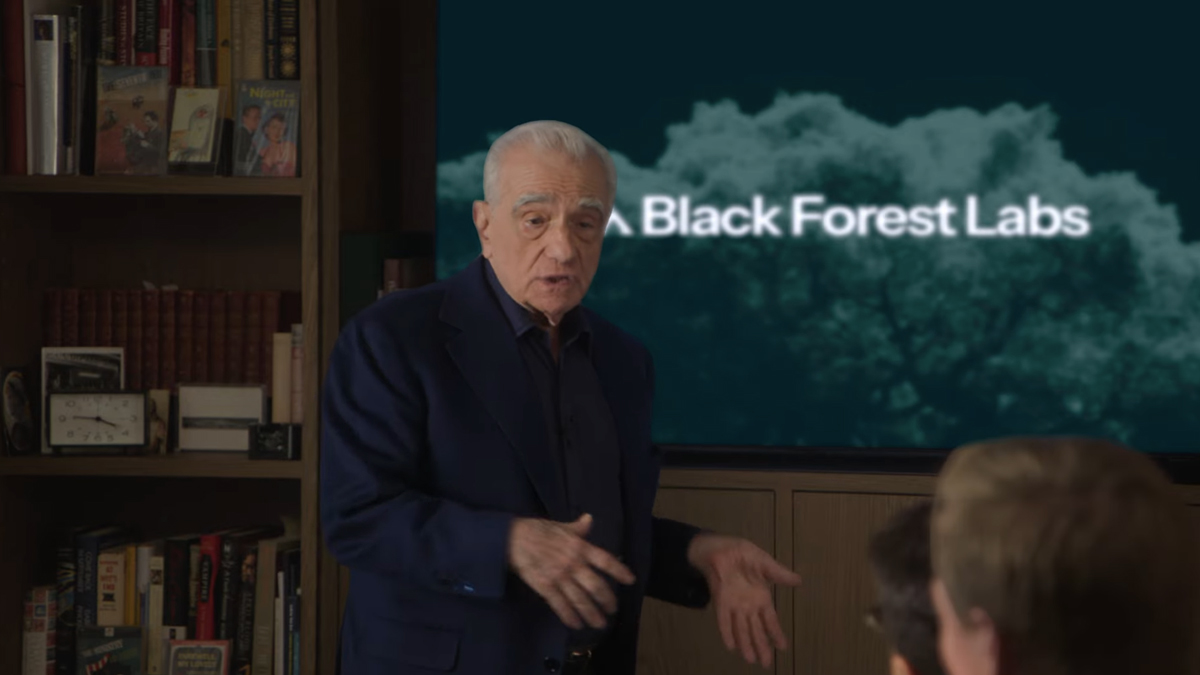
NEW YORK: It seems Martin Scorsese is giving artificial intelligence a starring role, though not quite a speaking part. In a move that has ignited debate across Hollywood and the technology sector, legendary filmmaker Martin Scorsese has joined Black Forest Labs as an advisor and partner. The collaboration marks one of the highest-profile endorsements of generative AI by a major film director and signals a growing willingness among some industry veterans to experiment with emerging creative tools.
The German startup, valued at more than $3.25 billion, was founded by members of the team behind Stable Diffusion and is best known for developing FLUX, a suite of text-to-image models capable of producing highly detailed visual concepts from written prompts.
Scorsese, however, is not using AI to write scripts, direct actors or generate finished scenes for cinema screens. Instead, he has incorporated FLUX into the pre-production process for his upcoming film What Happens at Night, which stars Leonardo DiCaprio and Jennifer Lawrence.
In a promotional video released by Black Forest Labs, the 83-year-old director demonstrated how the technology helps him translate ideas into visual references. Sitting in his New York office, Scorsese used prompts to create images of a weathered Eastern European town with narrow cobblestone streets, helping communicate the atmosphere and look he envisioned for a scene.
For Scorsese, the attraction lies in solving a problem that filmmakers have wrestled with for decades: how to convey a picture that exists only in a director’s mind.
“There’s always been that problem of what you see in here, how do you get it there?” said Scorsese. “How do you create what you have in your thoughts, in your mind’s eye?”
The director explained that while traditional storyboards remain an essential part of filmmaking, AI allows him to visualise concepts faster and share them more clearly with production designers, cinematographers and other collaborators.
He also highlighted the practical benefits. By helping teams map out complex shots and sequences before stepping onto a set, the technology could reduce production delays and lessen pressure on crews. Reflecting on the possibilities, Scorsese noted that projects which once required extensive planning could potentially be organised much more efficiently.
The partnership emerged through connections within Hollywood’s investment community. Scorsese was introduced to Black Forest Labs via BroadLight Capital, whose co-founder Rick Yorn has long managed the filmmaker’s career. Reports also suggest that veteran entertainment executive Michael Ovitz played a role in facilitating discussions.
Not everyone in the creative world is applauding the move.
While Black Forest Labs chief executive officer Robin Rombach has described the collaboration as an important validation of AI’s creative potential, critics argue that widespread adoption could threaten jobs traditionally performed by artists and storyboard specialists.
Among the sceptics is filmmaker Boots Riley, who has publicly questioned the growing influence of generative AI in filmmaking. Meanwhile, fellow director Guillermo del Toro has repeatedly voiced strong opposition to AI-generated art.
Yet Scorsese is far from alone in exploring the technology. Earlier, James Cameron joined the board of Stability AI, while Peter Jackson has likened AI to another step in the evolution of filmmaking tools.
Scorsese himself frames the technology as part of a broader tradition of innovation. He has previously embraced advances such as 3D filmmaking in Hugo and digital de-ageing techniques in The Irishman. In his view, cinema remains a relatively young art form, and creative professionals should remain open to new methods of storytelling and production.
For now, Scorsese’s use of AI remains firmly behind the camera rather than on screen. But given his standing as one of cinema’s most respected voices, his decision to back an AI company may prove to be a pivotal frame in Hollywood’s ongoing debate over where technology ends and artistry begins.