Brands
Samsung marks 30 years of customer care evolution in India
From pagers to AI care Samsung builds 3,000 plus service touchpoints.

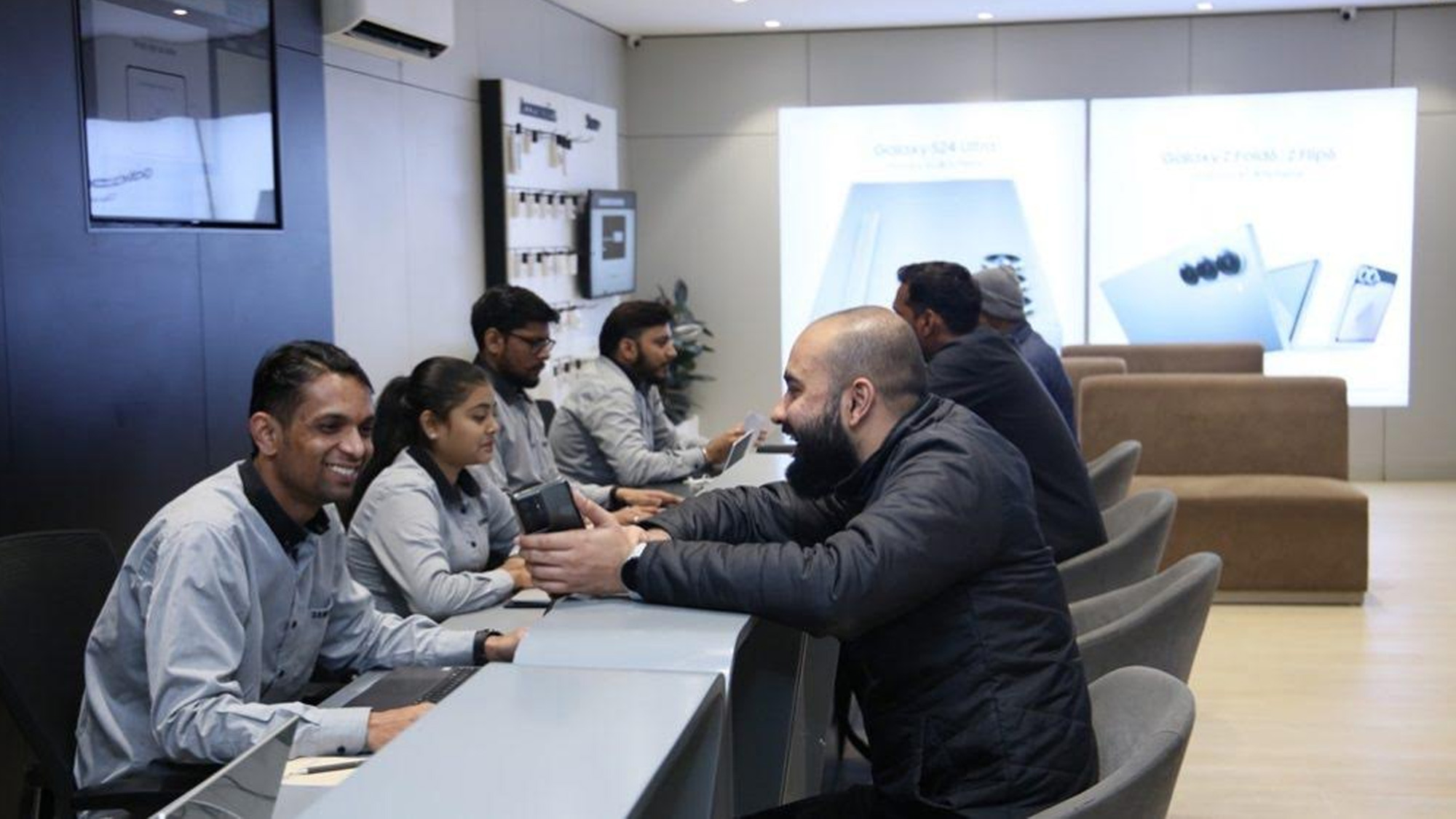
MUMBAI: Before AI-powered diagnostics and Whatsapp support became the norm, customer complaints lived inside thick registers, engineers travelled with paper slips tucked into toolkits, and a pager buzzing on the belt felt like peak technology. Samsung’s India service story began in exactly that world and 30 years later, it has turned into one of the country’s largest connected customer care ecosystems. Marking three decades of customer service operations in India, Samsung is reflecting on a journey that mirrors India’s own technological transformation from crowded service desks and handwritten entries in the mid-1990s to predictive AI-led support systems and connected home care today.
When Samsung opened its first service centre in India in March 1996, the country was still years away from mass internet adoption and smartphone dependency. Most households did not even own telephones, meaning customers often physically walked into service centres to report issues.
“Back then, customer care was deeply personal in the most literal sense. Customers often walked directly into service centres because telephones were not common in homes,” said Rajiv Gupta, Director, Service Operations, Samsung India.
“Service requests were manually entered into registers, and engineers travelled across cities carrying logbooks, paper slips and toolkits,” he added.
Yet Samsung moved quickly. By December 1996, the company had already expanded to 21 service centres across India. A year later, engineers began using pagers to receive customer alerts, a tiny gadget that now feels prehistoric, but back then represented a major leap in responsiveness.
As India’s consumer electronics market exploded through the late 1990s and early 2000s, Samsung steadily expanded its support infrastructure alongside it. Franchise service centres spread across the country, while 2003 marked another turning point with the launch of Samsung’s first in-house call centre at Nehru Place in Delhi and the introduction of a toll-free support number.
Fast forward to 2026, and Samsung’s customer care network has grown into a sprawling operation with more than 3,000 service touchpoints, over 12,500 trained engineers and 16 strategically located parts warehouses across India.
But the story today is no longer just about physical service centres. Samsung’s support ecosystem has quietly evolved into something much larger, a connected care infrastructure powered increasingly by AI, remote diagnostics and predictive maintenance.
Through SmartThings-enabled Proactive Care backed by Home Appliances Remote Management (HRM), Samsung appliances can now identify potential issues before customers even notice them. Refrigerators can flag cooling inefficiencies, air conditioners can signal servicing requirements, and connected devices can proactively trigger maintenance alerts turning customer care from reactive troubleshooting into preventative support.
“What truly defines Samsung’s customer service journey is how closely it has evolved alongside the lives of Indian consumers,” said Samsung India head of customer satisfaction Sunil Cutinha.
“For us, customer service is not just a support function, it is a core part of the Samsung experience,” he said, adding that the company’s focus remains on delivering “fast, transparent and reliable service” through a combination of scale, innovation and empathy.
Today, Samsung customers can access support through toll-free helplines, Whatsapp assistance, remote diagnostics, online booking platforms and digital self-help tools. Voice support is available in 10 Indian languages, while services like Pick and Drop for smartphones and Digital Service Center platforms are designed to reduce friction for increasingly digital-first consumers.
Behind the scenes, Samsung is also leaning heavily into AI-enabled service technologies such as intelligent co-pilots, speech-to-text systems and sentiment analysis tools that help customer support teams respond faster and more accurately to complaints.
The company’s customer relationships, however, remain rooted in familiarity as much as technology.
“Samsung has been a part of my life for three decades now. Our first television was a Samsung, and later the first smartphone I bought for my son was a Galaxy device,” said Sanjeev Gupta, a long-time Samsung customer from Ludhiana.
“What has remained constant over the years is the trust and reliability associated with the brand,” he added.
Samsung has also spent years building a parallel ecosystem of skilled service professionals. Through four training academies and its long-running Dost Service initiative, the company has partnered with 22 ITIs to train more than 14,500 service engineers across India.
Sustainability, too, is becoming part of the service conversation. Initiatives like Care for Clean India focus on responsible e-waste disposal and recycling through authorised recyclers as Samsung attempts to align customer care with broader environmental goals.
Thirty years on, Samsung’s India service story is no longer simply about fixing televisions or repairing smartphones. It is about how customer care itself has evolved from paper registers and pagers to predictive AI systems quietly working in the background before a customer even realises something is wrong.