MAM
How to Choose the Right Capacity of a Water Softener

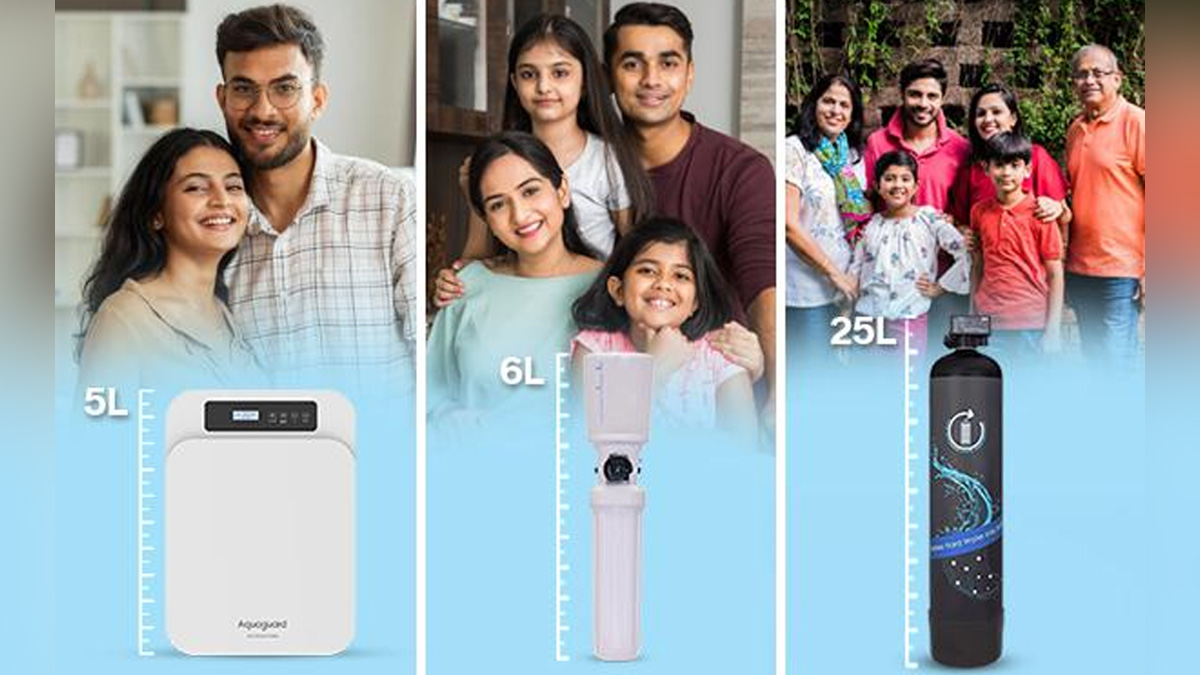
Hard water is one of the common concerns among many Indian households. It generally leaves behind stubborn white residues on the taps, causes dryness on the hair scalp and reduces the efficiency of electrical appliances such as a washing machine. For this reason, water softeners are becoming a popular choice among people. However, they often get confused about the right capacity suitable for their homes.
This blog will walk you through the key factors to consider while buying to help you make an informed choice.
What Does Capacity Mean in Water Softeners?
Water softener capacity refers to the amount of hardness, mainly caused by calcium and magnesium, that a softener can remove. It is usually measured in grains per gallon (GPG) or the volume of water treated between the regeneration cycles.
- 1 grain = 64.8 mg of calcium carbonate.
Inside a typical hard water to soft water converter, resin beads attract and hold calcium and magnesium ions as the water passes through it. When the resin beads are at their capacity, the system requires regeneration to restore its ability to soften water.
It is important to note that:
- Water softener capacity does not mean the size of the tank
- Higher water softener capacity means less frequent regeneration
- The right water softener capacity depends on water usage and the hardness of water, and not just the home size.
Why Does Right Water Softener Capacity Matter?
Selecting the right water softener capacity directly influences the system. A small-capacity water softener may require frequent regeneration, whereas a larger one will have higher initial costs and infrequent regeneration. Therefore, to ensure the smooth functioning of the water softeners, one must consider the following factors given below before buying a water softener for the home.
Factors Determining the Right Water Softener Capacity
Total no. of people in the house
The number of people present in the home directly affects the daily water use. The more people, the more water would be used in showering, laundry, and dishes.
In general:
- 1-2 people may require low to moderate capacity
- 3 to 5 people may require a medium-capacity water softener
- 6< people may require a high-capacity water softener.
However, other than the number of people, their water habits are equally important.
- Daily water use
An Indian household generally consumes 150 to 200 litres of water per person per day. It includes multiple activities like cooking, cleaning, bathing, and washing. However, actual water consumption varies with the lifestyle and the household setup. Families with multiple bathrooms, washing machines, and coolers will require more water.
Generally, water usage is calculated in terms of gallons; 1 gallon is approximately 3.78 litres.
In practical terms, a person uses approximately 30 to 40 gallons of water per day, whereas a family of four people generally uses 250 to 350 gallons of water per day.
It is essential to assess the approximate water usage to reduce the risk of buying the wrong capacity system.
- Hardness level of the water
Water hardness is generally expressed in grains per gallon (GPG).
(1gpg= 17.1 mg/l of calcium carbonate)
The hardness level of water varies from city to city, such as the borewell water of Delhi and its neighbouring areas, has a hardness ranging from 300 mg/l in Civil Lines to 1100mg/l in Burari.
One can refer to the general levels given below:
- Soft water- 0 to 3gpg
- Moderately hard water- 3.5 to 7 gpg
- Hard water- 7.5 to 11 gpg
- Severe hard water- 15<gpg
It is advised to conduct a water test before buying the water softener.
Water Softener Capacity Calculation
A simple formula can be used to determine the required capacity:
Daily grains needed = water hardness (GPG) x daily water usage (in gallons).
For instance, if water hardness is around 20 gpg and a household uses 200 gallons of water per day, then,
20 x 200 = 4000 grains per day.
It means they need to buy a system that can remove at least 4000 grains of water per day. However, it is advisable to accommodate peak usage periods, such as a wedding function at home, where the number of people at home increases.
Mistakes People Make While Choosing a Water Softener System
- Overlooking variation in water use
People often fail to incorporate the variation in water usage and end up buying either an undersized unit or an oversized unit.
For instance, someone has bought a water softener for bathroom, which is designed to handle limited demand. But they start using softened water for other purposes, such as washing utensils or other household activities. It puts pressure on the water softener system. In such cases, the system might regenerate frequently and still fail to fulfil the demand.
Similarly, someone bought a water softener for home tank, which is intended to manage large volumes of water. But their water usage is low to moderate; this might seem beneficial at first, but the upfront cost will be high, also there will be ineffective use of resin beads and salt and irregular regeneration cycles.
- Opting for an automatic water softener system when water consumption is low
If someone buys an automatic water softener system when their water consumption is low, this will result in irregular regeneration. To prevent this, one can buy a manual water softener, giving control to the user when to regenerate or soften the water.
- Opting for a manual system in a high-water usage household
Buying a manual water softener when water usage is high can lead to inconvenience, as manual systems rely on human intervention. In case of high water usage, manual systems will become a hassle, as someone will have to manually control them to regenerate water to match the demand. Therefore, it is advised to buy an automatic water softener system as it ensures timely regeneration without requiring constant monitoring.
Conclusion
Choosing the right capacity for a water softener is an investment in long-term efficiency and comfort. By understanding the water usage, accurate measurement of hardness in water and regeneration frequency, one can make an informed choice as a suitable water softener will improve water quality, along with enhancing the lifespan of the electrical appliances and improving overall health of skin and hair.






