Brands
Maruti Suzuki extends WPP Media’s Rs 1,200 crore media mandate
India’s biggest carmaker is not just racing for showroom sales anymore, it is fighting for attention, screen space and SUV mindshare too.

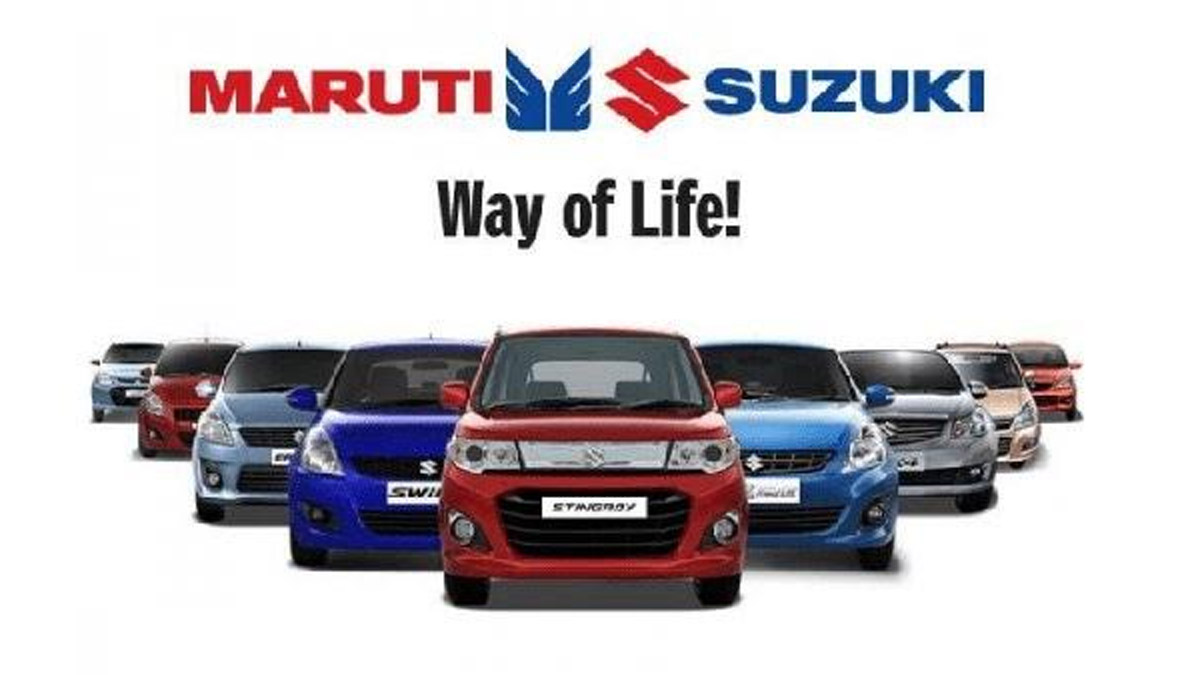
MUMBAI: Maruti Suzuki India has reviewed its media business, estimated to be worth around ₹1,200 crore, as the country’s largest carmaker sharpens its marketing playbook amid intensifying competition in the passenger vehicle market. According to multiple industry and company executives familiar with the development, incumbent WPP Media has retained the account and secured a one-year extension on the mandate following the review.
The exercise arrives at a pivotal moment for Maruti Suzuki, which is leaning harder on advertising and promotional spends to maintain momentum in a slowing automobile market while defending its long-held dominance against increasingly aggressive SUV-focused rivals.
The company’s latest numbers reveal why the marketing engine matters more than ever.

In April, Maruti Suzuki reported total sales of 239,646 vehicles, supported by strong performances across compact cars, utility vehicles and exports. Domestic passenger vehicle sales stood at 187,704 units, while exports jumped 43.5 per cent year-on-year to 40,054 units.
Its compact and mid-size portfolio home to several of its biggest-volume products rose 30.2 per cent to 80,659 units. Meanwhile, utility vehicles including the Brezza, Ertiga, Fronx, Grand Vitara and XL6 climbed 31.9 per cent to 77,892 units, highlighting Maruti’s aggressive push into India’s fast-growing SUV battleground.
Even the entry-level mini segment, featuring models such as Alto and S-Presso, staged a sharp comeback. Sales in the category surged to 16,066 units in April, compared with 6,332 units during the same period last year.
Behind those numbers sits an increasingly expensive marketing machine.
According to the company’s latest annual report, advertising expenditure rose to ₹1,127.5 crore for the year ended March 2025, while sales promotion spending climbed to ₹615.1 crore. Combined sales and marketing expenses touched ₹1,742.6 crore, up from ₹1,558.1 crore a year earlier.
The spending spike came during what was otherwise a sluggish year for India’s passenger vehicle industry, which grew by only around 2 per cent overall. Weak showroom footfalls during summer months and softer consumer sentiment ahead of national elections pushed many automakers towards heavier discounts, promotional campaigns and sharper branding efforts.
Maruti Suzuki, however, still managed to post its highest-ever annual sales of 2.23 million vehicles, powered largely by replacement buying and demand from multi-car households.
The company also expanded deeper into smaller towns and rural markets, adding 372 new sales outlets during the year as it widened distribution reach beyond major urban centres.
Its advertising efforts closely mirrored that expansion strategy. Campaigns during the period revolved around launches and refreshed editions such as the Epic New Swift, Baleno Regal Edition and Grand Vitara Dominion Edition, alongside a wider push around hybrid technology and green mobility messaging.
For Maruti Suzuki, the road ahead is no longer just about manufacturing scale. Increasingly, it is about staying culturally visible in a market where consumers are spoilt for choice, rivals are louder than ever, and every SUV launch arrives with its own digital hype cycle attached.