Regulators
TRAI floats V2X framework to enable connected vehicles and safer roads
Consultation paper outlines spectrum, licensing and tech norms for smart mobility

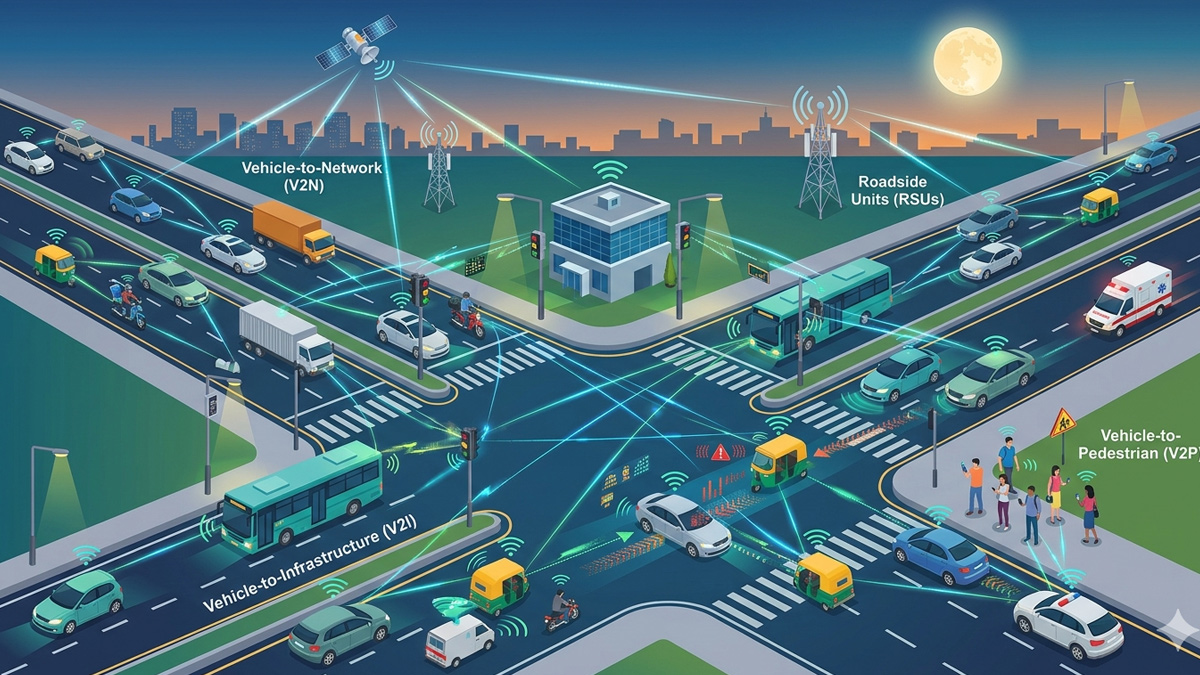
NEW DELHI: Telecom Regulatory Authority of India has unveiled a detailed consultation paper to lay down a regulatory framework for Vehicle-to-Everything, signalling a decisive push towards smarter and safer roads in India.
The move follows a reference from the Department of Telecommunications in December 2025, asking the regulator to chart out a roadmap for adopting this next-generation vehicle communication technology.
At its core, V2X is the digital nervous system of modern transport. It allows vehicles to talk wirelessly to everything around them, including:

- Other vehicles (V2V): Sharing speed and position to prevent collisions.
- Infrastructure (V2I): Receiving alerts from smart traffic lights or toll booths.
- Pedestrians (V2P): Warning drivers of nearby cyclists or walkers.
- Networks (V2N): Connecting to the cloud for real-time traffic updates.
The aim is simple: reduce human error, which currently accounts for roughly 92 per cent of road accidents in India.
The urgency is hard to ignore. India recorded around 1.73 lakh road fatalities and over 4.6 lakh injuries in 2023. With the automotive sector contributing 7.1 per cent to GDP and nearly half of manufacturing output, safer transport is not just a social need but an economic priority. The framework also aligns with United Nations Sustainable Development Goals that call for halving road deaths and improving transport systems by 2030.
The paper leans towards adopting Cellular V2X as India’s primary technology standard, a direction already backed in principle by the DoT. This would use a dual communication approach, short-range direct links for vehicle and infrastructure interaction, and long-range cellular connectivity for cloud-based services.
On the spectrum front, TRAI has proposed allocating 30 MHz in the 5875 to 5905 MHz band for initial deployment, with an additional 20 MHz kept aside for future intelligent transport applications. This phased approach aims to balance immediate rollout with long-term scalability.
The consultation also outlines a tiered licensing framework. On-board units installed in vehicles are likely to be licence-exempt under defined conditions, making adoption easier for manufacturers and consumers. Roadside units, however, may require authorisation to ensure coordinated deployment and avoid signal interference. The Ministry of Road Transport and Highways has suggested that such permissions be limited to government bodies or agencies authorised by them.
Technical recommendations include a maximum transmission power of 4W for both on-board and roadside units, along with defined parameters to ensure consistent performance across networks.
TRAI is also seeking industry views on several key questions. These include whether a separate service authorisation is needed for vehicle-to-infrastructure communication under the Telecommunications Act, 2023, whether specific global standards such as 3GPP releases should be mandated, and whether equipment should fall under the mandatory testing and certification regime.
Globally, countries are taking varied approaches. The United States and China are moving towards C-V2X with a mix of licensed and licence-exempt models, while Europe remains technology-neutral. South Korea has adopted LTE-V2X with a similar hybrid licensing structure. India’s framework appears to be drawing from these experiences while tailoring them to local conditions.
Stakeholders have been invited to submit written comments by May 28, 2026, and counter-comments by June 11, 2026. Submissions can be addressed to Telecom Regulatory Authority of India advisor (networks, spectrum and licensing) Akhilesh Kumar Trivedi.
As India’s road network stretches across millions of kilometres and traffic continues to grow, the proposed V2X framework could mark a turning point. If executed well, it promises not just connected vehicles, but a connected safety net on wheels.





Regulators
India Post & DTDC sign MoU to boost logistics reach across India
Partnership taps 1.64 lakh post offices to speed up e-commerce deliveries
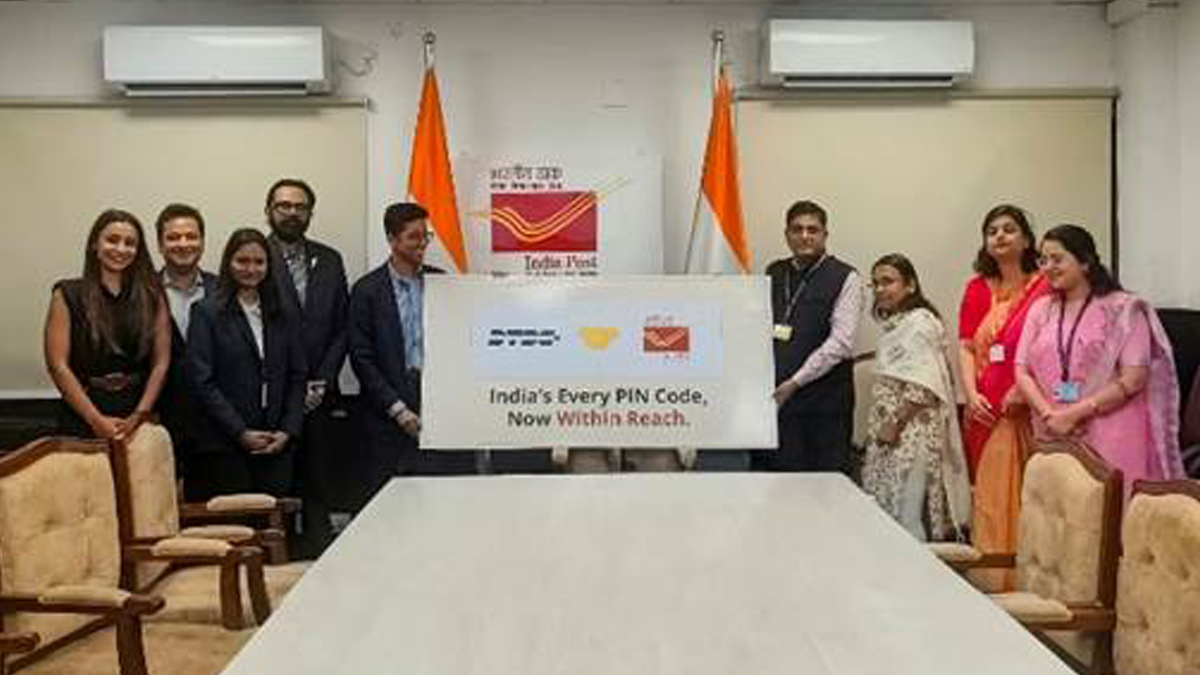
NEW DELHI: In a move aimed at strengthening India’s fast-growing logistics and e-commerce ecosystem, the Department of Posts under the Ministry of Communications has signed a memorandum of understanding with DTDC Express Limited to enhance parcel delivery capabilities across the country.
The agreement was formalised in New Delhi by Department of Posts general manager parcel directorate Neeraj Kumar Jha and DTDC Express Limited ceo Abhishek Chakraborty, in the presence of senior officials from both organisations.
At its core, the partnership looks to combine India Post’s extensive nationwide network with DTDC’s operational expertise in logistics. The collaboration will allow DTDC to tap into more than 1.64 lakh post offices, significantly widening its reach, particularly in remote and underserved regions.
The MoU builds on an existing association that began in 2025 and focuses on expanding joint logistics operations, sharing capacity, and aligning best practices across the parcel ecosystem. Both organisations will also coordinate marketing strategies and hold quarterly review meetings to track progress and identify new growth opportunities.
For DTDC, the tie-up offers scale and deeper market penetration, helping it meet rising demand driven by e-commerce. For India Post, the partnership is expected to strengthen its parcel business, improve delivery timelines, and reinforce its role in the country’s logistics value chain.
The inclusion of services such as cash on delivery is also set to make the collaboration more relevant for online sellers and consumers alike, especially in regions where digital payment adoption is still evolving.
As India pushes towards becoming a global logistics hub, this public-private partnership signals a practical step forward, blending legacy infrastructure with modern delivery capabilities to keep pace with the country’s e-commerce boom.