Digital
BSE revamps website with real-time data, mobile-first design, smart search
New platform brings cleaner layout, live market trackers and easier navigation

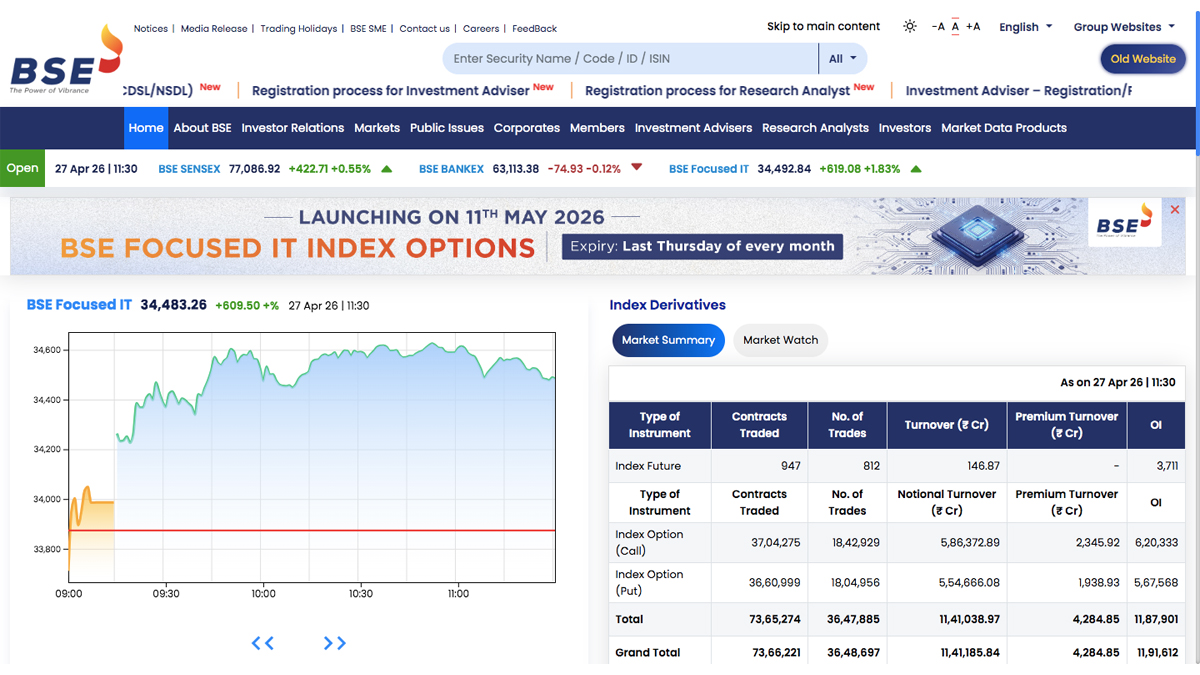
MUMBAI: BSE has rolled out a major redesign of its official website, aiming to make market data faster to access and easier to navigate for both seasoned traders and new-age retail investors.
The updated platform introduces a cleaner, more modern interface, replacing the earlier dense and text-heavy layout with a streamlined design. Navigation has been simplified with clearly segmented menus across markets, corporates, public issues, members, investment advisers and research analysts, helping users find information without the usual maze of links.
At the top, a refreshed header now offers quick access to notices, media releases, trading holidays and career updates. A centralised search bar allows users to instantly locate securities using names, codes, IDs or ISINs, cutting down the time spent digging through pages. For those still attached to the old layout, a dedicated toggle lets users switch back during the transition period.
A key highlight of the revamp is the sharper focus on real-time market data. A live ticker band now runs across the site, offering updates on indices including the SENSEX and BANKEX, alongside pre-open market signals. The homepage also features interactive charts, giving users a quick visual read of market trends without needing to navigate deeper.
Market activity sections such as top gainers, losers, turnover stocks and block deals have been reorganised into tabbed formats, making them more intuitive and easier to scan. Meanwhile, specialised areas like index derivatives and corporate data have been upgraded with better visualisation tools, offering clearer insights into contracts, turnover, open interest and company fundamentals.
The overhaul also reflects a strong mobile-first approach. With a growing number of investors tracking markets on their phones, the new site is fully responsive, ensuring charts and data tables remain readable and interactive across devices.
With this redesign, BSE appears to be aligning its digital presence with the needs of a more tech-savvy investor base, where speed, clarity and usability are just as critical as the data itself.