Brands
Godrej clarifies ‘GI’ identifier after logo similarity debate
Says GI is not a logo, will not replace Godrej signature across products.
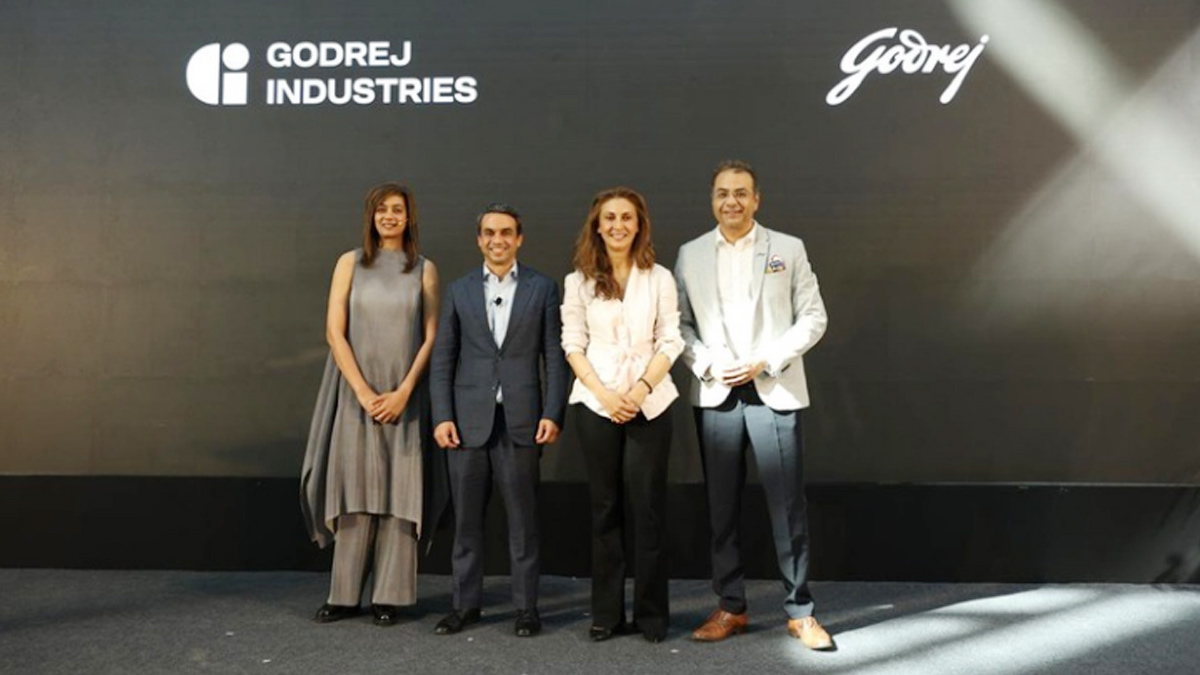
MUMBAI: In a branding storm where shapes did the talking, Godrej is now spelling things out. Godrej Industries Group (GIG) has issued a clarification on its newly introduced ‘GI’ identifier, addressing questions around its purpose and design following a wave of online criticism. At the centre of the debate were two concerns: whether the new mark replaces the long-standing Godrej logo, and whether its geometric design mirrors other corporate identities.
The company has drawn a clear line. The Godrej signature logo, it said, remains unchanged and continues to be the sole logo across all consumer-facing products and services. The ‘GI’ mark, by contrast, is not a logo but a corporate group identifier intended for use alongside the Godrej signature or company name, and aimed at stakeholders such as investors, media and talent rather than consumers.
The need for such a distinction stems from the 2024 restructuring of the broader Godrej Group into two separate business entities. With both continuing to operate under the same Godrej name and signature, the identifier is positioned as a way to differentiate the Godrej Industries Group at a corporate level.
The rollout, however, triggered a broader conversation on design originality. Critics pointed to similarities between the GI mark’s geometric composition and logos used by companies globally, raising questions about distinctiveness.
Responding to this, GIG said its intellectual property and legal review found that such overlaps are common in minimalist, geometry-led design systems. Basic forms such as circles and rectangles appear across dozens of brand identities worldwide, the company noted.
It added that the identifier emerged from an extensive design process and was chosen for its simplicity, allowing it to sit alongside the Godrej signature without competing visually. While acknowledging that elemental shapes may appear less distinctive in isolation, the group emphasised that the mark is part of a broader identity system that includes a custom typeface, sonic branding and other proprietary elements.
Following legal and ethical assessments, the company said it found no impediment to using the identifier, reiterating that the GI mark is a corporate tool not a consumer-facing symbol.
In short, the logo isn’t changing but the conversation around it certainly has.

Brands
Reliance Retail FY26 revenue rises 11.8 Per Cent to Rs 3.7 lakh crore
Q4 revenue up 11.1 Per Cent, hyperlocal orders surge 4x, PAT steady
MUMBAI: Reliance Retail isn’t just ringing up sales, it’s ringing doorbells faster than ever. Reliance Retail Ventures Limited (RRVL) reported a steady FY26 performance, with growth powered by store expansion, a sharp surge in hyperlocal commerce, and consistent traction across grocery, fashion and jewellery. For the full year, revenue rose 11.8 per cent year-on-year to Rs 3,70,026 crore. In the January–March quarter, revenue from operations climbed 11.1 per cent to Rs 87,344 crore, up from Rs 78,622 crore a year earlier.
Operating performance remained stable, with Q4 EBITDA inching up 3.1 per cent YoY to Rs 6,921 crore from Rs 6,711 crore. However, quarterly profit after tax held steady at Rs 3,563 crore. For the full fiscal, PAT grew 11.7 per cent to Rs 13,842 crore.
Expansion remained a key lever. RRVL added 1,564 new stores during FY26, while simultaneously scaling its digital and hyperlocal commerce play. The latter emerged as a standout, with daily orders surging more than fourfold year-on-year in Q4, underlining a clear shift towards faster, localised fulfilment.
In grocery, large-format stores maintained momentum, aided by festive demand and the expansion of Smart Bazaar, which crossed 1,000 stores. Promotional campaigns such as ‘Full Paisa Vasool’ delivered record results, with sales rising 26 per cent YoY.
Digital commerce also picked up pace. JioMart added 5.8 million new users in Q4, nearly doubling its registered base year-on-year. Hyperlocal orders grew 29 per cent sequentially and over 300 per cent annually during the quarter.
Fashion and lifestyle saw steady traction. Ajio recorded a 23 per cent YoY rise in average bill value, while fast-fashion platform Shein crossed 11 million app installs, scaling rapidly with expanding product lines.
The jewellery business added further shine, with average bill value jumping 53 per cent YoY, largely driven by rising gold prices and sustained consumer demand.
Commenting on the shift, RRVL executive director Isha Ambani said hyperlocal commerce has become a structural growth driver, with orders rising more than fourfold over the year.
Looking ahead to FY27, the company is betting on technology to deepen engagement. The focus, Ambani noted, will be on AI-led merchandising, sharper pricing strategies and disciplined execution turning scale into sustained customer value.
In short, the carts are fuller, the clicks are quicker, and the next phase looks less about reach and more about precision.