MAM
Sunrise Spices hosts four day Bihu cultural showcase in Assam
56 groups perform across five tribal dance forms at April 14 to 17 event.
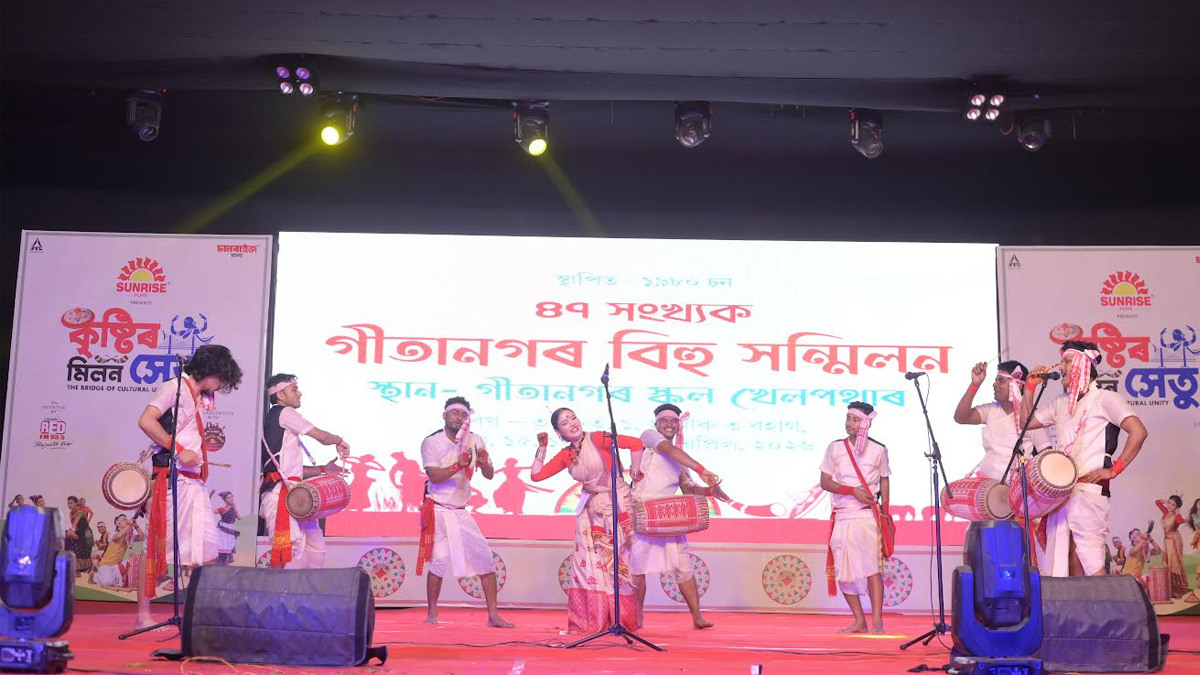
MUMBAI: Spice met spirit and the rhythm did the talking. Sunrise Spices brought more than flavour to the table this Rongali Bihu, wrapping culture, community and choreography into a four-day celebration that turned Assam’s festive mood into a living stage. Titled ‘Kristir Milan Setu – Bridge of Cultural Unity’, the event ran from April 14 to April 17, transforming the Bihu week into a showcase of the state’s diverse tribal heritage. Rather than a static celebration, the initiative leaned into performance spotlighting traditional dance forms and turning them into a participative, competitive experience.
Across the four days, 56 group performers from different communities took centre stage, representing five distinct dance traditions Assamese, Bodo, Karbi, Rabha and Mising. Each day unfolded like a cultural chapter, highlighting a different facet of Assam’s identity through rhythm, movement and storytelling.
The event culminated in a felicitation ceremony attended by Ravi Sarma, where winners were recognised across categories based on authenticity, coordination, expression and stage presence, an attempt to balance celebration with craft.
The finale dialled up the energy further with a Barabarani performance by the Tezpuriya Thespian Dance Group, closing the event on a high note that blended spectacle with tradition.
For Sunrise Spices, the play goes beyond cultural patronage. The brand, part of ITC Limited, has long positioned itself around regional authenticity whether through recipes or roots. With this initiative, it extends that narrative from the kitchen to the cultural arena, aligning food heritage with living traditions.
In a landscape where brand activations often chase visibility, this one leaned into identity using dance not just as performance, but as a reminder that culture, much like spice, is best experienced when it’s shared.

Brands
Hyundai and TVS Motor partner to develop electric three wheelers
Joint development pact targets last mile mobility with localisation push
MUMBAI: Three wheels, one big ambition and a charge towards the future. Hyundai Motor Company and TVS Motor Company have signed a joint development agreement to co-create electric three-wheelers (E3Ws), aiming to crack India’s complex last-mile mobility puzzle. The collaboration moves beyond concept talk into execution mode, building on the E3W prototype first showcased at the Bharat Mobility Global Expo 2025. The goal now is clear, design, develop and commercialise a purpose-built vehicle tailored to Indian roads, riders and realities.
Under the agreement, Hyundai will lead design and co-development, bringing its global R&D muscle and human-centric engineering approach to the table. TVS Motor, meanwhile, will anchor the product on its electric platform, leveraging deep three-wheeler expertise and local market insight. It will also handle manufacturing and sales in India, with an eye on exports down the line.
The timing is strategic. India remains the world’s largest three-wheeler market, where affordability, durability and adaptability often outweigh sheer innovation. The upcoming E3W aims to strike that balance combining advanced technology with practical features such as adaptive ground clearance for monsoon-hit roads, improved thermal management for tropical climates, and flexible interiors suited for passengers, cargo or emergency use.
A key pillar of the partnership is localisation. Major components will be sourced and manufactured within India, a move expected to strengthen the domestic supply chain, create jobs, lower costs and improve after-sales support.
The shift from prototype to production will involve rigorous testing, certification and refinement to meet regulatory standards and consumer expectations. Dedicated cross-functional teams from both companies are already in place to accelerate timelines.
At a broader level, the tie-up reflects a growing trend in mobility, global players partnering with local specialists to navigate emerging markets. For Hyundai and TVS, the bet is that combining scale with street-level insight could unlock a new chapter in sustainable urban transport, one that runs not just on electricity, but on relevance.