Brands
Zydus Wellness expands Ritebite Max Protein into new formats
RTD shakes, ghee jaggery bars and Korean chips target $10–12 bn protein market.
MUMBAI: Protein is no longer just gym talk, it’s making a full-course entry into everyday India. Zydus Wellness Ltd. is stretching its Ritebite Max Protein portfolio across three new formats, signalling a sharper push to turn protein from a niche supplement into a daily habit. The expansion brings ready-to-drink (RTD) protein shakes, culturally rooted ghee jaggery bars, and Korean-inspired protein chips under one umbrella, an attempt to build what the company calls a “multi-format protein ecosystem”. The move targets India’s rapidly expanding protein market, currently estimated at $10–12 billion and growing at a mid-teen CAGR.
The numbers suggest the strategy already has legs. In Q3 FY26, Ritebite Max Protein posted near double-digit EBITDA margins following its acquisition, driven by distribution expansion, product innovation and broader category tailwinds.
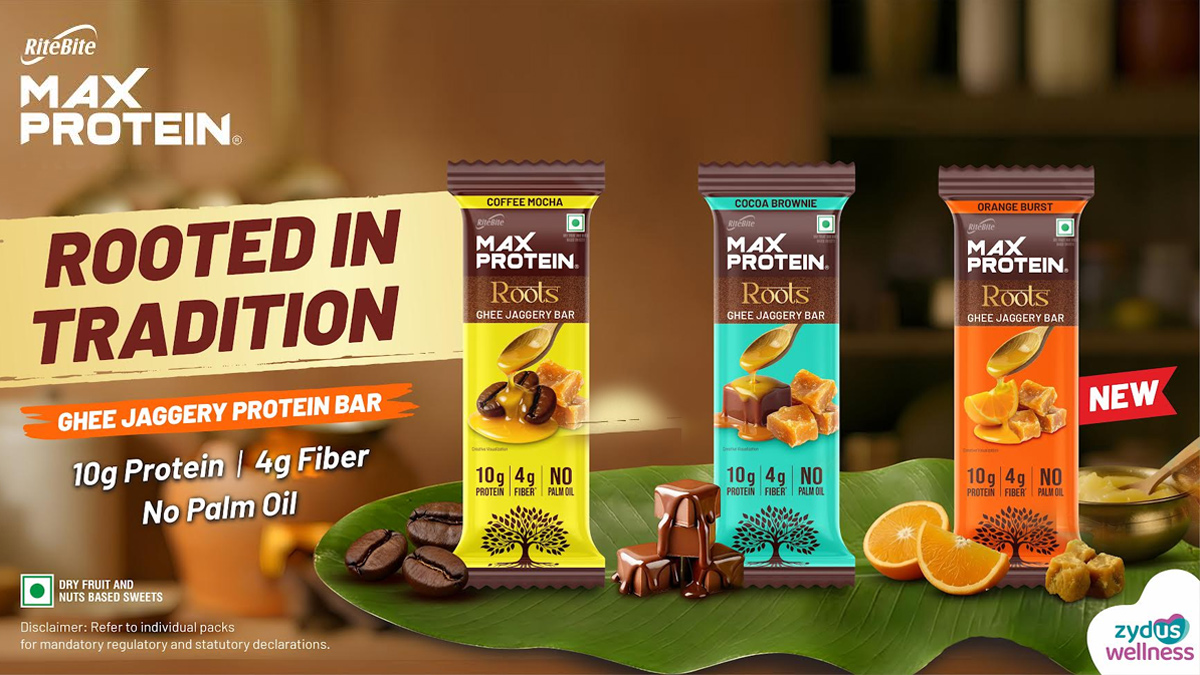
At the centre of the rollout is convenience. The newly launched RTD shakes available in Choco Burst and Berry Blush deliver 26 grams of protein per 250 ml serving, designed for on-the-go consumption. Meanwhile, the “Roots” Ghee Jaggery Protein Bars blend traditional Indian ingredients with whey and casein, offering 10 grams of protein and 4 grams of fibre per serving.
But the play isn’t just about nostalgia. On the other end of the spectrum, Korean-flavoured protein chips featuring variants like Hot Chilli, Barbeque and Gochujang tap into global snacking trends. Each 60-gram serving delivers 10 grams of protein and 4 grams of fibre, alongside claims such as no palm oil and gluten-free formulation.
The broader insight is clear: the protein category is fragmenting along lifestyle lines. One cohort is leaning into familiarity and traditional formats, while another is chasing novelty and international flavours. Zydus is betting it can straddle both worlds.
With a nationwide rollout planned across e-commerce and quick-commerce platforms, the company is positioning Ritebite Max Protein not just as a product line, but as a day-long consumption habit, one shake, bar, or chip at a time.

Brands
Hyundai and TVS Motor partner to develop electric three wheelers
Joint development pact targets last mile mobility with localisation push
MUMBAI: Three wheels, one big ambition and a charge towards the future. Hyundai Motor Company and TVS Motor Company have signed a joint development agreement to co-create electric three-wheelers (E3Ws), aiming to crack India’s complex last-mile mobility puzzle. The collaboration moves beyond concept talk into execution mode, building on the E3W prototype first showcased at the Bharat Mobility Global Expo 2025. The goal now is clear, design, develop and commercialise a purpose-built vehicle tailored to Indian roads, riders and realities.
Under the agreement, Hyundai will lead design and co-development, bringing its global R&D muscle and human-centric engineering approach to the table. TVS Motor, meanwhile, will anchor the product on its electric platform, leveraging deep three-wheeler expertise and local market insight. It will also handle manufacturing and sales in India, with an eye on exports down the line.
The timing is strategic. India remains the world’s largest three-wheeler market, where affordability, durability and adaptability often outweigh sheer innovation. The upcoming E3W aims to strike that balance combining advanced technology with practical features such as adaptive ground clearance for monsoon-hit roads, improved thermal management for tropical climates, and flexible interiors suited for passengers, cargo or emergency use.
A key pillar of the partnership is localisation. Major components will be sourced and manufactured within India, a move expected to strengthen the domestic supply chain, create jobs, lower costs and improve after-sales support.
The shift from prototype to production will involve rigorous testing, certification and refinement to meet regulatory standards and consumer expectations. Dedicated cross-functional teams from both companies are already in place to accelerate timelines.
At a broader level, the tie-up reflects a growing trend in mobility, global players partnering with local specialists to navigate emerging markets. For Hyundai and TVS, the bet is that combining scale with street-level insight could unlock a new chapter in sustainable urban transport, one that runs not just on electricity, but on relevance.