I&B Ministry
Government sets up AI governance group to steer policy
AIGEG to align ministries, assess jobs impact, guide AI deployment.
MUMBAI: If artificial intelligence is the engine, the government is now building the dashboard and making sure everyone reads from the same screen. The Centre has constituted a new inter-ministerial body to coordinate India’s approach to AI, formalising a key recommendation from its governance framework and the Economic Survey. The AI Governance and Economic Group (AIGEG), set up by the Ministry of Electronics and Information Technology, will act as the central platform to align AI-related policy across ministries, regulators and departments, an attempt to bring coherence to what has so far been a fragmented and fast-evolving landscape.
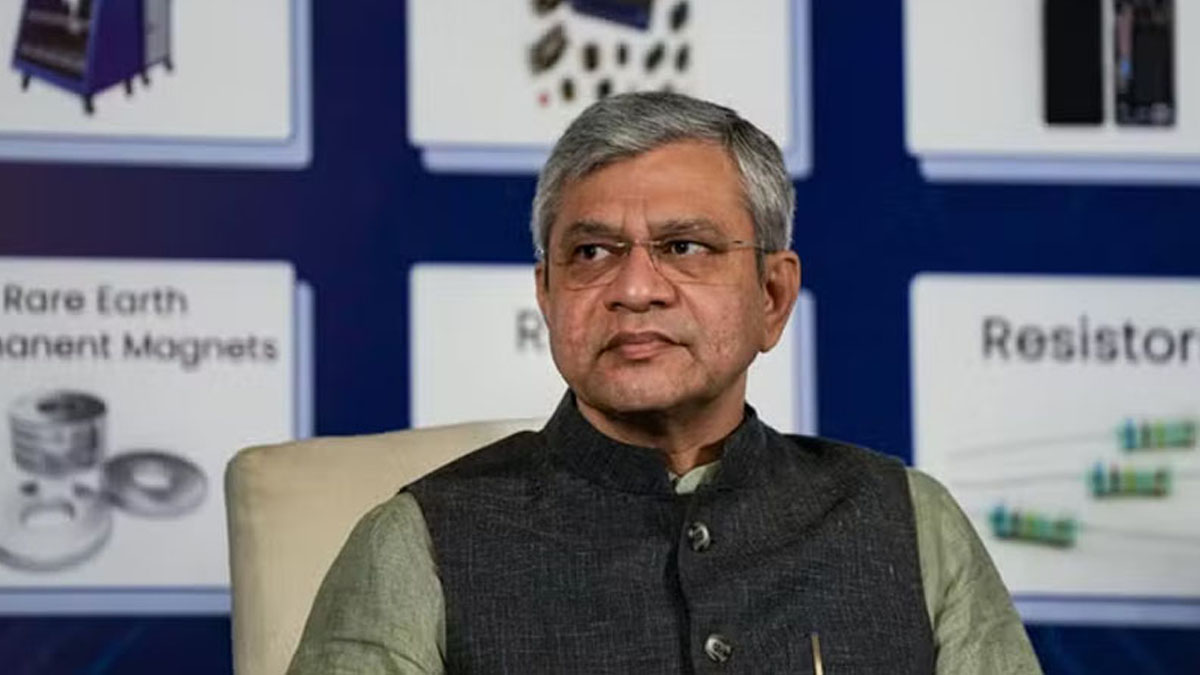
The group will be chaired by union minister Ashwini Vaishnaw, with minister of state Jitin Prasada as vice chairperson. Its composition reflects both technological and economic priorities, bringing together the principal scientific adviser, the chief economic adviser, and the CEO of NITI Aayog, alongside key secretaries from telecommunications, economic affairs and science and technology. A representative from the National Security Council Secretariat is also part of the group, while the MeitY secretary will serve as member convenor.
At its core, AIGEG is designed to do two things: coordinate and anticipate. On the policy front, it will review existing regulatory mechanisms, issue guidance across sectors and ensure companies remain compliant with evolving legal frameworks. Beyond that, it will oversee national initiatives on AI governance, with a focus on enabling responsible innovation rather than merely regulating it.
The economic dimension is equally central. The group has been tasked with assessing how AI-driven automation could reshape jobs identifying which roles are most at risk, where those impacts may be geographically concentrated, and whether technology will augment or replace human labour. Based on these assessments, it will develop mitigation strategies and transition plans, signalling a more proactive stance on workforce disruption.
In parallel, AIGEG will work with industry stakeholders to chart a long-term roadmap for AI adoption, categorising use cases into “deploy”, “pilot” or “defer” buckets depending on readiness factors such as data availability, skill levels and regulatory clarity. The aim is to move from broad ambition to structured execution deciding not just what can be built, but what should be built now.
The group will function as the apex layer in India’s AI governance architecture, supported by a Technology and Policy Expert Committee that will track global developments, emerging risks and regulatory priorities. Together, the two bodies are expected to shape both the pace and direction of AI adoption in the country.
In a landscape where technology often outruns policy, the creation of AIGEG signals an attempt to close that gap ensuring that India’s AI journey is not just rapid, but also coordinated, accountable and economically grounded.

I&B Ministry
Prasar Bharati opens AIR to private content under new policy
NIPP introduces revenue share, sponsored and gratis models
MUMBAI: Radio may be the oldest voice in the room, but it’s learning some very modern tricks. In a bid to stay tuned to changing listener habits, Prasar Bharati has opened the doors of All India Radio to private players under a newly rolled-out content framework. The initiative, titled Notice Inviting Programme Proposals (NIPP), marks a significant shift in how the public broadcaster approaches programming moving from a largely in-house model to a more collaborative, market-aligned ecosystem. Issued by Akashvani’s Directorate General in April 2026, the policy invites private producers, content owners and aggregators to pitch programmes across formats, from radio dramas and documentaries to quiz shows, storytelling and music-led content.
At the heart of the framework lies a three-pronged participation model designed to balance creative freedom with commercial viability. The most prominent route is revenue sharing, where advertising and sponsorship income generated by a programme is split between the producer and the broadcaster. The structure tilts in favour of creators offering a 70:30 split when producers bring in advertising, and 65:35 when monetisation is handled by Prasar Bharati.
Alongside this sits the sponsored model, where producers fully fund and monetise their content, subject to compliance with advertising norms and the AIR Broadcast Code. For those less commercially inclined, a gratis route allows content to be submitted free of cost, with Prasar Bharati retaining all monetisation rights effectively turning the platform into a national distribution channel for diverse voices.
The move comes as legacy media grapples with intensifying competition from private FM networks, streaming platforms and digital audio ecosystems. By repositioning AIR as both a public service broadcaster and a content marketplace, Prasar Bharati appears to be recalibrating its role in a rapidly evolving media landscape.
Importantly, the framework does not dilute editorial control. All submissions must adhere to the AIR Broadcast Code, and proposals are evaluated through a layered process that weighs storytelling quality, production capability, audience appeal and revenue potential. Only proposals crossing a defined threshold move forward, signalling that while access has widened, the bar remains firmly in place.
Operational discipline is another cornerstone of the policy. Producers are required to maintain broadcast-ready content, deliver episode banks in advance and navigate a structured approval process. Crucially, all production costs are borne by the content provider, reinforcing Prasar Bharati’s positioning as a distribution and oversight platform rather than a commissioning entity.
What elevates the initiative further is its scale. The framework spans multiple clusters and stations across India, covering both metro and regional markets, with specific language mandates and submission channels. This not only expands the content pipeline but also deepens linguistic and cultural representation, an area where AIR has historically held an advantage.
In effect, NIPP signals a quiet but meaningful transformation. AIR is no longer just broadcasting to the nation, it is inviting the nation to broadcast with it, blending legacy reach with contemporary content economics in a bid to stay relevant in an increasingly fragmented audio universe.