Brands
The “invisible” infrastructure: what are dark stores and how do they work?
The most valuable real estate in Indian retail is a store you will never walk into

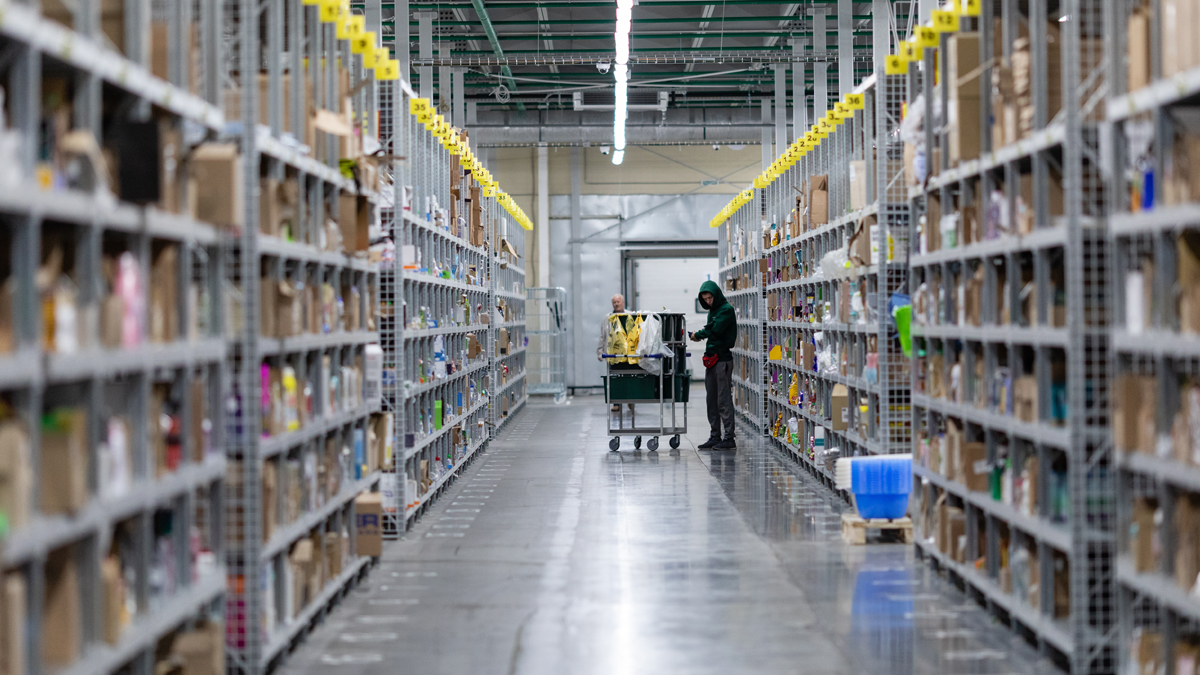
MUMBAI: In the heart of India’s most congested urban hubs—from the narrow lanes of Mumbai to the sprawling sectors of Gurgaon—a quiet revolution is happening behind closed shutters. While traditional retail relies on the allure of window displays and foot traffic, a new breed of “invisible” commerce is taking over. These are “dark stores”, the hyper-local engines driving the country’s multi-billion dollar quick commerce (q-commerce) boom.
As of April 2026, the race for “minutes over miles” has turned the humble dark store into the most valuable real estate in the logistics world.
What exactly is a dark store?
A dark store is a micro-fulfillment center that looks like a supermarket but operates like a high-speed factory. It is not open to the public; there are no walk-in customers, no checkout counters, and no aesthetic “browsing” sections. Every inch of its 2,500 to 5,000 square-foot floor plan is optimized for one metric: pick-to-pack speed.
Inside, “pickers” (and increasingly, automated bots) navigate aisles to fulfill app-based orders in under three minutes. These facilities are placed within a 2-3 km radius of dense residential clusters, ensuring that a delivery partner can reach your doorstep before your favorite song ends.
The 2026 land grab: A new infrastructure race
The scale of dark store expansion in 2026 is unprecedented. Major players like Blinkit, Swiggy Instamart, and Zepto are no longer alone. Heavyweights Flipkart and Amazon have aggressively entered the fray, with Flipkart reportedly adding nearly 100 dark stores every month to reach a target of 1,200 by mid-year.
Blinkit remains the market leader, aiming for a staggering 3,000 stores by early 2027.
Flipkart Minutes is rapidly scaling to 250 cities, signaling that quick commerce is no longer just a “metro phenomenon” but is moving into Tier-II and Tier-III markets.
The Growth Metric: Mature dark stores in prime urban areas are now processing upwards of 1,100 orders per day, with some hitting operational profitability—a milestone that was once doubted by skeptics.
The operational DNA of a dark store
To achieve 10-minute delivery, these hubs rely on a sophisticated tech stack and rigid inventory management:
AI-Driven Stocking: Algorithms predict demand based on local neighborhood habits. A store in Bandra might stock high-end organic almond milk, while one in a college hub stocks bulk instant noodles.
Precision Inwarding: Freshness is non-negotiable. Most platforms now reject products with less than 50% of their shelf life remaining.
Shelf-to-Bike Logic: High-velocity SKUs (like milk or bread) are placed nearest to the packing station to shave seconds off the picking process.
Regulatory speedbumps and future challenges
Despite the efficiency, the “Dark Store Revolution” faces growing pains in 2026:
The 10-Minute Debate: Recent government scrutiny and protests from gig worker unions have challenged the “10-minute” promise, citing rider safety and road hazards. In response, platforms are focusing on increasing dark store density rather than rider speed to keep delivery times low.
Zoning Friction: In cities like Bengaluru and Chennai, new land-use regulations are being debated. Since dark stores operate as warehouses but exist in residential zones, urban planners are struggling to categorize them, leading to potential “zoning bans” in high-traffic neighborhoods.
Category Expansion: The model is moving beyond groceries. “Express” dark stores are now being designed to handle larger items—like water heaters and air purifiers—promising 30-minute delivery for consumer electronics.
The verdict
The rise of the dark store represents an infrastructure inversion. We are moving away from centralized warehouses on city outskirts toward a fragmented, hyperlocal network that lives next door to the consumer. For the retail industry, the message is clear: in the 2026 economy, proximity is the ultimate competitive advantage. The store of the future isn’t a place you visit; it’s a place that comes to you.