Brands
India sells a record 2.97 crore vehicles in FY26, its best year ever
The Federation of Automobile Dealers Associations reports a record 2.97 crore units retailed in FY2025-26, but geopolitical turbulence and rising fuel prices are already clouding the road ahead

MUMBAI: India’s auto retail machine roared into record territory in FY2025-26, selling 2,96,71,064 vehicles — nearly three crore units — a 13.30 per cent surge year-on-year that left five of six vehicle categories standing at all-time highs. The country is knocking on the door of the three-crore milestone, a figure that would have seemed fanciful just 24 months ago. Then came March 2026: a scorching 26,92,449 units, the highest single month ever recorded, up 25.28 per cent on the year. The India growth story, battered by doubters for half a decade, has emphatically answered back.
A landmark year, with an asterisk
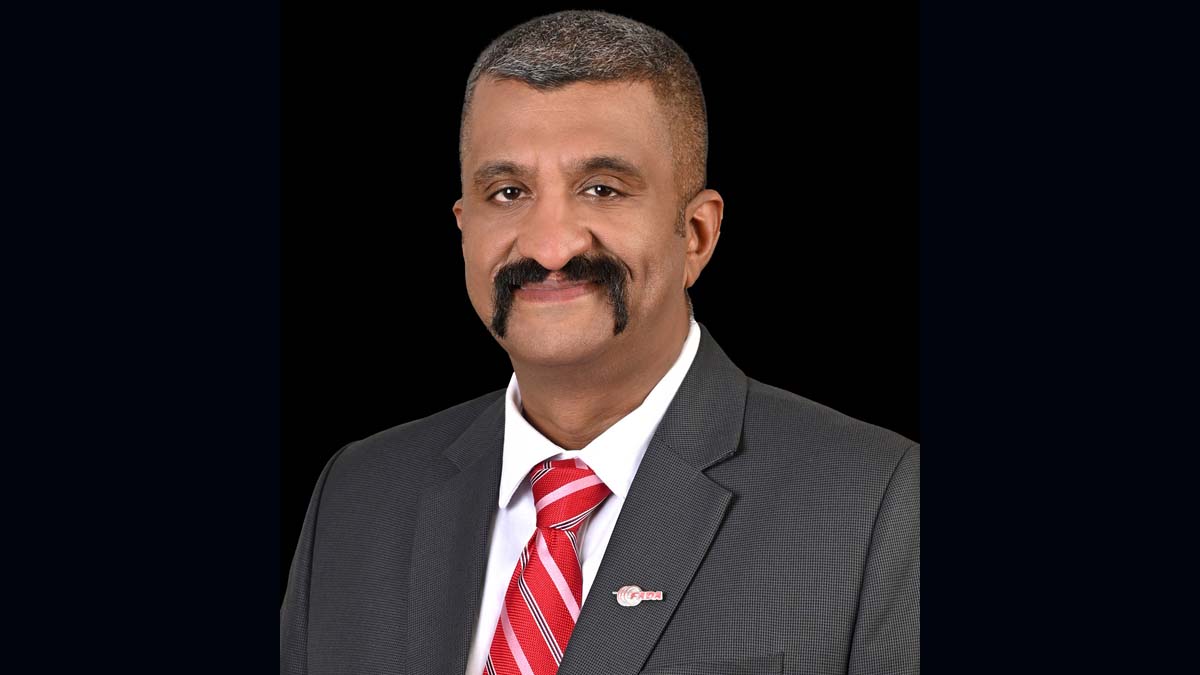
The full-year tale is not a straight line. C S Vigneshwar, president of the Federation of Automobile Dealers Associations (FADA), sets the scene bluntly:
“FY 2025-26 has been a landmark year for Indian auto retail, delivering an all-time high of 2,96,71,064 units with a broad-based 13.30 per cent year-on-year growth that saw five of six vehicle categories set new annual records. This is not just a number — it represents the industry approaching the 3-crore mark, a milestone that would have seemed distant just two years ago. What makes this year particularly significant is that the growth was structurally sound, underpinned by improving affordability, widening mobility demand across urban and rural India, and a diversifying powertrain mix.”
The first five months — April through August — were a slog, with monthly growth crawling between 2 per cent and 5 per cent as dealers battled residual inventory overhang, patchy financing, and a consumer in wait-and-watch mode. Enquiries stayed tentative; conversions stayed uneven.
Then September arrived, and with it a thunderclap: GST 2.0. The rate rationalisation cut the effective tax burden on mass-market two-wheelers, small cars, three-wheelers and select commercial categories. The timing was near perfect. Vigneshwar again:
“The turning point arrived in September with the implementation of GST 2.0. The rate rationalisation improved real affordability at a time when the consumer was already positioned to respond. From September onwards, we witnessed a clear inflection: the festive convergence of Navratri and Diwali in October delivered an all-time record monthly retail of over 40 lakh units, and the momentum carried through the remainder of the year. January, February, and March 2026 each registered strong double-digit year-on-year growth, validating that the upshift was not merely festive but structural.”
Category by category: records tumble
Two-wheelers reclaimed their pre-COVID peak, shifting over 2.14 crore units at 13.40 per cent growth. Passenger vehicles crossed 47 lakh for the first time, rising 13.00 per cent on a rich pipeline of new models and an insatiable appetite for SUVs. Tractors were the year’s breakout act, eclipsing 10 lakh units for the first time in history at 18.95 per cent growth — a direct dividend of an excellent monsoon, robust rabi sowing and improving farm economics. Commercial vehicles cracked the 10-lakh barrier at 11.74 per cent growth, propelled by infrastructure freight demand and a standout medium commercial vehicle sub-segment. Three-wheelers notched their third consecutive annual record at 11.68 per cent growth, with electric vehicles now accounting for over 60 per cent of the segment. Construction equipment was the sole spoilsport, falling 11.70 per cent as project delays and a high base ate into volumes.
In Vigneshwar’s words:
“Two-Wheelers reclaimed their pre-COVID peak, retailing over 2.14 crore units and growing 13.40 per cent — a recovery that had been long awaited and was finally unlocked by the combination of GST-led affordability, improved rural cash flows, and a broadening product portfolio that catered to both entry-level and aspirational segments. Passenger Vehicles crossed the 47-lakh mark for the first time, growing 13.00 per cent. Tractors were the year’s standout performer, crossing 10 lakh retail units for the first time in history at 18.95 per cent growth — a direct reflection of an excellent monsoon, strong rabi sowing, and improving farm economics. Commercial Vehicles recorded best ever figures and above the 10-lakh mark for the first time at 11.74 per cent growth, led by infrastructure-driven freight demand and a particularly strong MCV sub-segment. Three-Wheelers set their third consecutive annual record at 11.68 per cent growth, with the EV transition now accounting for over 60 per cent of the segment’s retail. Construction Equipment was the sole exception, declining 11.70 per cent as project-level delays and a high base weighed on volumes.”
The electric undercurrent
Beneath the headline numbers, the powertrain mix is quietly but relentlessly shifting. Two-wheeler EV share rose to 6.54 per cent (from 6.09 per cent), passenger vehicle EV share climbed to 4.25 per cent (from 2.61 per cent), and commercial vehicle EV share nearly doubled to 1.83 per cent. CNG consolidated its grip on passenger vehicles at 21.98 per cent and on commercial vehicles at 11.79 per cent. Total EV retail for the year hit 24.52 lakh units, up 24.63 per cent. As Vigneshwar puts it:
“The total EV retail for the year stood at 24.52 lakh units, a 24.63 per cent expansion, signalling that the transition is no longer directional but substantive.”
Rural India closes the gap
The urban-rural divide in auto retail continued to narrow. For FY2025-26, rural retail grew 13.05 per cent against 13.62 per cent in urban — near parity that would have been unthinkable a decade ago. In passenger vehicles, rural demand outpaced urban decisively, at 17.12 per cent against 10.43 per cent, driven by better rural incomes, expanding road networks and growing last-mile mobility needs.
Inventory management, a persistent headache through FY2024-25, also staged a sharp recovery. Passenger vehicle stock at dealers fell from over 50 days to approximately 28 days by March 2026 — the healthiest reading in recent memory — as OEMs tightened dispatches and aligned wholesale more closely with ground demand.
“Rural India continued to narrow the gap with urban markets. For FY’26, total rural retail grew 13.05 per cent against 13.62 per cent in urban — a near-parity that reflects the expanding aspirational footprint of auto retail in the hinterland, aided by better rural incomes, improving road connectivity, and increasing last-mile mobility needs. Within PVs, rural demand outpaced urban meaningfully at 17.12 per cent versus 10.43 per cent.”
“Inventory management improved significantly through the year. PV stock, which had been a sustained concern through FY’25 and the early months of FY’26, corrected from over 50 days to approximately 28 days by March — the healthiest reading in recent memory.”
“In sum, FY’26 closes as a year of vindication for the India growth story in auto retail — where the right policy intervention, coupled with an improving macro backdrop and a confident consumer, delivered record volumes and set the stage for the next phase of structural expansion.”
March 2026: the strongest finish on record
If the full year was a marathon, March was a sprint finish. The 26,92,449 units retailed was the highest March in FADA’s records, and the quality of the close mattered as much as the quantity. Vigneshwar is precise about it:
“March 2026 was an emphatic close to a landmark financial year. The industry retailed 26,92,449 vehicles — the highest-ever March in FADA’s records — posting a 25.28 per cent year-on-year growth that was both broad-based and meaningful across categories. More than the headline number, what stands out is the quality of this close: it was driven by genuine retail pull rather than channel push, backed by enquiry conversion, healthy walk-in trends, and sustained consumer engagement right through the month.”
Two-wheelers led the charge at 19,51,006 units, up 28.68 per cent year-on-year — the second-highest March on record. Urban two-wheeler growth hit 28.84 per cent; rural matched it at 28.57 per cent. EV share in two-wheelers surged to 9.79 per cent, the highest monthly reading yet. Vigneshwar flagged this as significant:
“The EV share in 2W surged to 9.79 per cent, the highest monthly reading yet, suggesting that the electric transition in this segment is approaching a critical mass, particularly in urban and semi-urban markets where total cost of ownership is becoming the decisive factor.”
Passenger vehicles posted a record March at 4,40,144 units, up 21.48 per cent, with rural PV growth of 26.48 per cent once again outrunning urban at 18.46 per cent. CNG share in passenger vehicles rose to 23.76 per cent and EV share improved to 5.11 per cent. Commercial vehicles closed at 1,02,536 units, up 15.12 per cent, with the medium commercial vehicle sub-segment shining brightest at 25.50 per cent growth. CV EV share hit 2.40 per cent in March, more than double the year-ago level.
“The urban-rural dynamic in March was noteworthy — total rural retail grew 26.49 per cent compared to 23.82 per cent in urban, making March one of the rare months where rural growth decisively exceeded urban growth across most major categories. This is a validation of the widening geographic spread of auto retail demand in India and the role that improved rural incomes, better connectivity, and expanding personal mobility are playing in shaping the market.”
“Overall, March 2026 closed the financial year on a note of strength and quality — not an isolated surge but a fitting culmination of the demand trajectory that has been building since September 2025.”
April and beyond: cautiously constructive
The near-term view is less euphoric. FADA’s dealer survey for April finds 50.56 per cent of dealers expecting growth and 40.15 per cent expecting flat performance — a natural hangover from a record-setting year-end. The seasonality of a new financial year — reset OEM schemes, fresh inventory, recalibrated consumer urgency — tempers expectations further. The marriage season and Akshaya Tritiya offer localised demand boosts.
The bigger cloud is the West Asia conflict. FADA’s survey reveals that 53.2 per cent of dealers have experienced some form of supply or dispatch disruption, with 17.1 per cent reporting significant delays of three or more weeks. The commercial vehicle segment has been most affected, though passenger vehicle and two-wheeler dealers have also flagged selective variant-level shortages. On fuel prices, 36.5 per cent of dealers report that rising or anticipated prices are moderately to significantly affecting customer purchase decisions.
Vigneshwar puts the near-term assessment plainly:
“The broader operating environment is clouded by the West Asia situation. Our survey reveals that 53.2 per cent of dealers have experienced some form of supply or dispatch disruption linked to the ongoing conflict, with 17.1 per cent reporting significant delays of three or more weeks. While the impact has been most pronounced in the CV segment, PV and 2W dealers have also flagged selective variant-level delays. We are watching this closely.”
“On the fuel-price front, 36.5 per cent of dealers report that rising or expected fuel prices are moderately to significantly affecting customer purchase decisions. This is a real friction point that bears monitoring — not because it will derail demand, but because it can elongate decision cycles and shift customer preference further toward CNG and EV options.”
On the positive side of the ledger, credit conditions hold firm, with 72.5 per cent of dealers reporting no change in financing terms over the past 30 days, and 51.30 per cent reporting good liquidity at the dealer level.
“April should deliver steady performance — potentially softer than March on account of base and seasonality, but supported by residual momentum, a reasonably healthy pipeline, and stable financial conditions. The key variable will be the trajectory of the West Asia situation and its pass-through to fuel prices, supply availability, and overall consumer confidence.”
Q1 FY2026-27: moderate growth, maximum vigilance
For the April-June 2026 quarter, 49.81 per cent of dealers expect growth, 40.52 per cent expect flat performance, and 9.67 per cent anticipate de-growth. Zoom out to FY2026-27 as a whole and confidence sharpens considerably: 74.72 per cent of dealers expect growth, with the consensus clustering in the 3-7 per cent band — a clear signal that dealers view the current turbulence as transitional, not structural.
Three risks dominate the three-month horizon. First, and most cited at 40.5 per cent: an overall economic slowdown and a decline in consumer sentiment, the cascading effect of geopolitical uncertainty. Second, at 30.5 per cent: OEM supply disruption and model unavailability, a direct consequence of the West Asia conflict’s ripple through global logistics and component supply. Third, at 14.9 per cent: rising fuel prices dampening demand, particularly in the commercial vehicle and two-wheeler segments.
FADA’s survey also finds that 56.9 per cent of dealers report accelerating customer interest in EV and CNG vehicles — a structural signal that elevated fuel prices appear to be catalysing, rather than dampening, the powertrain shift.
“When asked about FY’27 as a whole, confidence improves meaningfully — 74.72 per cent of dealers expect growth, with the consensus clustering in the 3-7 per cent band. This suggests that the dealer community views the current uncertainty as transitional rather than structural, and that the medium-term India demand story remains well-anchored.”
“The accelerating interest in EV and CNG vehicles — reported by 56.9 per cent of dealers — is an important structural signal within this environment. Elevated fuel price concerns appear to be catalysing, rather than dampening, the powertrain shift, with customers increasingly factoring total cost of ownership into purchase decisions.”
“We expect Q1 FY’27 to be a period of moderate but healthy growth, with the sector normalising after the sharp re-rating of H2 FY’26. The structural demand drivers — urbanisation, rising incomes, rural mobility expansion, and electrification — remain firmly in place. The near-term risk lies in the speed and severity with which the West Asia situation evolves and transmits to fuel prices, supply chains, and broader consumer sentiment. Responsible pricing, disciplined inventory, timely supply, and sharper finance turnaround times will be the operational levers that differentiate performance in the months ahead.”
“FADA hence remains constructively cautious — structurally optimistic but operationally watchful for the next three months.”
Dealer sentiment: the numbers behind the narrative
FADA’s online member survey for April 2026 puts dealer liquidity at good for 51.30 per cent, neutral for 40.15 per cent and bad for just 8.55 per cent. Sentiment reads neutral for 54.65 per cent, good for 36.06 per cent and bad for 9.29 per cent. For April alone, growth is expected by 50.56 per cent, flat by 40.15 per cent and de-growth by 9.29 per cent. For the April-June quarter: growth 49.81 per cent, flat 40.52 per cent, de-growth 9.67 per cent. For all of FY2026-27: growth 74.72 per cent, flat 21.93 per cent, de-growth 3.35 per cent.
Three crore beckons. India’s auto retail engine has proved it can fire on all cylinders when policy, demand and supply align. Whether FY2026-27 delivers a steady cruise or a bumpy ride may hinge less on the dealership forecourt and more on the trajectory of a conflict several thousand kilometres away — and the price of the fuel that every buyer must eventually put in the tank. FADA’s watchword captures it neatly: structurally optimistic, operationally watchful. The India auto story is far from over. It may just be shifting gears.
NOTE: Data excludes Telangana state. Retail data collated as on 2 April 2026 from 1,463 of 1,466 RTOs in collaboration with the Ministry of Road Transport and Highways, Government of India. Source: FADA Research.