Connect with us

Legal and Policies

India’s new income tax law and higher F&O levies take effect from 1st April

A sweeping overhaul of the tax code, stiffer securities transaction taxes and relief for travellers and tech firms all land at once


Published

on

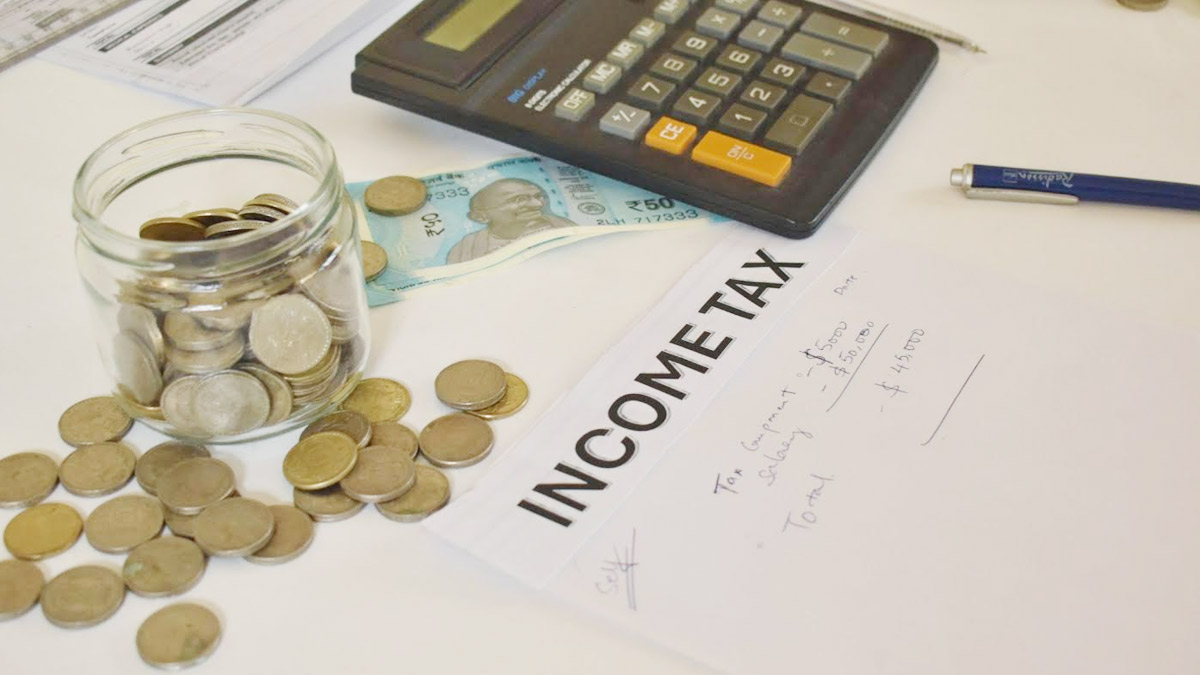
NEW DELHI: India’s tax landscape shifts gears on Tuesday. The Income-tax Act, 2025, which replaces the Income-tax Act, 1961, comes into force from April 1, 2026, alongside a clutch of budgetary measures that will be felt by traders, tourists, technology firms and ordinary taxpayers alike.

The new Act is not a reinvention of tax policy so much as a tidying up of it. Gone is the unwieldy distinction between the assessment year and the previous year; in its place comes a single “tax year” framework designed to be more logical and reader-friendly. Taxpayers will also, for the first time, be able to claim tax deducted at source refunds even when income tax returns are filed after the deadline, without incurring penal charges.

For those who trade derivatives, however, the news is less comfortable. Securities transaction tax on futures contracts rises to 0.05 per cent from 0.02 per cent, while STT on options premiums and the exercise of options is hiked to 0.15 per cent from 0.1 per cent and 0.125 per cent respectively. The government has made no secret of its intent: the higher levy is aimed squarely at curbing speculative bets in the futures and options segment and shielding retail investors from ruinous losses. The numbers tell a grim story. The number of individual investors active in the F&O segment fell from 1.06 crore in FY25 to about 75.43 lakh by December 2025. A Sebi study found that individual investors had racked up net losses of more than Rs 1.05 lakh crore in FY25 alone.

Advertisement

Overseas travellers and those remitting money abroad for medical and education purposes get some relief. Tax collected at source on overseas tour packages has been slashed to 2 per cent from 20 per cent, while TCS on Liberalised Remittance Scheme transfers for medical and educational purposes drops to 2 per cent from 5 per cent.

The data centre industry, too, has reason to cheer. Any foreign company procuring data centre services in India will enjoy a 20-year tax holiday stretching to 2047, shielding its global income from Indian tax authorities. Whether a global firm sets up its own facility or simply buys services from an Indian data centre, the tax treatment will be identical, ensuring a level playing field. India’s effective corporate tax rate stands at 25.17 per cent.

Software companies get a further fillip: the safe harbour threshold for IT services has been raised sharply from Rs 300 crore to Rs 2,000 crore, a move designed to reduce litigation and give the sector greater certainty.

Advertisement

On the transition, the income tax department has confirmed that its e-filing portal will handle compliance under both the old and new Acts during the switchover period. Taxpayers filing returns for assessment year 2026-27, which covers the period governed by the old Act, will do so in July 2026 using the old forms. Advance tax payments for tax year 2026-27, commencing from June 2026, will follow the new Act.

One sweeping law, several sharp edges, and a deadline that waits for no one.

Advertisement
Click to comment

Leave a Reply

Your email address will not be published. Required fields are marked *

Legal and Policies

‘The India deal is on…’: India tariffs cut to 10% from 18% after Trump’s SC defeat

In response, Trump rolls out blanket 10 per cent tariff, “effective almost immediately”

Published

on

WASHINGTON: The White House said on Friday that US trading partners, including India, will face a flat 10 per cent tariff after the Supreme Court struck down President Donald Trump’s use of emergency powers to impose sweeping import duties. Countries that reached tariff agreements with Washington, both before and after Trump’s original orders, will now be subject to the same 10 per cent levy, even if higher rates had previously been agreed.

The ruling invalidated Trump’s reliance on a 1977 law to levy sudden, country-specific tariffs, dealing a sharp blow to one of his signature economic policies. Within hours, the administration responded by certifying a new, across-the-board 10 per cent duty on imports into the United States.

In response, Trump announced an additional blanket 10 per cent tariff on all imports into the United States, signing a new order and saying on social media that it was “effective almost immediately”, after a year in which his administration had imposed varying duties to reward allies and punish rivals.

Advertisement

According to a White House factsheet, the new levy will take effect on 24 February and remain in force for 150 days. Exemptions will continue for sectors under separate investigations, including pharmaceuticals, and for goods entering the US under the US-Mexico-Canada Agreement.

A White House official told AFP that the administration would seek ways to “implement more appropriate or pre-negotiated tariff rates” at a later stage, signalling that country-specific arrangements could return through alternative legal routes.

The move directly affects India, which earlier this month announced a framework for an interim trade agreement with the United States. That arrangement followed Trump’s decision to lift 25 per cent punitive tariffs linked to India’s purchases of Russian oil and cut reciprocal duties from 25 per cent to 18 per cent. Under the new regime, Indian exports to the US will instead face the flat 10 per cent rate.

Advertisement

Trump insisted the Supreme Court verdict would not disrupt the India-US trade deal. “Nothing changes,” he said, adding that India would continue to pay tariffs while the United States would not.

“They’ll be paying tariffs, and we will not be paying tariffs. So the deal with India is they pay tariffs… It’s a fair deal now,” Trump said, describing the shift as a “flip” from past arrangements. “The India deal is on… all the deals are on—we’re just going to do it in a different way.”

Earlier on Friday, the Supreme Court ruled six to three that the International Emergency Economic Powers Act does not authorise a president to impose tariffs. Chief justice John Roberts said the law contained “no reference to tariffs or duties” and did not grant such “extraordinary power”.

Advertisement

Trump reacted angrily, accusing the court, without evidence, of foreign influence and claiming the ruling left him “more powerful”. Treasury secretary Scott Bessent later said the administration’s alternative approach would leave tariff revenues “virtually unchanged” in 2026.

The decision does not affect sector-specific duties on steel, aluminium and other goods, nor ongoing investigations that could lead to further levies. Still, it marks Trump’s most significant Supreme Court defeat since returning to the White House.

Markets reacted calmly, with Wall Street shares edging higher. Business groups welcomed the ruling, while uncertainty remains over whether companies will receive refunds for tariffs already paid. Analysts estimate potential refunds could reach $175 billion, though legal clarity is lacking.

Advertisement
Continue Reading

Advertisement News18
Advertisement All three Media
Advertisement Whtasapp
Advertisement Year Enders

Indian Television Dot Com Pvt Ltd

Signup for news and special offers!

Copyright © 2026 Indian Television Dot Com PVT LTD

This will close in 10 seconds