Brands
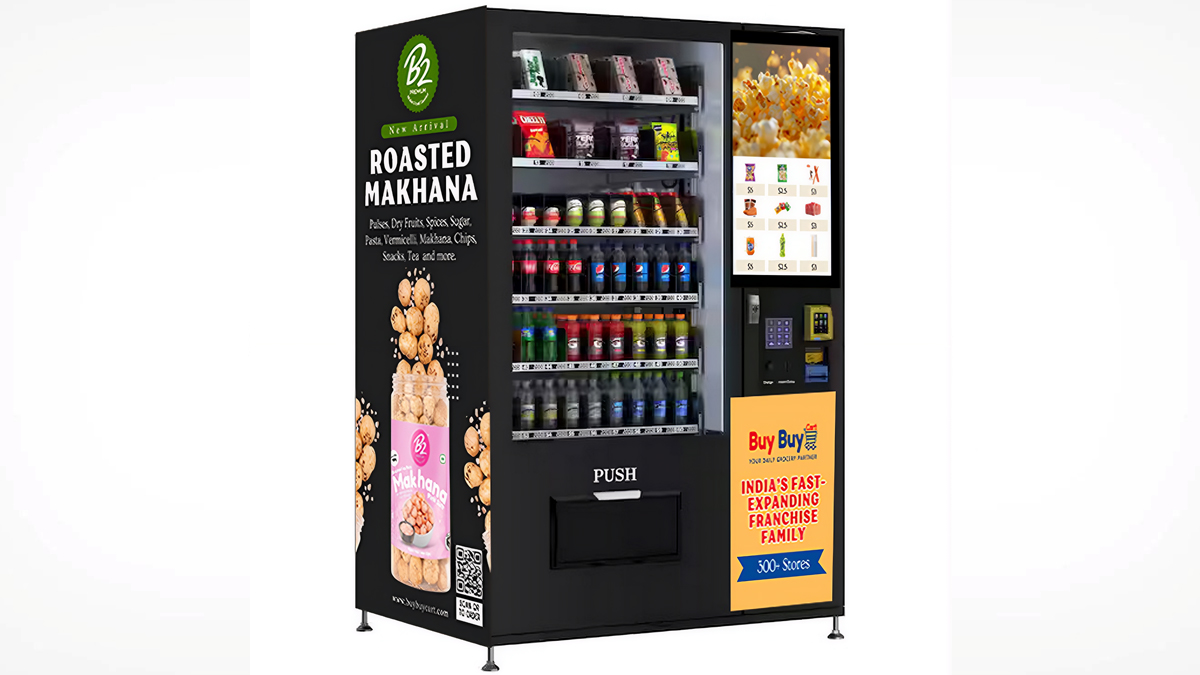
BuyBuyCart launches smart vending machines in retail push
Firm plans up to 400 automated units across high footfall locations
NEW DELHI: BuyBuyCart is betting on convenience at the tap of a screen with the launch of its smart vending machines, marking its entry into India’s fast-evolving automated retail space.
Designed for speed and simplicity, the machines aim to bring everyday essentials closer to consumers who are increasingly short on time but high on expectations. From packaged snacks and beverages to ready-to-eat meals, personal care items and even healthier options like makhanas and dry fruits, the offering is built around daily needs with a dash of impulse buying.
Each unit comes equipped with an interactive touchscreen and supports multiple payment modes, including upi, qr code scanning, debit and credit cards, and digital wallets, making the entire purchase journey quick and contactless.
Founder Ashish Pandey said the move reflects a broader shift in consumer behaviour. “Convenience, speed and accessibility are now central to retail. Our vending machines are designed to deliver essentials round the clock while strengthening a technology-led retail ecosystem,” he noted.
The company plans to roll out between 300 and 400 machines in the first phase, targeting high footfall locations such as offices, IT parks, colleges, hospitals, fuel stations and residential complexes. It is also exploring partnerships with educational institutions to deepen its reach.
Beyond convenience, the machines double up as miniature storefronts for brands, offering a new channel for product visibility and promotions.
To scale operations, BuyBuyCart will adopt both FOCO and COCO models, allowing entrepreneurs to plug into the network while the company retains operational control in select locations.
As urban lifestyles grow busier, retail is quietly stepping out of stores and into corridors, campuses and corners, one vending machine at a time.

Brands
Maharashtra panel orders Lodha to refund Rs 5 crore to homebuyers
Consumer court flags unfair practices in long-running property dispute case
MUMBAI: In a sharp rebuke to one of India’s biggest real estate players, the Maharashtra State Consumer Disputes Redressal Commission has directed Macrotech Developers to refund nearly Rs 5 crore to a senior citizen couple, Uttam and Anindita Chatterjee. The ruling, delivered on March 13, 2026, calls out the developer for “deficiency in service” and “unfair trade practices”, bringing closure to a dispute that has stretched over a decade.
The case traces back to 2015, when the couple booked a 3-BHK flat at World Towers in Lower Parel for Rs 12.22 crore, with possession promised within a year. What followed was a series of changes that complicated matters. After deciding to exit the project, they were persuaded to shift to a 4-BHK in another development priced at Rs 8 crore, with delivery scheduled for 2018. However, within months, the price was allegedly increased to Rs 10 crore. After demonetisation reshaped the market, similar flats were reportedly being offered at lower prices, but the couple were not given the benefit.
Despite paying over Rs 2.83 crore, the couple neither received possession nor clarity. Instead, in 2018, the developer unilaterally cancelled the booking, retained part of the amount as earnest money, and argued that the buyers were investors rather than consumers. The commission rejected this claim, observing that casual references to “investment” do not take away consumer rights when the purchase intent is residential.
The bench also held that the developer could not penalise buyers for payment delays while failing to meet its own delivery commitments. It noted the lack of formal documentation for revised terms and termed the prolonged retention of funds without delivering a home as exploitative.
As part of its order, the commission directed the developer to refund Rs 2.83 crore paid by the couple, along with interest at 10 per cent per annum, amounting to around Rs 2.12 crore. In addition, Rs 1 lakh has been awarded for mental agony and Rs 50,000 towards litigation costs, taking the total payout to over Rs 5 crore. The developer has been asked to comply within two months.
For now, the ruling serves as a reminder that in real estate, shifting terms and delayed promises can carry a significant cost.