MAM
L’Atelier 1664 returns to Lakmé Fashion Week with Abraham & Thakore
Design platform showcases ‘The Sari’torial’ blending tailoring and drapes.

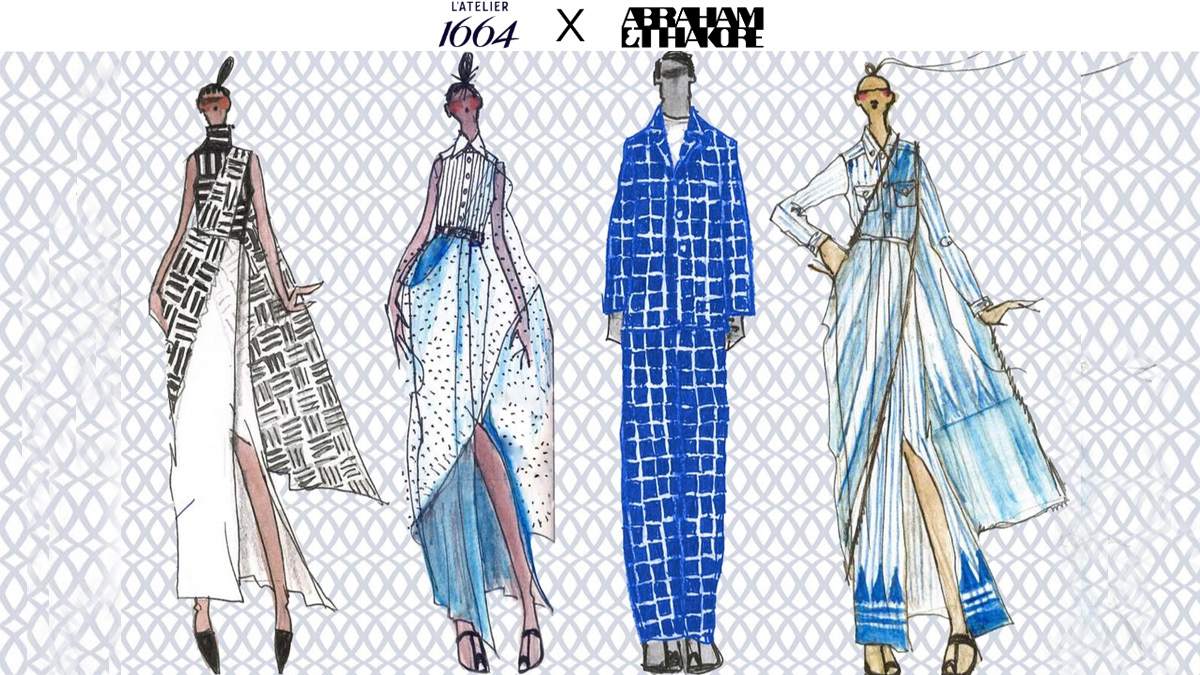
MUMBAI: When couture meets craft, even a sari can learn a few new tricks. L’Atelier 1664 is returning to Lakmé Fashion Week 2026 in Mumbai, continuing its design led partnership with one of India’s most influential fashion platforms. The cultural platform will once again spotlight the intersection of fashion, craftsmanship and contemporary lifestyle, this time through a special runway collaboration with design house Abraham & Thakore.
Titled “The Sari’torial,” the curated showcase reimagines the sari through a conversation between structured tailoring and fluid draping. Drawing inspiration from the relaxed elegance of French style and the rich heritage of Indian textiles, the collection explores everyday silhouettes refined with signature fabrics, subtle detailing and a restrained colour palette highlighted by L’Atelier 1664’s distinctive house blue.
The collaboration marks a continuation of L’Atelier 1664’s presence at Lakmé Fashion Week after its debut association last year, reinforcing the platform’s growing engagement with India’s creative and fashion ecosystem.

Beyond the runway, the brand will also host its signature lounge at the fashion week venue, creating an immersive experiential space designed to bring together design, culture and contemporary lifestyle in one setting.
Carlsberg India vice president for marketing Partha Sarathi Jha said the association reflects the brand’s interest in supporting creative expression. “Lakmé Fashion Week is one of the most important platforms for fashion and creative expression in India. Through L’Atelier 1664, we aim to celebrate this intersection of culture, design and contemporary lifestyle. We are excited to continue our association with Lakmé Fashion Week and collaborate with Abraham & Thakore to bring this vision to life on the runway,” he said.
Designers David Abraham and Rakesh Thakore added that the collection explores a cross cultural design dialogue. “With Sari’torial, we wanted to explore a conversation between French ease and Indian craftsmanship. Our collaboration with L’Atelier 1664 blends a relaxed French sensibility with the richness of Indian textiles, reinterpreting traditional crafts through a modern lens,” they said.
L’Atelier 1664 is part of the portfolio of Carlsberg Group, the Denmark headquartered beverages company whose Indian arm has operated in the country since 2007. Today, Carlsberg India runs 14 breweries across the country, including eight company owned facilities and six contract manufacturers, supporting a portfolio that includes brands such as Carlsberg Smooth, Carlsberg Elephant, Tuborg Green, Tuborg Strong, Tuborg Ice Draft, Tuborg Classic and 1664 Blanc.
Through its continued presence at Lakmé Fashion Week, L’Atelier 1664 is positioning itself not just as a sponsor but as a cultural platform connecting fashion, design and lifestyle conversations in India’s evolving creative landscape.


MAM
VML India lands two finalist spots at Cairns Hatchlings 2026
The Mumbai agency is back in Australia with two teams, a UN brief and 24 hours to impress

MUMBAI: VML India is heading to Australia again. The Mumbai-based creative agency has secured two finalist spots at the Cairns Hatchlings 2026 competition, one in the Audio category and one in Design, making it the only Indian agency to have reached the finals in both editions of the contest since its launch in 2025.
Four people will make the trip. Senior copywriter Shilpi Dey and senior art director Raj Thakkar will compete in Audio. Art directors Shabbir and Shruti Negi will go head-to-head with the world’s best in Design. The finals take place at the Cairns Convention Centre from 13th May, culminating in an awards ceremony on 15th May.
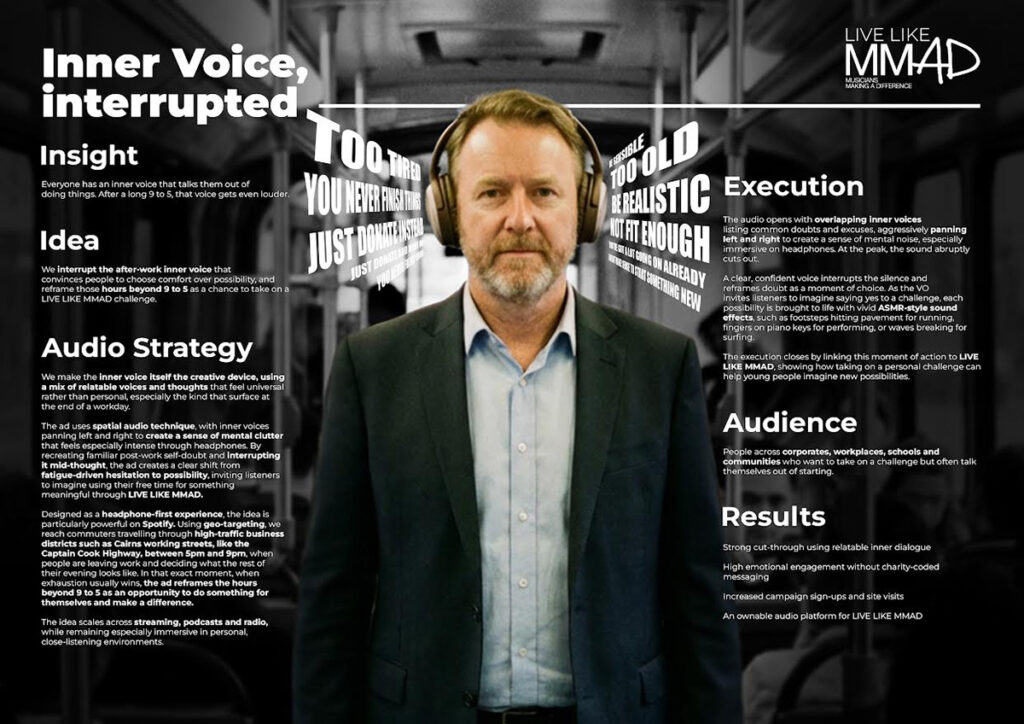
The work that got them there is worth examining. For the Audio category, Dey and Thakkar tackled a brief for LIVE LIKE MMAD with a campaign called Inner Voice, Interrupted. Using spatial audio techniques, the campaign recreates the overwhelming self-doubt that descends after a long workday, physically panning negative thoughts left and right before cutting the noise entirely to reveal a confident inner voice. Strategically targeted at commuters via Spotify during evening rush hours, the campaign reframes the hours after work as an opportunity for personal growth and charitable action.
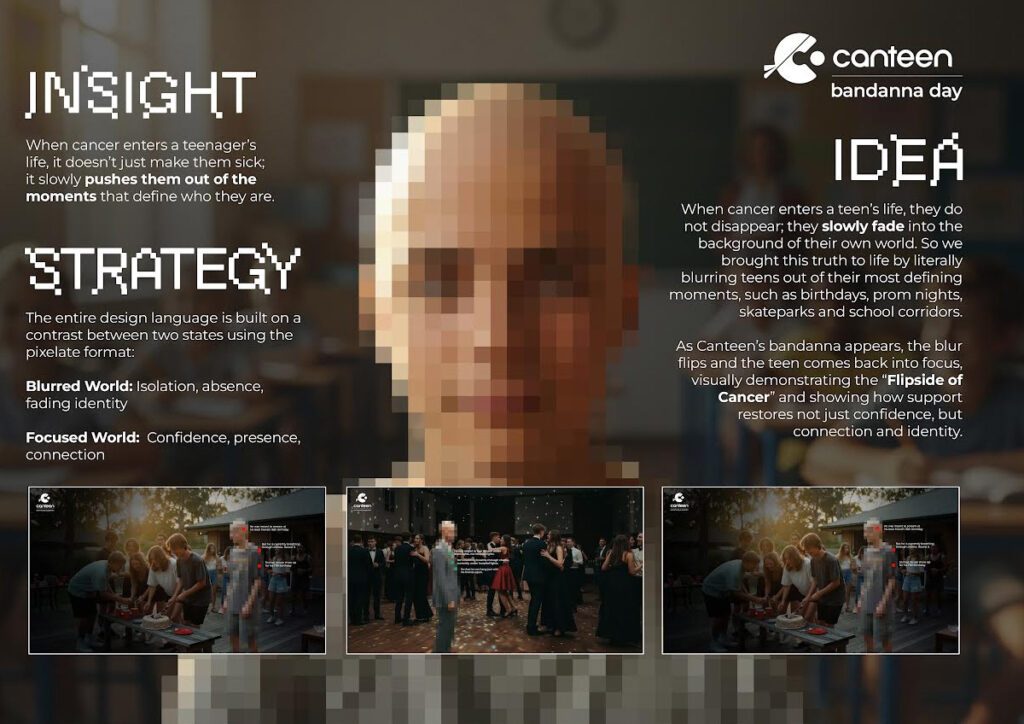
For the Design category, Shabbir and Negi worked on a brief for Canteen’s Bandanna Day, a campaign highlighting how cancer pushes teenagers out of their own defining moments. Using a pixelated design language to create stark contrast between a blurred world of isolation and a focused world of connection, the campaign, titled The Flipside of Cancer, shows teenagers fading into the background of birthdays, skateparks and school proms. As a Canteen bandanna appears, the blur flips and the teenager snaps back into sharp focus.
Kalpesh Patankar, group chief creative officer of VML India, made no attempt to disguise his satisfaction. “We are immensely proud to see our teams consistently excel on the Cairns Hatchlings platform since its inception,” he said. “They have masterfully tackled challenging briefs across diverse categories, demonstrating both layered storytelling and a unique creative approach. This exceptional teamwork is truly inspiring.”
Dey and Thakkar, returning to the finals after last year’s run, were candid about the demands of the audio medium. “It’s one of the most demanding mediums, where we only have a few seconds to capture a listener’s world with sound alone, so absolute clarity is essential,” they said. “The true measure of creative work is its ability to create positive change, and our audio submission was made to help those who need it most while encouraging people to silence the inner voices that hold them back.”
Shabbir and Negi, competing in Design for the first time, described the experience as “a completely different beast.” “We see it as an opportunity to showcase our expertise, raise the bar, and challenge ourselves in new ways, while also learning from creative minds from across the globe,” they said.
In Australia, the four finalists will face a live 24-hour brief from the United Nations before presenting in a live pitch session. Twenty-four hours, one brief, one shot. VML India has been here before. It knows exactly what is at stake.