VBS 2026
AI and analytics will define cable’s next act, says NXTDigital CEO Vynsley Fernandes
Fernandes outlines satellite internet, IPTV and AI roadmap at VBS 2026

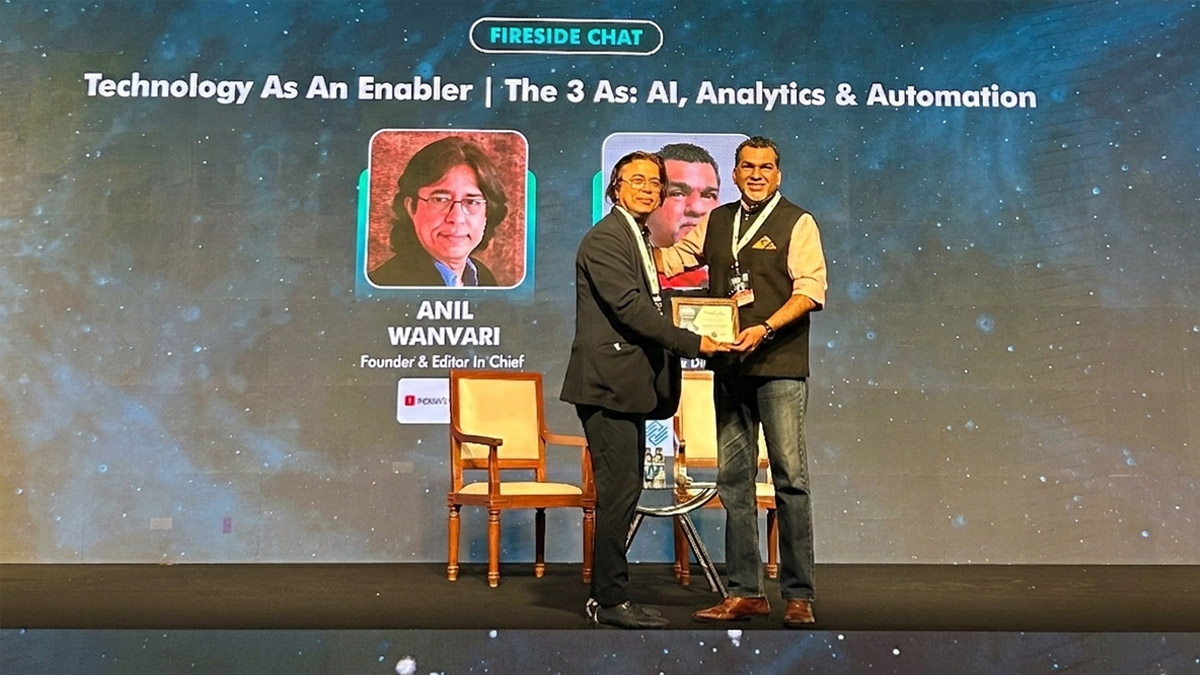
MUMBAI: India’s cable and broadband industry is morphing, not fading, under the pressure of AI, satellite internet and hyperlocal demand. That was the central thesis from Hinduja Global Solutions whole-time director and NXTDigital Media Group CEO Vynsley Fernandes during a fireside chat at VBS 2026.
In conversation with Indian Television Dot Com founder and editor in chief Anil Wanvari, Fernandes argued that the future of media distribution will be shaped less by buzzwords and more by execution around what he calls the “three As”: artificial intelligence, analytics and automation.
Fernandes traced the group’s journey back 30 years, positioning the Hinduja Group as an early mover in cable innovation. It pioneered in-cable services, cable magazines and niche channels before launching its headend-in-the-sky (HITS) platform, NXTDigital Media Group, in 2015.
That platform now spans roughly 4,500 pin codes, reaching geographies as remote as Arunachal Pradesh and the Andaman and Nicobar Islands.
Now, Fernandes says, the focus has shifted to the next layer: satellite internet, IPTV integration, OTT bundling and CCTV services, all underpinned by AI-driven analytics. “These are not buzzwords,” he insisted. “They are enablers.” Analytics interprets consumer behaviour; artificial intelligence anticipates demand; automation delivers solutions at scale.
He offered a practical example. During exam season, broadband consumption spikes. By analysing usage patterns, the company pushes targeted upgrade offers, such as boosting speeds from 10 Mbps to 100 Mbps for a marginal Rs 5, improving customer experience while nudging revenue upwards. With over a million customers, even incremental gains, he noted, meaningfully lift the bottom line.
Satellite internet, he said, will complement terrestrial broadband, particularly in remote regions such as Tawang and Pulwama, or desert districts of Rajasthan. Rather than viewing it as a threat, NTDigital sees it as an extension of reach: folding satellite capability into its broader digital services stack.
The company is pushing a quad-play bundle: television, VoIP, Wi-Fi and broadband. Although under strain, linear television will migrate into IPTV ecosystems. “The future is integration, not isolation,” Fernandes opined.
National strategies are blunt instruments, he argued. Regional segmentation is insufficient. The next growth layer is hyperlocal: neighbourhood by neighbourhood.
He cited Goregaon East versus Goregaon West as an example of consumption variance within a single suburb. In Maharashtra, temple towns see periodic traffic spikes. Local Wi-Fi integration and queue-management systems create monetisation opportunities tied to pilgrimage seasons.
India has roughly 48 million wired broadband homes versus nearly 200 million wireless households. Even accounting for income disparities, wired broadband penetration remains underdeveloped.
One Broadband, the group’s flagship brand, expanded into 60 additional tier 3 towns over the past two quarters, targeting upgrades from entry-level 10 Mbps plans to higher tiers.
As India oscillates between “India” and “Bharat”, Fernandes struck a pragmatic note. Automation will deepen; digital payments will rise. Yet physical operators will continue to matter, particularly beyond metros, where service and familiarity remain currency.
The message was clear: in an industry obsessed with disruption, survival will belong to those who marry hyperlocal sensitivity with national execution and let technology quietly do the heavy lifting.