iWorld
Telcos power past Rs 1 lakh crore in December quarter
Sector revenues surge year on year, with Reliance Jio in the lead and government levies swelling alongside
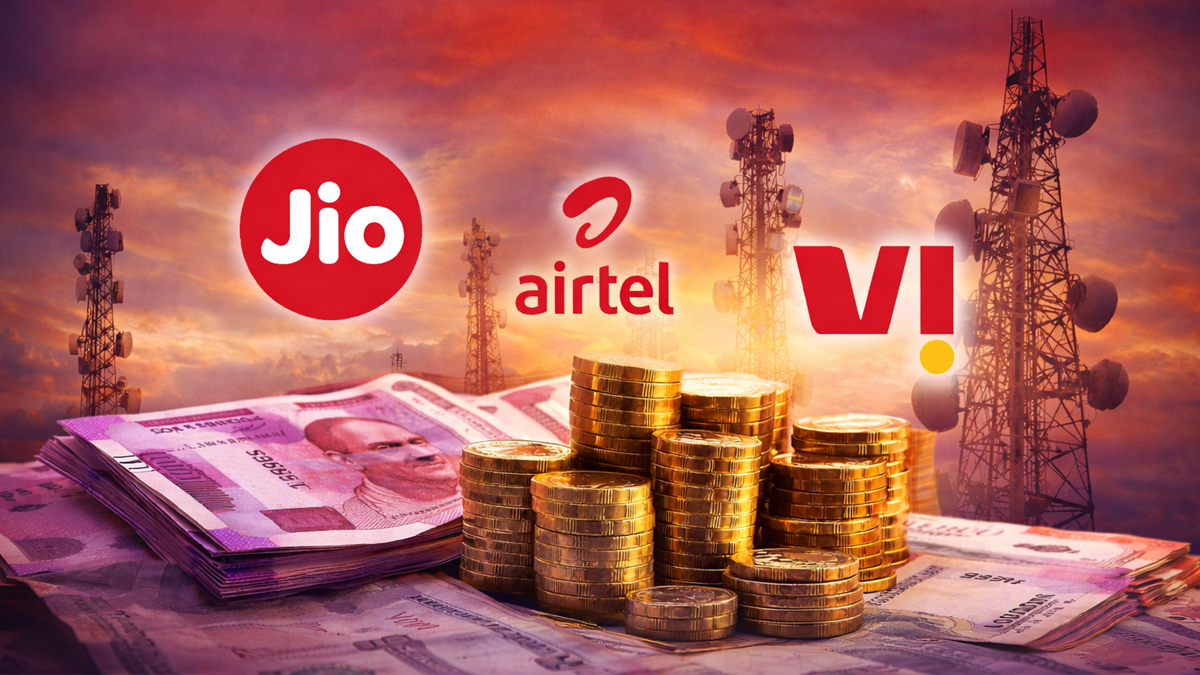
NEW DELHI: India’s telecom giants have punched through a psychological barrier. In the December 2025 quarter, their combined gross revenue vaulted past Rs 1 lakh crore, underlining the sector’s pricing muscle and data-driven momentum.
According to the Telecom Regulatory Authority of India (TRAI), cumulative gross revenue of telecom service providers rose to Rs 1.02 lakh crore in the quarter, up from Rs 99,828 crore in September and Rs 96,390 crore a year earlier. The climb is steady. The signal is clear.
Adjusted gross revenue (AGR) — the metric that matters most because it fattens both company coffers and government levies — grew 8.13 per cent year on year to Rs 84,270 crore, up from Rs 77,934 crore in the same quarter last year. AGR includes revenue from telecom services as well as licence fees and spectrum usage charges paid to the exchequer. When telcos earn more, so does the state.
Access service providers such as Reliance Jio, Bharti Airtel and Vodafone Idea accounted for 84.54 per cent of total AGR in the December quarter, reaffirming the dominance of the mobile heavyweights in an increasingly consolidated market.
Data published earlier by TRAI for the September 2025 quarter showed Reliance Jio topping the revenue charts with Rs 31,767.11 crore, ahead of its rivals. The December numbers suggest the pecking order is unlikely to have shifted dramatically.
For a sector once mired in bruising price wars and AGR litigation, the rebound is striking. Tariff repairs, premium data plans and relentless subscriber upgrades are doing the heavy lifting. Revenues are rising, government collections are firming and balance-sheets are breathing easier.
India’s telecom story, long defined by survival, is now tilting towards scale and cash. The quarter’s message: the industry is no longer merely connected — it is charging ahead.

iWorld
Micro-Dramas Surge in India, Redefining Mobile Content Habits
Meta-Ormax study maps rapid rise of short-form storytelling among 18–44 audiences.
MUMBAI: Micro-dramas aren’t just short, they’re the snack that ate Indian entertainment, and now everyone’s bingeing between the sofa cushions. Meta, in partnership with Ormax Media, has released ‘Micro Dramas: The India Story’, a comprehensive study unveiled at the inaugural Meta Marketing Summit: Micro-Drama Edition. The report maps how the vertical, bite-sized format is reshaping content consumption for mobile-first audiences aged 18–44 across 14 states.
Conducted between November 2025 and January 2026 through 50 in-depth interviews and 2,000 personal surveys, the research reveals that 65 per cent of viewers discovered micro-dramas within the last year proof of explosive adoption. Nearly 89 per cent encounter the format through social feeds and recommendations, making algorithm-driven discovery the primary engine rather than active search.
Key viewing patterns show a median of 3.5 hours per week (about 30 minutes daily) spread across 7–8 short sessions. Consumption peaks between 8 pm and midnight, with additional spikes during commutes and work breaks classic “in-between moments” that the format fills perfectly. Around 57 per cent of viewing happens in ambient mode (while doing something else), and 90 per cent is solo, enabling more intimate, personal storytelling.
Romance, family drama and comedy lead genre preferences. Audiences show growing openness to AI-generated content, 47 per cent find it unique and creative, while only 6 per cent say they would avoid it entirely. Regional languages are surging after Hindi and English, Tamil, Telugu and Kannada dominate consumption.
Meta, director, media & entertainment (India) Shweta Bajpai said, “Micro-drama isn’t a passing trend, it’s rewriting the rules of Indian entertainment. In under a year, an entirely new category of platforms has emerged, built audience habits from scratch, and created a business vertical that is scaling fast.”
Ormax Media founder-CEO Shailesh Kapoor added, “Micro-dramas are beginning to show the early signs of becoming a distinct content category in India’s digital entertainment landscape. When a format aligns closely with how audiences naturally engage with their devices, it has the potential to scale very quickly.”
The study proposes ecosystem-wide responsibility, universal signposting of commercial intent, shared accountability among advertisers, platforms, creators, schools and parents, built-in safeguards, and formal media literacy in schools.
In a feed that never sleeps and a day that never stops, micro-dramas have slipped into the cracks of every spare minute turning 30-second stories into the new national pastime, one vertical swipe at a time.