Connect with us

iWorld

OTT piracy hits Rs 8,000–11,000 crore annually in 2025

Illegal feeds drain broadcasters as MIB task force moves slowly; OTT now main piracy source with 63 per cent share.

Published

on

MUMBAI: India’s TV screens are leaking money faster than a pirate’s ship because when signals get stolen, the only thing sinking is the industry’s bottom line. DTH signal piracy has escalated into a multi-billion-rupee crisis for India’s broadcast sector, with illegal feeds causing an estimated Rs 22,400 crore loss in 2023 alone. Industry estimates show roughly 90 million users accessed pirated video content outside India in 2024, inflicting $1.2 billion (≈ Rs 10,000 crore) in notional losses equivalent to about 10 per cent of the legal video market. Without stronger intervention, projections warn this could balloon to 158 million users and $2.4 billion in losses by 2029.

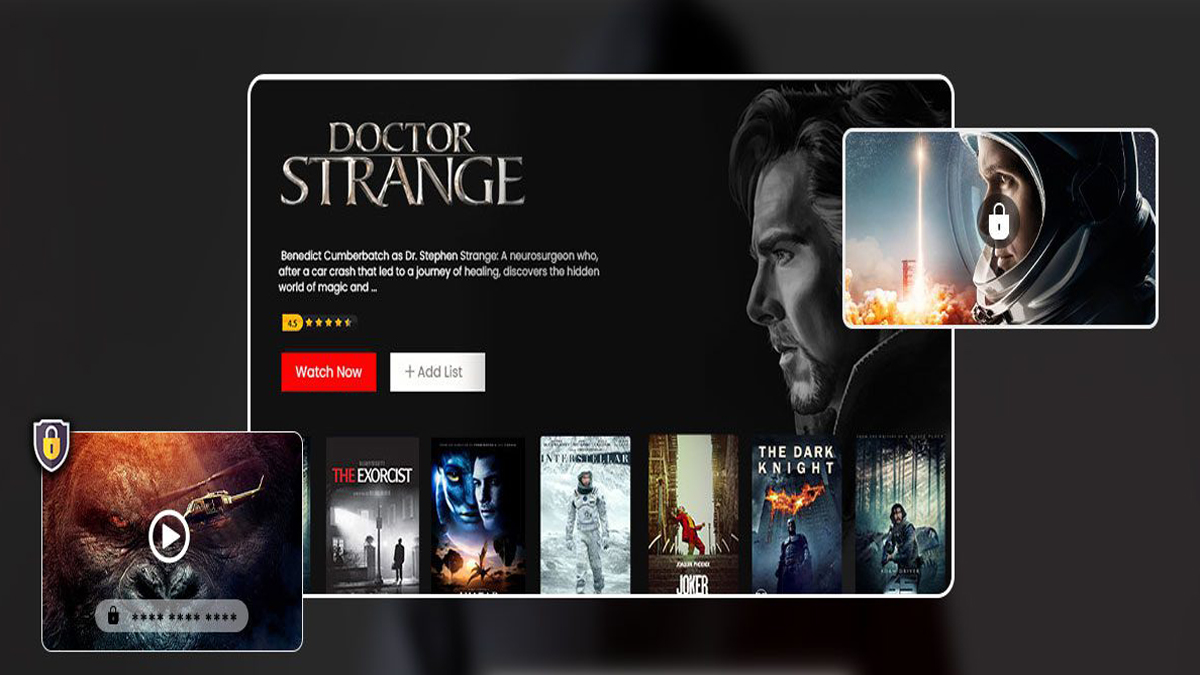
Broadcasters and distributors report piracy now eats over 30 per cent of their revenues, crippling reinvestment in content and infrastructure. The shift is stark, while DTH once dominated pay TV, active subscribers fell to around 56.92 million in early 2025 amid subscriber churn to OTT platforms, which now boast over 547 million video streamers. Yet piracy has followed the audience OTT has become the primary source for illegal content, accounting for 63 per cent of such access and driving Rs 8,000–11,000 crore in annual losses for the streaming market.

The industry has repeatedly urged the Ministry of Information & Broadcasting (MIB) to mandate forensic watermarking technology that embeds invisible identifiers in video streams to trace unauthorised feeds back to their source. Other proposed measures include physical verification for set-top box activations and location-based services. MIB established a task force to tackle the issue, and a nationwide consultation began in late 2025, but stakeholders say progress remains slow and the mandate too narrow, still excluding full coverage of cable and satellite networks.

Advertisement

The broader media and entertainment sector valued at Rs 2.5 trillion in 2024 faces mounting headwinds from piracy’s evolution. Cross-border enforcement remains complex, consumer preference for free content persists, and technological countermeasures spark an ongoing arms race. Without faster regulatory teeth and wider safeguards, broadcasters warn, the projected doubling of losses by 2029 could choke innovation and global competitiveness.

For an industry already squeezed by OTT migration, signal theft isn’t just theft, it’s a slow bleed threatening the very content that keeps viewers hooked. The question now isn’t whether piracy hurts; it’s how long the legitimate players can keep the lights on while the pirates keep the party going for free.

Advertisement
Click to comment

Leave a Reply

Your email address will not be published. Required fields are marked *

iWorld

T20 World Cup ’26: India–England semi-final sets global streaming record of 619 million views on JioHotstar

India–England semi-final records 65.2 million peak streams

Published

on

MUMBAI: The ICC Men’s T20 World Cup 2026 set a new milestone in global sports streaming, as the India–England semi-final drew record digital audiences on JioHotstar.

The match on 5 March registered 65.2 million peak concurrent viewers, the highest ever recorded for a live event on any streaming platform worldwide. The semi-final also generated 619 million views, making it the most streamed T20 international match in history.

The landmark audience numbers were driven largely by viewers in India, setting a record achieved within a single market, rather than through aggregated viewership across multiple countries.

Advertisement

The high-scoring encounter between India national cricket team and England cricket team produced 499 runs across both innings, fuelling widespread fan engagement across platforms.

According to the International Cricket Council, the digital record surpassed the previous global benchmark of 65 million concurrent viewers, set in November 2024 by another international streaming platform.

Across television and digital platforms combined, the semi-final reached more than 320 million viewers, while total watch time exceeded 23 billion minutes, making it the most watched T20 international match ever.

Advertisement

“This World Cup demonstrates the immense passion of cricket fans and the progress made in bringing the game closer to audiences worldwide,” said ICC chairman Jay Shah.

“This moment reflects the scale of cricket fandom in India and the technological capability required to serve hundreds of millions of viewers simultaneously.”

JioStar vice-chairman Uday Shankar, said the audience surge underscored the future of large-scale digital entertainment.

Advertisement

“One in every three Indians tuned in to watch the second semi-final. Delivering such an experience at scale requires the very best of technology,” he said.

The 619 million views during the match also eclipsed the 533 million views recorded during the final of the ICC Men’s T20 World Cup 2024.

With the final yet to be played, the 2026 tournament has already set multiple benchmarks in audience reach and digital engagement.

Advertisement

India will face the New Zealand national cricket team in the final on 8 March at the Narendra Modi Stadium in Ahmedabad. The match will be broadcast on the Star Sports Network and streamed on JioHotstar.

Continue Reading

Advertisement News18
Advertisement All three Media
Advertisement Whtasapp
Advertisement Year Enders

Copyright © 2026 Indian Television Dot Com PVT LTD

This will close in 20 seconds