Brands
Victorinox sharpens Swiss watch ambitions in India
From Jura precision to bold Indian launches, 2026 marks a serious horology push

MUMBAI: From pocket tools to precision timepieces, Victorinox is tightening its grip on time itself.
In 2026, the Swiss brand best known for its iconic Swiss Army Knife is turning the spotlight firmly on its watches in India. This is not a seasonal refresh or a cosmetic marketing tweak. It is a clear statement of intent: Victorinox wants to be recognised not merely as a dependable accessory brand, but as a serious Swiss watchmaker.
At the centre of this transformation lies Delémont, Switzerland. Since 2016, the company’s 17,800 square metre Watch Competence Centre in the Swiss Jura has brought every discipline of watchmaking under one roof. More than 200 Swiss specialists design, prototype, manufacture, assemble and test each timepiece in house. Bezels, cases, movement integration and final assembly are handled internally, ensuring quality control at every step.
Sustainability is also part of the story. The facility’s 2,750 square metres of solar panels generate around 500,000 kWh of clean energy each year. It is a blend of traditional horology and future focused responsibility.
Every Victorinox watch can take up to two years to move from design board to wrist. Each piece undergoes rigorous multi stage testing that goes beyond legal Swiss Made requirements. For Indian consumers, the message is clear: these watches are Swiss crafted, Swiss controlled and Swiss tested.
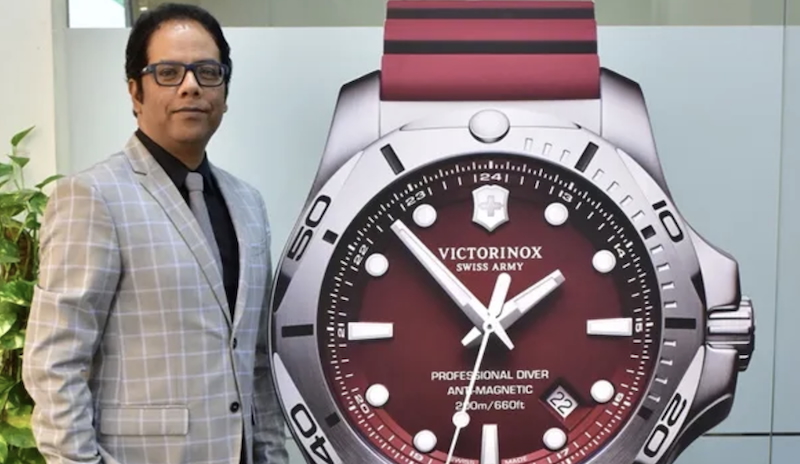
In India, the shift is being anchored by a new campaign titled “Spend Your Time Wisely”. Under the leadership of Debraj Sengupta, Managing Director Sales and Marketing, and Avirup Mukhopadhyay, Head of Marketing, Victorinox is positioning its watches as the emotional and technical core of its future strategy. Sengupta brings three decades of watch industry experience, including 15 years at Victorinox India, while Mukhopadhyay’s FMCG background adds a fresh consumer first approach.
The 2026 portfolio reflects that renewed ambition.
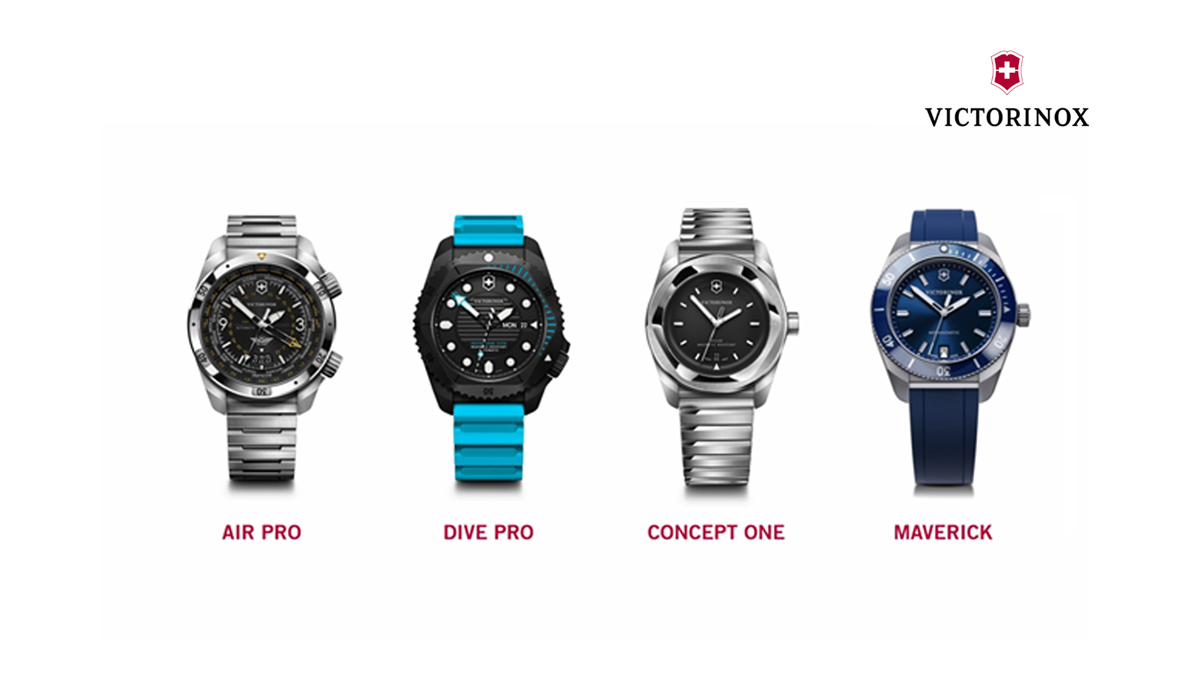
The Air Pro GMT Automatic is built for globally mobile professionals, tracking up to three time zones with ease. It pairs a refined GMT complication with everyday wearability, making it as practical in a boardroom as it is in an airport lounge.
The Concept One arrives in both automatic and solar powered versions. The solar models offer up to eight months of autonomy without light, while the automatic models deliver a 68 hour power reserve. It is a confident showcase of energy efficiency and mechanical know how.
For those drawn to the deep, the Dive Pro collection carries full ISO 6425 diver certification, with 300 metre water resistance, anti magnetic protection and serious shock resistance. These are purpose built instruments rather than lifestyle props.
Then there is the Square One, a bold square cased automatic that signals a more contemporary design language for the brand. It is confident, distinctive and refreshingly different.
Victorinox has also refreshed two of its most popular lines for the Indian market. The Maverick returns with bolder aesthetics aimed at modern wearers who prefer to lead rather than follow. Meanwhile, the I.N.O.X. Elegant combines the brand’s trademark toughness with refined detailing and interchangeable straps, offering durability with a touch of polish.
Together, the collections nod to India’s dual personality: resilient yet expressive, practical yet stylish.
After more than 140 years of Swiss craftsmanship, Victorinox is making it clear that in India its future is measured not just in heritage, but in horological credibility. From the engineering floors of Delémont to wrists across the country, the brand is no longer simply keeping time. It is staking a claim to lead it.