Digital
Nembharat ride-booking app to launch with zero commissions
WEML unveils prepaid platform eliminating surge pricing, aims to stabilise driver earnings and fix fares for passengers.
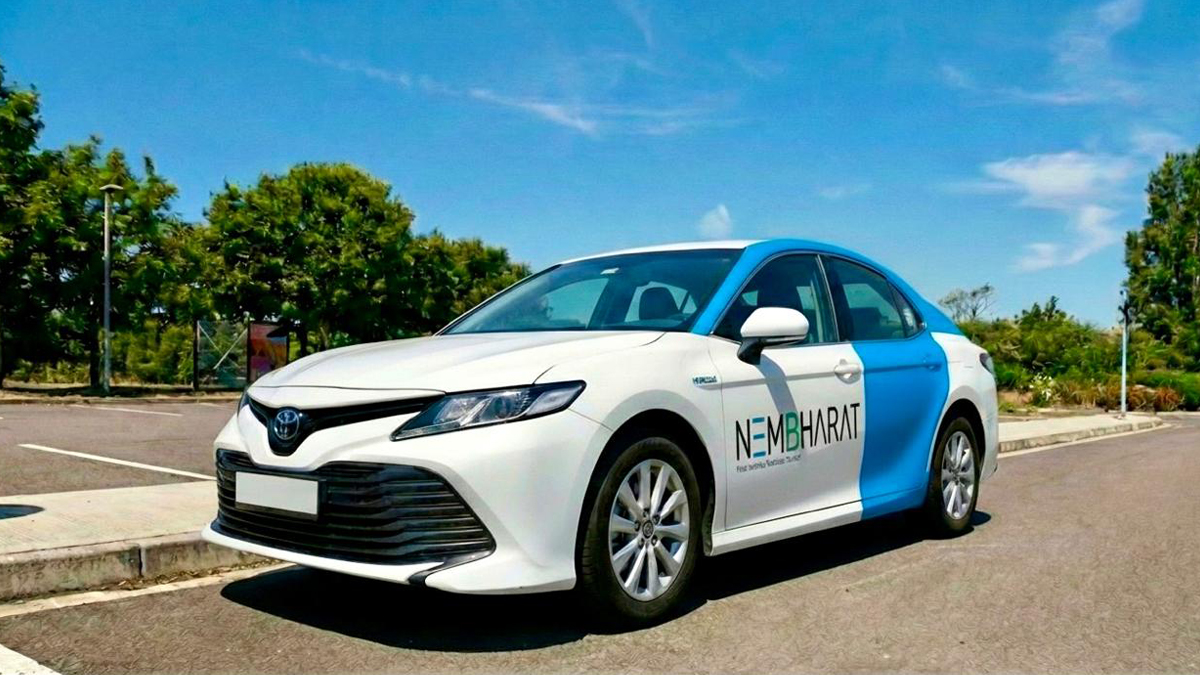
MUMBAI: Ride-hailing in India is about to get a fare shake-up because when commissions vanish, the only thing surging might be driver smiles. World Economic Mobility Limited (WEML), governed by the Narayanihiti Trust, is gearing up to launch Nembharat, a new ride-booking app that scraps driver commissions and passenger surge pricing entirely. The prepaid, cashless platform promises drivers keep 100 per cent of their earnings while commuters enjoy fixed, predictable fares no dynamic pricing surprises.
The move lands amid ongoing tension in the sector: driver strikes over low take-home pay, passenger gripes about safety and erratic fares, and mounting regulatory scrutiny on platform accountability and gig-worker protections. Nembharat positions itself as a national transport network that integrates cabs, auto-rickshaws, and other modes under uniform safety standards aligned with Central Consumer Protection Authority (CCPA) guidelines.
WEML director and CEO Deepak K. Shah said, “Our platform will address the lack of income predictability for gig workers. Nembharat is built to provide clear details on driver pay and passenger costs.”
WEML director and COO Kanchi Sharma added, “This system aligns with CCPA guidelines and acts as a tool to balance workforce standards with consumer protection.”
By removing the subscription and commission layer that dominates existing apps, WEML is betting on a leaner model that offers stability for fleet owners, individual drivers, and everyday riders alike. Whether it can scale across India’s chaotic roads and win over users tired of the status quo remains the real test but on paper, it’s aiming to turn every ride into a fair deal for both sides.
No launch date has been announced yet, but the promise is clear: in Nembharat’s world, the journey costs what it should nothing more, nothing less.

Digital
Maharashtra partners OpenAI, Sarvam AI to boost state’s tech ecosystem
State to set up dedicated AI department and roll out frontier technology policies
MUMBAI: Maharashtra is set to become a primary hub for artificial intelligence following the 2026–27 Budget announcement. chief minister Devendra Fadnavis confirmed that the state has signed letters of intent with global giant OpenAI and national pioneer Sarvam AI to integrate advanced technology into the state’s economic and administrative framework.
The collaboration with OpenAI and Sarvam AI marks a shift towards adopting cutting-edge generative tools for governance. These partnerships, alongside MoUs with IIT Bombay and BharatGen, are designed to create a robust ecosystem for research and innovation. The move signals the state’s intent to bring together global technology leaders and domestic research institutions to accelerate the development and adoption of artificial intelligence across sectors.
Regarding the strategic intent of these alliances, chief minister Fadnavis stated, “With the objective of making the State’s Information Technology and Artificial Intelligence sector dynamic, letters of intent have been signed with globally and nationally reputed institutions like OpenAI and Sarvam AI to facilitate the Information Technology and Artificial Intelligence sector in the state.”
To manage these high-level partnerships and ensure effective implementation, the government is establishing an independent department of electronics, Information technology, and artificial intelligence. The new department will function with a dedicated commissionerate and specialised technical manpower, enabling faster decision-making, improved coordination, and stronger accountability in executing technology-driven initiatives.
The state also plans to introduce special policies aimed at strengthening its position in emerging technology sectors. These policies will focus on advancing Maharashtra as a global hub for frontier technologies such as artificial intelligence, quantum computing, drones, autonomous vehicles, and deep technology.
According to the chief minister, “The state government plans to introduce special policies to develop Maharashtra as a world-class hub for frontier technologies such as Artificial Intelligence, quantum computing, drones, autonomous vehicles and deep technology.”
Artificial intelligence is already being integrated into the state’s governance framework. A collaboration with Microsoft has led to the development of MahaCrimeOS AI, a platform that has reportedly reduced police investigation times by 80 per cent across 23 police stations in Nagpur. The initiative demonstrates how AI-driven tools can significantly enhance law enforcement efficiency and data analysis capabilities.
The government is also working toward building a fully digitised administrative ecosystem. Plans are underway to achieve complete digitisation of land transactions and implement electronic office systems across departments, paving the way for a paperless government. In addition, a pilot project will introduce AI-powered solutions in 75 selected villages to improve infrastructure, governance efficiency, and overall quality of life in rural areas.
To strengthen digital infrastructure and data protection, the state also intends to establish an advanced data centre in Nagpur. This facility will be designed to safeguard sensitive and sovereign information while supporting large-scale digital services and government platforms.
These initiatives form part of Maharashtra’s broader cyber security and digital transformation strategy aligned with the Viksit Maharashtra 2047 vision. By partnering with global and domestic technology leaders such as OpenAI and Sarvam AI, the state aims to build a secure, future-ready digital ecosystem that enhances citizen services, supports innovation, and strengthens India’s position in emerging technologies.