Connect with us

Digital

Sarvam AI launches Indus, India’s sovereign AI app

Government-backed beta brings 105B model to users

Published

on

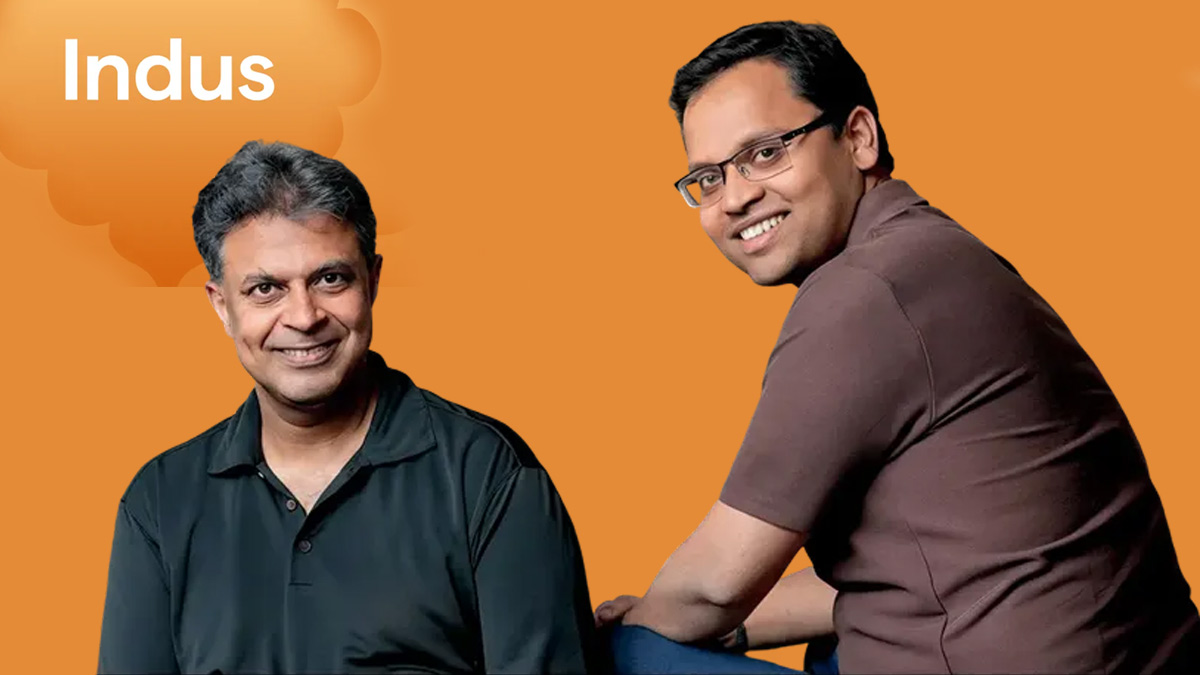
BENGALURU: India’s sovereign AI ambitions have moved from white papers to working product. Bengaluru-based Sarvam AI, founded by Vivek Raghavan and Pratyush Kumar, has opened limited beta access to Indus, a new conversational interface powered by its 105-billion-parameter sovereign model. The launch follows the company’s selection under the Government of India’s IndiaAI Mission to build a home-grown large language model.

For Sarvam, Indus is more than an app. It is proof of concept.

The company says its 105B model is smaller than the frontier systems that power global consumer chat platforms. That is by design. For now, the focus is on accuracy, efficiency and alignment with Indian contexts before scaling to larger foundational models. In other words, build steady, then build big.

Advertisement

True AI sovereignty, Sarvam argues, means owning the full stack. The first step was training foundational models from scratch in India. Indus is the next, giving India control over the data and interface layers as well.

Backed by the Centre, the project is positioned as part of the broader Atmanirbhar Bharat push. In a post on X, Sarvam said it is proud to have been selected to build India’s sovereign large language model, fluent in Indian languages, voice-enabled, capable of reasoning and ready for secure, population-scale deployment. The company thanked Prime Minister Narendra Modi and senior officials for their support.

Co-founder Pratyush Kumar struck a more rallying note. India, he wrote, must be a builder and not merely a consumer in this defining era of technology. Strategic autonomy starts now.

Advertisement

Indus is currently available in beta on iOS, Android and the web. Users can ask questions via text or voice and receive responses in both formats. Sign-in options include phone number, Google, Microsoft and Apple accounts. For now, access appears restricted to India.

There are early-stage wrinkles. Users cannot delete chat history without deleting their account. The reasoning feature cannot be switched off, which may slow responses at times. Compute capacity is limited, so new users may encounter a waitlist as access is gradually expanded.

Sarvam has made it clear that this is a work in progress. The company describes itself as being in listen mode, inviting feedback from developers, researchers, creators and everyday users. If sovereign AI is to mean anything, it says, it must be built with the country, not just for it.

Advertisement

The message is simple. Try Indus. Say what works. Say what does not. In the race for artificial intelligence, India is signalling it does not want to merely download the future. It wants to write it.


Click to comment

Leave a Reply

Your email address will not be published. Required fields are marked *

Digital

Ethical AI must benefit society, not dominate it, says WFEB chief Sanjay Pradhan at IAA event

At Mumbai event, ethics expert urges businesses and governments to shape AI responsibly

Published

on

MUMBAI: Artificial intelligence may be racing ahead at lightning speed, but its direction must still be guided by human conscience. That was the central message delivered by Sanjay Pradhan, president of the World Forum for Ethics in Business (WFEB), during the latest edition of IAA Conversations held in Mumbai.

The session was organised by the International Advertising Association (IAA) and the Artificial Intelligence Association of India (AIAI) in association with The Free Press Journal at the Free Press House on 7 March. Addressing a packed audience, Pradhan called for stronger ethical leadership to ensure AI remains a tool that benefits humanity rather than one that governs it.

“Artificial intelligence has rapidly become one of the most powerful technologies humanity has created,” Pradhan said. “It is unlocking breakthroughs in medicine, science and creativity at a pace unimaginable just a few years ago.”

Advertisement

But he warned that the same technology carries serious risks. AI, he noted, can amplify disinformation faster than facts can travel, compromise privacy, deepen discrimination and disrupt millions of livelihoods. Referencing concerns raised by AI pioneers such as Geoffrey Hinton, often called the godfather of AI, Pradhan stressed that the real challenge is not whether AI will shape the world, but whether humans will shape it with ethics and wisdom.

Structuring his talk around four guiding questions, why, what, how and who, Pradhan introduced the audience to WFEB’s emerging AI Ethics Partnership, a global platform aimed at advancing responsible artificial intelligence. He outlined four priority concerns that demand urgent attention: disinformation, bias and discrimination, data privacy and job security.

To make the idea of ethical AI easier to grasp, Pradhan offered a simple metaphor. Ethical AI, he said, is like a three layered cake. The outer layer represents the visible value ethical AI creates for businesses and society. The middle layer is organisational culture that moves ethics from written codes to everyday practice. The innermost layer, however, is the most crucial, the conscience of individual leaders.

Advertisement

Drawing from Indian philosophical thought through WFEB co-founder Ravi Shankar, Pradhan noted that while artificial intelligence can reproduce stored knowledge, true intelligence is boundless and rooted in conscience, creativity and compassion. Practices such as breathwork and meditation, he suggested, can help leaders develop the calm clarity needed for ethical decision making.

The event also featured a discussion with Maninder Adityaraj Singh, chief of staff and head of innovation at Rediffusion Brand Solutions Pvt Ltd, and Yash Johri, lawyer, Supreme Court of India.

Opening the session, IAA India chapter president Abhishek Karnani, highlighted the need for industries to understand and engage with AI responsibly.

Advertisement

“AI has to be befriended and understood,” added Rediffusion managing director and AIAI national convenor Sandeep Goyal. “Its ethical use will determine whether it becomes a friend or a foe.”

As AI continues to reshape industries and societies, Pradhan ended with a simple but powerful call to action. Businesses, governments and individuals must work together to ensure that the algorithms shaping the future reflect human values rather than just cold logic.

Advertisement
Continue Reading

Advertisement News18
Advertisement All three Media
Advertisement Whtasapp
Advertisement Year Enders

Copyright © 2026 Indian Television Dot Com PVT LTD

This will close in 10 seconds

×