Connect with us

iWorld

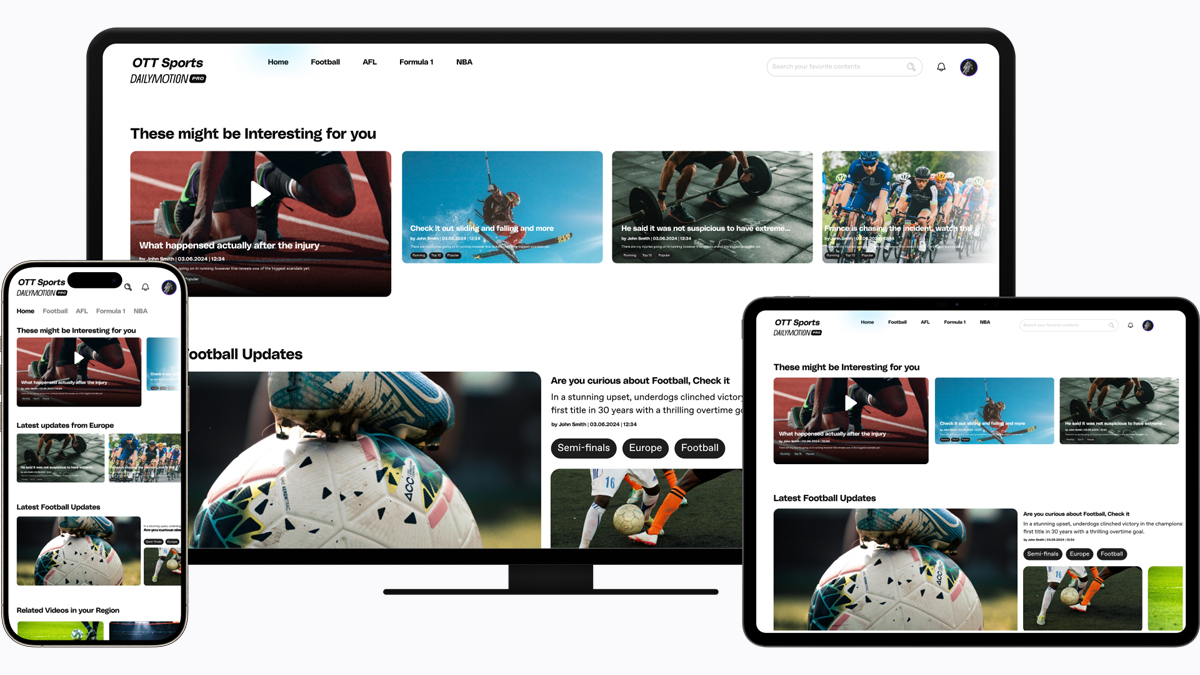
Dailymotion Pro and Oksat team up to fast-track OTT and FAST platforms

Strategic partnership combines video infrastructure with full OTT product layer for media and brands.

Published

on

MUMBAI: When video meets ambition, the result is a platform that doesn’t just stream, it sprints. Dailymotion Pro, a global leader in video distribution and monetisation, has joined forces with European OTT and FAST specialist Oksat to launch a new integrated end-to-end solution for media companies, brands and institutions.

The alliance fuses Dailymotion’s large-scale infrastructure and monetisation know-how with Oksat’s robust OTT and FAST capabilities multi-device apps, channel orchestration, product logic and advanced media workflows. Together they promise faster time-to-market, enterprise-grade scalability and flexibility to evolve business models over time.

Dailymotion Pro SVP forsupply & enterprise Sales Global Rémi Leclancher said, “Our customers are no longer just looking for video technology, they are building full media products. By partnering with Oksat, we are extending our infrastructure and monetisation strengths with a robust OTT and FAST product layer, enabling our clients to launch, scale, and evolve their services with greater speed and confidence.”

Advertisement

Oksat CEO Cédric Monnier added, “This partnership reflects a clear market trend, OTT and FAST platforms are best built through strong alliances between infrastructure leaders and product specialists. Together with Dailymotion Pro, we are offering a solution that is not just technologically powerful but also designed as a true media product, accessible, scalable, and aligned with the long-term strategic needs of our customers.”

The joint offering supports premium OTT services, FAST channel launches, hybrid VOD/live models and advertising-based video, all from a unified cloud-native environment. It caters to entertainment plus education, healthcare, corporate communications and professional training, with strong emphasis on sovereignty, governance and European compliance.

The platform aligns with EU-backed projects ASAP4EU and FAST4EU, advancing ad monetisation, interoperability and interactive advertising models. Early adopter Locales TV is already using the integrated solution to enhance OTT distribution and speed up new services.

Advertisement

In a streaming world where speed and scale win races, this tie-up aims to give customers a clear lane powerful tech plus real product muscle, minus the usual multi-vendor headaches. The finish line? Faster launches, smoother growth and happier viewers.


Click to comment

Leave a Reply

Your email address will not be published. Required fields are marked *

Gaming

Dream Sports sees 100 plus exits after gaming ban forces overhaul

Company splits into eight units as real money gaming law hits revenue.

Published

on

MUMBAI: For a company built on fantasy leagues, reality has suddenly rewritten the rulebook. More than 100 employees have exited Dream Sports, the parent of Dream11, after the company reorganised its operations following India’s ban on real money online gaming. The shake up came after the Promotion and Regulation of Online Gaming Act, 2025 came into force in August 2025, prohibiting games where users deposit money expecting winnings. The regulation struck at the heart of the fantasy gaming industry and dramatically affected Dream Sports’ core business, wiping out about 95 percent of its revenue and all of its profits.

In response, the Mumbai based company shifted into what chief executive officer Harsh Jain described as “startup mode”, splitting its operations into eight independent business units in December.

Around 700 employees were reassigned across these newly formed ventures based on their experience and interests. However, roughly 15 percent opted to leave the company.

Advertisement

A spokesperson for Dream Sports said many of those who exited were experienced professionals accustomed to running scaled businesses rather than early stage ventures.

“Since some of these employees were experienced with running high scale businesses and not startups, around 15 percent chose to leave and join other scaled companies or start ventures of their own,” the spokesperson said.

Despite the departures, the company noted that the attrition rate is only slightly higher than its earlier level of around 10 percent before the ban. Dream Sports now has close to 950 employees and is not currently hiring, choosing instead to focus on stabilising its existing workforce.

Advertisement

The restructuring has transformed Dream Sports from a fantasy gaming company into a broader sports entertainment platform. The eight units now operate independently, each focusing on different segments of the sports and technology ecosystem.

These include Dream11, sports streaming platform Fancode, sports travel service DreamSetGo, mobile game Dream Cricket and artificial intelligence initiative Dream Sports AI, which includes sports analytics platform Dream Play.

Other ventures include fintech product Dream Money, open source initiative Dream Horizon and the philanthropic arm Dream Sports Foundation.

Advertisement

As part of cost saving efforts, Dream Sports also relocated its headquarters from Bandra Kurla Complex to Worli earlier this year. The new office, called Dream Sports Stadium, brings teams from its various brands together under one roof to improve collaboration and operational efficiency.

Jain had earlier said the company removed bonus lock in timelines for employees hired in recent years, allowing those who wished to leave to exit with pro rata payouts.

“We want people who are fully into the startup mode and willing to work for it, and we will share that reward if it comes,” he said.

Advertisement

Founded in 2008 by Harsh Jain and Bhavit Sheth, Dream Sports was last valued at 8 billion dollars after raising 840 million dollars in 2021 from investors including Falcon Edge Capital, DST Global, D1 Capital Partners, RedBird Capital Partners, Tiger Global Management, TPG and Footpath Ventures.

The new gaming law has forced several companies in the fantasy gaming sector to either shut down or pivot their business models, signalling a significant reset for one of India’s fastest growing digital entertainment industries.

Advertisement
Continue Reading

Advertisement News18
Advertisement All three Media
Advertisement Whtasapp
Advertisement Year Enders

Copyright © 2026 Indian Television Dot Com PVT LTD

This will close in 20 seconds

×


