Brands
TCS unveils Team SDG Universe for young learners

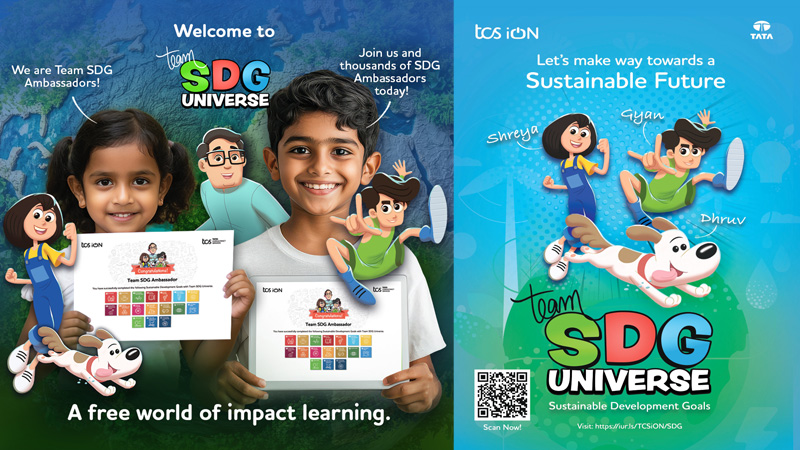
MUMBAI: TCS has decided that saving the planet should start with playtime, and it is giving children a whole universe to learn in. Marking Children’s Day with purpose and imagination, Tata Consultancy Services has launched Team SDG Universe, a free, interactive digital platform designed to help children explore and embrace the United Nations’ 17 sustainable development goals.
Developed by TCS iON, the company’s learning and assessment unit, the platform turns global challenges such as climate action, gender equality and responsible consumption into story-led missions. Children aged eight and above can navigate games, nano-videos, comics and interactive pledges that culminate in an SDG Ambassador certification.
Operating on a self-service model, Team SDG Universe aims to bridge the gap between awareness and real-world action by encouraging creativity, curiosity and responsible choices. Schools can integrate the programme into their curriculum, and several have already done so, including Vidya Mandir School in Chennai.
Vidya Mandir School principal Kanchana Mala S H, said the initiative aligned with the school’s aim to make screen time meaningful. “Our students found the activities enjoyable and insightful. It is heartening to see them talking about SDGs with interest and understanding. Inspired by this experience, our class eight students have chosen the UN SDGs as the theme for their annual project day,” she said.
Accessible through the TCS iON webpage, the platform encourages interdisciplinary learning and collaboration. Learners are guided by three friendly mascots Shreya Sustainable, Dhruv Development and Gyan Goals, who help make the journey engaging and relatable.
TCS iON global head Venguswamy Ramaswamy, said the initiative reflects the company’s belief in purposeful learning. “By combining play with purpose, Team SDG Universe helps young learners internalise global values through local action. True innovation is measured by its impact on society, and this platform empowers children to become global citizens,” he said.
The gamified approach responds to a growing need for interactive, scalable and meaningful sustainability learning tools. Available free to children across India, it offers schools and families a simple way to introduce SDG concepts in a format that feels fun rather than formal.
With Team SDG Universe, TCS strengthens its commitment to nation-building through education, while TCS iON further expands its mission to deliver productive learning experiences across institutions, enterprises and government departments.