Brands
Maruti charges ahead with electric ambitions

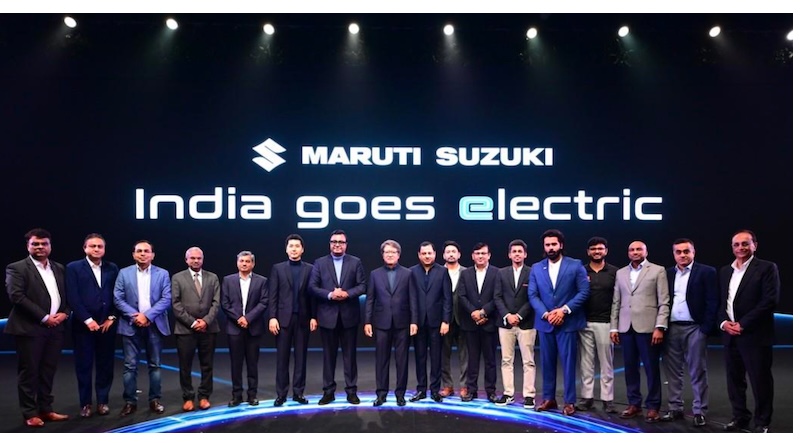
NEW DELHI: The elephant in India’s automotive room is finally dancing. Maruti Suzuki, the lumbering giant that’s sold more cars to Indians than anyone else, has decided it’s time to go electric—and it’s doing so with the subtlety of a Hindi cinema production number.
On 2 December the company announced it had cosied up to 13 charging-point operators and aggregators, promising to transform India’s patchy EV infrastructure into something resembling a proper network. The ambition? Enable access to 100,000 public charging points by 2030. That’s a lot of juice.
For now, Maruti is rolling out 2,000 of its own charging stations across its dealer network, spanning more than 1,100 cities. Hisashi Takeuchi, the firm’s managing director and chief executive, called it a “historic step” into electric mobility. He’s not wrong—Maruti has been notoriously late to the EV party, watching rivals like Tata Motors gobble up market share whilst it dithered.
The company’s weapon of choice is the e Vitara, a made-in-India electric SUV that’s been tested from “sand to snow” across temperatures ranging from -30°C to 60°C. It promises a driving range of 543 kilometres on a full charge. Whether Indian roads will be quite so accommodating remains to be seen.
To prove the charging network isn’t vaporware, Maruti staged what it calls an “e drive”—four e Vitaras flagged off from Gurugram towards India’s four corners: Srinagar up north, Kanyakumari down south, Bhuj out west, and Dibrugarh in the east. It’s part publicity stunt, part stress test.
The centrepiece is an app called “e for me” (someone in marketing clearly had fun). It promises to locate charging points, handle payments through UPI or “Maruti Suzuki Money” (powered by Razorpay), and even let owners remotely manage their home chargers. One card does it all—”tap n charge” functionality that might actually work.
Senior executive officer for marketing and sales Partho Banerjee was positively buzzing. “Today is the dawn of a new era for electric mobility in India,” he declared. The company has trained 150,000 workers specifically for EVs and converted 1,500 service workshops across 1,100 cities to handle electric vehicles. In the top 100 cities, charging points will sit every 5-10 kilometres. DC fast chargers are being planted along major highways like motorway service stations.
Whether this charging offensive will be enough to convince India’s notoriously price-conscious buyers to go electric is the billion-rupee question. Maruti’s petrol-sipping hatchbacks have ruled Indian roads for decades precisely because they’re cheap to buy and run. EVs remain considerably pricier, even with government subsidies.
But Maruti clearly reckons the current is shifting. And when India’s car colossus finally plugs in, the entire market pays attention. Charge on.