Connect with us

Brands

MRSI’s new code cracks the ethics code as India’s insights industry evolves

Published

on

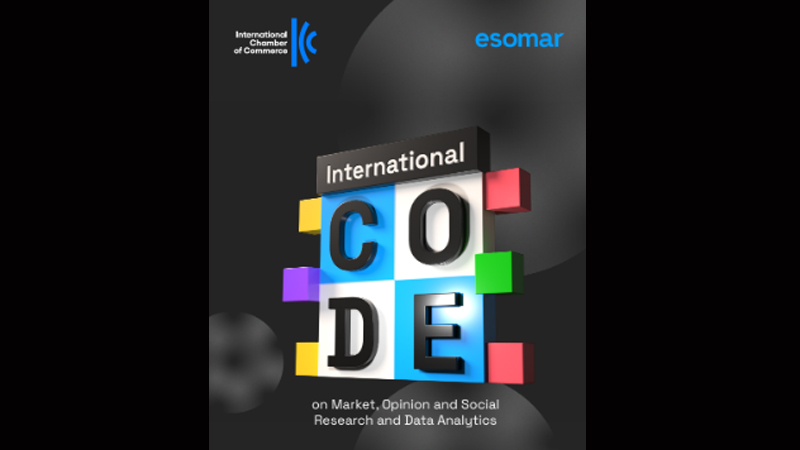
MUMBAI: The Market Research Society of India (MRSI) has formally adopted the ICC/ESOMAR International Code on Market, Opinion and Social Research and Data Analytics 2025: a global gold standard shaping how research is conducted across more than 50 countries.

The updated code, refreshed for an era dominated by AI tools, synthetic data, automation and sprawling digital ecosystems, aims to bring sharper guardrails to a fast-changing insights industry. Developed jointly by Esomar and the International Chamber of Commerce since 1977, the Code is recognised by over 60 industry associations worldwide.

As India’s leading industry body for research and insights since 1988, MRSI said the adoption reinforces its commitment to ethical, transparent and globally benchmarked practices. Its Professional Standards Committee (PSC), established in 2020, will continue to enforce compliance and take disciplinary action when members fall short. The committee is chaired by Sathyamurthy Namakkal (Co-founder, DataPOEM), supported by Abhinav Goel (Nestlé India), Anjana Pillai (Quantum Consumer Solutions), Jyoti Malladi (Ipsos India) and Priyamvada Sharma (Godrej Consumer Products).

Advertisement

What’s new in the 2025 Code?

The revamped guidelines sharpen expectations across five key areas:

● Duty of care: Stronger safeguards for children, young people and vulnerable groups.

Advertisement

● Data minimisation: Collect only what’s necessary, protect it stringently, and anonymise it once used.

● AI & emerging tech: Clear rules for responsible AI deployment, transparency and privacy as technologies reshape research.

● Fit-for-purpose research: Ensuring that studies truly represent the populations being measured — including when using self-service platforms.

Advertisement

● Transparency & accountability: Mandatory disclosures on methods, data sources and limitations so clients can assess research integrity.

MRSI and chief growth & partnerships officer president Nitin Kamat at TAM Media Research, said the move “reiterates our commitment to ethical excellence and responsible data practices… signalling that member companies are stronger partners to deliver research clients can trust with complete confidence.”

Esomar president Anne-Sophie Damelincourt called MRSI’s adoption “a milestone that reflects India’s leadership in ethical research,” adding that it strengthens global collaboration and reinforces industry-wide trust.

Advertisement

The Code will come into effect in India from April 1, 2026, giving the industry time to align operations with the refreshed norms.

With this update, MRSI isn’t just keeping pace with global standards, it’s ensuring that in the race for insight, ethics don’t fall behind.

 

Advertisement
Click to comment

Leave a Reply

Your email address will not be published. Required fields are marked *

Brands

Godrej clarifies ‘GI’ identifier after logo similarity debate

Says GI is not a logo, will not replace Godrej signature across products.

Published

on

MUMBAI: In a branding storm where shapes did the talking, Godrej is now spelling things out. Godrej Industries Group (GIG) has issued a clarification on its newly introduced ‘GI’ identifier, addressing questions around its purpose and design following a wave of online criticism. At the centre of the debate were two concerns: whether the new mark replaces the long-standing Godrej logo, and whether its geometric design mirrors other corporate identities.

The company has drawn a clear line. The Godrej signature logo, it said, remains unchanged and continues to be the sole logo across all consumer-facing products and services. The ‘GI’ mark, by contrast, is not a logo but a corporate group identifier intended for use alongside the Godrej signature or company name, and aimed at stakeholders such as investors, media and talent rather than consumers.

The need for such a distinction stems from the 2024 restructuring of the broader Godrej Group into two separate business entities. With both continuing to operate under the same Godrej name and signature, the identifier is positioned as a way to differentiate the Godrej Industries Group at a corporate level.

Advertisement

The rollout, however, triggered a broader conversation on design originality. Critics pointed to similarities between the GI mark’s geometric composition and logos used by companies globally, raising questions about distinctiveness.

Responding to this, GIG said its intellectual property and legal review found that such overlaps are common in minimalist, geometry-led design systems. Basic forms such as circles and rectangles appear across dozens of brand identities worldwide, the company noted.

It added that the identifier emerged from an extensive design process and was chosen for its simplicity, allowing it to sit alongside the Godrej signature without competing visually. While acknowledging that elemental shapes may appear less distinctive in isolation, the group emphasised that the mark is part of a broader identity system that includes a custom typeface, sonic branding and other proprietary elements.

Advertisement

Following legal and ethical assessments, the company said it found no impediment to using the identifier, reiterating that the GI mark is a corporate tool not a consumer-facing symbol.

In short, the logo isn’t changing but the conversation around it certainly has.

Advertisement
Continue Reading

Advertisement News18
Advertisement
Advertisement
Advertisement
Advertisement Whtasapp
Advertisement Year Enders

Indian Television Dot Com Pvt Ltd

Signup for news and special offers!

Copyright © 2026 Indian Television Dot Com PVT LTD

This will close in 10 seconds