MAM
Straight talk at Unilever: Fernando Fernandez cuts to the chase

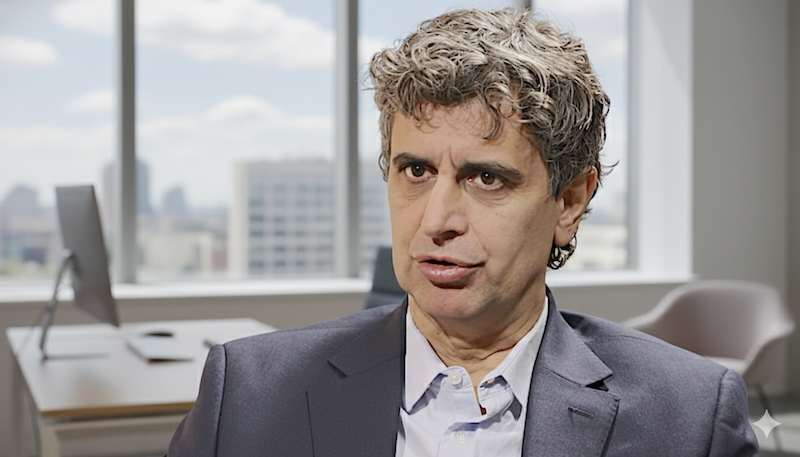
LONDON: Fernando Fernandez doesn’t do pleasantries. When the Unilever chief executive joins meetings, he skips the hellos and launches straight into his mantra: “Volume growth, positive mix, consistent growth, margin expansion, profit growth in hard currency.” Only then does he say hello. It may sound barmy, but after 37 years at the company, Fernandez reckons repetition is the secret sauce for aligning 120,000 employees.
Since taking the reins in March, the veteran has been conducting surgery on the Anglo-Dutch behemoth. Yesterday marked the completion of Unilever’s ice-cream separation—a complex carve-out that began in March 2024. “We’ll be cheering for Peter and his team at the Magnum ice cream company,” he said at a JP Morgan fireside chat, though his focus is squarely on what remains: a leaner beast built for battle.
The numbers tell the story. Volume growth hit 1.7 per cent in the third quarter, with similar performance expected for the fourth. Some 60 per cent of revenue is now winning market share, with particularly strong gains in Europe and America. “I don’t want generalists in the company telling me what the context is,” Fernandez declared. “I want people who, whatever the context, outperform.”
His weapon of choice? What he calls the “sassy” framework—an acronym for science, aesthetics, sensorials, set by others (influencer validation), and young, spirited brands. It’s corporate jargon with bite. The company now works with nearly 300,000 influencers globally, up from practically zero when he took charge. Broadcasting messages from big brands has become “suspicious,” he argues—modern consumers check reviews before buying anything, from restaurants to face cream.
The transformation is visible on shelves. Dove at Walmart looks “very different” to three years ago. Omo in Britain and France sports innovation around short-cycle washes—15 minutes instead of two hours—where the product does the heavy lifting, not the machine. Vaseline, a 155-year-old brand, has posted 12 per cent annual volume growth and swept Cannes advertising awards whilst climbing to number four in American skincare. “If I have to score the quality of what we’re doing on a one-to-ten scale, I’d give us a six or six and a half,” Fernandez admitted. “My mum used to say that ten doesn’t exist, but we need to reach a nine.”
Premium is the obsession. Two seismic shifts are driving this: digitisation has made consumers savvier about ingredients, and shrinking household sizes (more one or two-person homes) mean people splurge more on self-indulgence. Currently 30 per cent of Unilever’s revenue sits in premium territory; the target is 50 per cent. The wellness portfolio—liquid iv and nutrafol—has notched double-digit growth for five consecutive years, with both brands approaching $1bn in annual sales.
America has become an unexpected bright spot. The company ranked number two overall and first in personal care among the top 130 American retailers—”completely unprecedented for Unilever”. Five straight quarters of four per cent-plus volume growth have gone somewhat unnoticed by investors. Dove, Vaseline and Hellmann’s are stretching into premium segments whilst maintaining mainstream offerings. “We’ve built one of the best growth footprints for any big company in the US,” he boasted.
The medicine hasn’t all been sweet. Hair care, which accounts for 11 per cent of sales, has been flattish this year after four per cent growth last year. Fernandez owns up to “missteps”—axing three American brands, pricing shampoo and conditioner too aggressively, plus troubles in China and Brazil. Latin America has suffered from Mexican remittance declines, Brazilian political instability and Argentinian economic contraction, though he expects positive volume growth across the region in 2026.
India remains the crown jewel. With 55 per cent share in hair care, 80 per cent in functional nutrition, and 45 per cent in skin cleansing, the portfolio is the envy of rivals. (He’s put in a new CEO in Priya Nair in India – once the company’s chief marketing officer.) Recent government moves—GST cuts, personal income tax reductions, interest rate drops—signal recognition that consumption needs stimulus. “When a government does this, something isn’t right in the economy,” Fernandez observed. But with 60m-70m Indians now enjoying French-level incomes and GDP growth at 8.2 per cent last quarter, opportunities are “massive.”. India and America together represent 35 per cent of revenue; hit four per cent volume growth in both and the company-wide 2 per cent target becomes child’s play.
The financial architecture has been rewired too. Long-term incentive plans are now tied to hard currency performance. The 8,000 managers get bonuses linked to what’s in their direct control—run personal care in America, get paid for personal care in America. From 2026, restructuring costs (historically above sector levels) will be included in profit growth calculations. Operating margins should reach at least 19.5 per cent in the second half after the ice-cream exit, with gross margins in the low 50s.
Capital allocation follows a strict pecking order: invest for growth first, maintain a 55-60 per cent dividend payout, allocate $1.5bn annually to bolt-on acquisitions, then return any surplus via buybacks. The M&A hunt focuses on beauty, personal care and wellness—particularly in America and India. Targets must be lifestyle brands, digitally native, e-commerce-serious, and globally scalable. “Transformational acquisitions are off the table,” he stated flatly.
As for foods, the portfolio is “the envy of the industry.” After disposing of $1.5bn in European periphery brands, Hellmann’s and Knorr will represent 70-75 per cent of the division—low capital intensity, high margins, strong cash generation. Even here, no sacred cows exist. “Every brand has to earn the right to stay in the portfolio, whether it’s called Hellmann’s, Knorr, Dove or Tresemmé.”
The cultural shift extends beyond spreadsheets. Fernandez spends 80 per cent of his time on marketing and product quality, 20 per cent on talent. “There’s a coexistence of pockets of excellence and pockets of mediocrity in Unilever,” he said. “We’re trying to elevate what we do in every single geography, every single category.” Being “uncompromising on talent” means having the right leadership team—no compromises, no excuses.
Looking ahead, he’s unfazed by market headwinds. GDP growth and market volume growth have decoupled somewhat, with consumer categories growing closer to one per cent than the historical two per cent. But with wage inflation running at four to six per cent globally, purchasing power will eventually catch up. “I don’t want to project the long term based on what’s happened in the last six months,” he said. Besides, promotional intensity hasn’t turned irrational in Unilever’s categories, and the company has actually reduced promotional volumes this year.
Next year’s World Cup offers a marketing bonanza. Unilever will sponsor personal care and beauty categories, leaning into “event marketing” which Fernandez considers “more important than ever.”. Latin America, where football reigns supreme, should provide a launchpad for the deodorant business—particularly the aerosol format that represents 80 per cent of the category.
The turnaround playbook is simple in theory, fiendish in execution: elevate product quality through science, dominate digital and social channels, premiumise relentlessly, execute flawlessly, and align every employee on what matters. “It looks much more than eight or nine months,” Fernandez reflected on his tenure so far. “But I believe we’re making significant progress.”
If there’s one thing the boss won’t tolerate, it’s excuses. “Not being consciously competitive is a criminal offence,” he said. “Whatever it takes, we’ll invest in line with our two per cent volume growth ambition.” For a company once accused of coasting on heritage brands, these are fighting words. Whether Unilever can maintain the momentum when Fernandez’s 37-year institutional memory eventually departs remains to be seen. For now, though, the soap opera has a surprisingly compelling plot.
(The above article is based on a fireside chat that JP Morgan head of consumer staples Celine Pannuti had with Unilever CEO Fernando Fernandez last week)