Brands
Godrej Consumer stays steady as Q3 profits hold amid global market churn

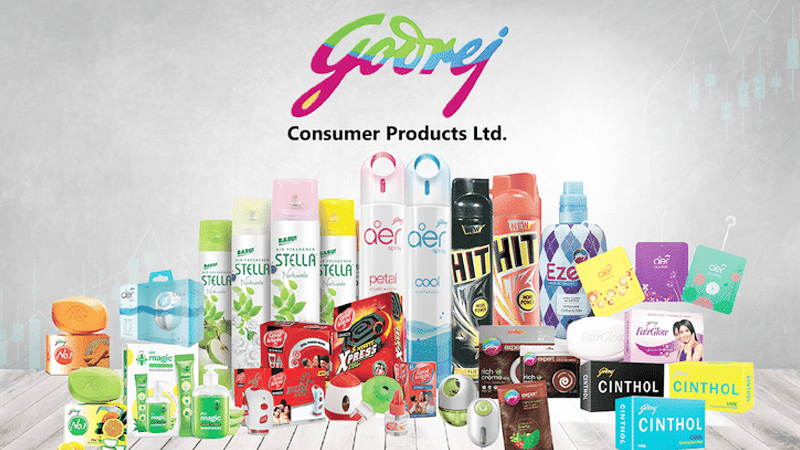
MUMBAI: Soap, hair colour and home care may be everyday staples, but their numbers still tell a story worth pausing for. Godrej Consumer Products Limited (GCPL) closed the December quarter of FY26 with steady growth, navigating cost pressures and volatile global markets while keeping profitability largely intact.
For the quarter ended December 31, 2025, GCPL reported consolidated revenue from operations of Rs 4,099 crore, up from Rs 3,768 crore a year earlier. Total income for the quarter stood at Rs 4,155 crore, reflecting modest but consistent top-line expansion across its key markets.
Net profit after tax came in at Rs 498 crore for the quarter, broadly flat compared to Rs 498 crore in the same period last year. While headline profit growth remained muted, the numbers suggest operational resilience rather than stagnation, especially in a quarter marked by currency movements and uneven consumer demand across geographies.

Operating performance showed familiar pressures. Profit before exceptional items and tax was Rs 791 crore in Q3 FY26, compared with Rs 687 crore a year ago. However, exceptional items amounting to Rs 91 crore pulled profit before tax down to Rs 700 crore.
For the nine months ended December 2025, consolidated revenue from operations stood at Rs 11,586 crore, up from Rs 10,766 crore in the same period last year. Net profit for the nine-month period came in at Rs 1,410 crore, marginally lower than Rs 1,440 crore in the previous year, reflecting higher costs and exceptional charges.
GCPL’s operating margin for the quarter was 21.6 per cent, compared with 20.1 per cent a year ago, signalling some improvement in operational efficiency. Net profit margin stood at 12.2 per cent, slightly below last year’s 13.3 per cent, underlining the tightrope FMCG players continue to walk between pricing, volumes and input costs.
India remained the company’s largest contributor, clocking segment revenue of Rs 2,510 crore in the quarter, up from Rs 2,262 crore a year earlier. Segment profit before tax, interest and exceptional items from India stood at Rs 606 crore, reinforcing the domestic market’s role as GCPL’s earnings anchor.
Africa, including the Strength of Nature portfolio, continued to show traction. The region delivered revenue of Rs 923 crore in the quarter, compared with Rs 772 crore last year, while segment profit rose to Rs 114 crore. Indonesia posted revenue of Rs 494 crore, though growth there remained relatively muted compared to Africa and India.
For the nine-month period, India contributed Rs 7,230 crore in revenue, Africa Rs 2,435 crore, and Indonesia Rs 1,422 crore, highlighting the company’s increasingly diversified earnings base.
On the cost front, raw material and packing material consumption rose to Rs 1,397 crore in Q3 FY26, while advertising and publicity spend stood at Rs 341 crore, reflecting continued investment behind brands even in a cautious demand environment.
Employee benefit expenses for the quarter were Rs 328 crore, up from Rs 296 crore a year ago, while finance costs remained largely stable at Rs 79 crore.
The balance sheet remained solid. GCPL reported a consolidated net worth of Rs 12,278 crore as of December 31, 2025. The debt-equity ratio stayed comfortable at 0.35, and the interest service coverage ratio stood at 8.17 times, indicating strong ability to service obligations despite global uncertainty.
Earnings per share for the quarter were Rs 4.87 on a basic and diluted basis, unchanged from the year-ago period. For the nine months ended December, EPS stood at Rs 13.78, slightly lower than Rs 14.08 last year.
Taken together, the December quarter was less about dramatic growth and more about holding ground. GCPL’s performance reflects a business balancing growth ambitions with margin discipline, particularly as emerging markets throw up uneven signals and input costs refuse to fully cool.
With India and Africa continuing to shoulder growth, and balance-sheet metrics remaining healthy, the company appears positioned to play the long game rather than chase short-term spikes. In an FMCG landscape where consistency increasingly counts as a win, GCPL’s latest numbers suggest it is content to keep its powder dry — and its shelves stocked.