Brands
Blue Star reshuffles board as Sam Balsara exits, new leadership steps up
MUMBAI: Blue Star is shaking up its boardroom quietly, decisively, and with an eye firmly on the next phase of growth. One of India’s most recognisable corporate brands is refreshing its leadership bench as a marketing legend exits, a seasoned industrialist enters, and the executive engine gets more firepower .
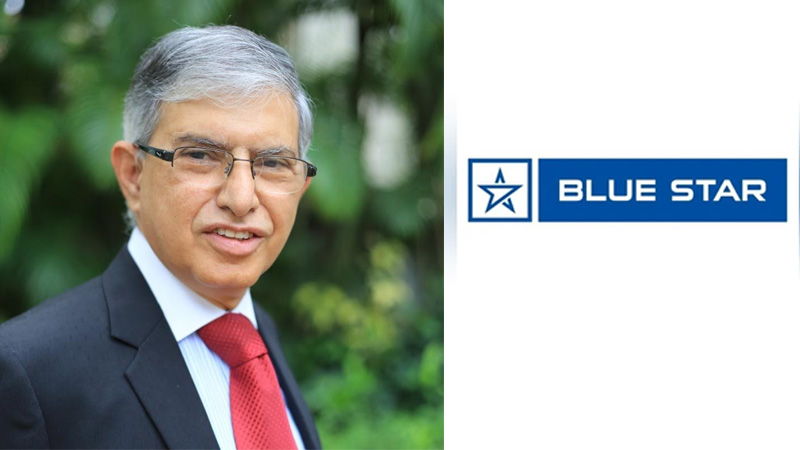
Sam Balsara, chairman of Madison World and one of Indian advertising’s most influential figures, will retire as independent director on January 31 after completing two consecutive terms. Having joined the board in June 2017 and been reappointed in 2022, Balsara leaves at 75, closing a chapter defined by sharp brand thinking and a steady hand on consumer strategy. As chairman of the nomination and remuneration committee, his influence extended deep into leadership development and succession planning, shaping Blue Star’s next generation of decision-makers .
Stepping into the independent director role is M S Unnikrishnan, appointed for a five-year term with effect from January 29. With more than four decades of experience, Unnikrishnan currently heads the IITB–Monash Research Academy and previously ran Thermax group as managing director, steering the engineering major across global energy and environment businesses. His boardroom résumé already includes KEC International, Kirloskar Brothers, Greaves Cotton and Livguard Energy Technologies, alongside trusteeships at Akshayapatra and Jehangir Hospital, Pune. A mechanical engineering graduate from VNIT Nagpur with an advanced management programme from Harvard Business School, Unnikrishnan brings operational heft and global exposure to Blue Star’s board .
Continuity, however, remains central. B Thiagarajan has been reappointed managing director for a further term from April 1, 2026, through May 24, 2027—one day short of his 70th birthday. A Blue Star lifer since 1998, Thiagarajan has clocked more than four decades across B2B and B2C businesses, rising from board member in 2013 to joint managing director in 2016 and managing director in 2019. An electrical and electronics engineer from Madurai University with a senior executive programme from London Business School, he continues to play a prominent role in industry bodies including the CII national council, the Indian Green Building Council and the CII Green Cooling Council .
The executive bench is also getting younger muscle. Mohit Sud has been elevated as executive director, unitary cooling products, for a five-year term starting April 1, 2026. Sud joined Blue Star in March 2025 as group president, overseeing room air conditioners and commercial refrigeration with end-to-end responsibility spanning sales, marketing, R&D, manufacturing and supply chain. A mechanical engineer with an MBA from XLRI Jamshedpur, Sud spent over two decades at Hindustan Unilever, leading sales and marketing across home care and beauty and wellbeing categories, most recently driving premium retail distribution .
Vir S Advani, chairman and managing director, framed the changes as both an inflection point and a vote of confidence. He credited Balsara with helping sharpen the brand’s relevance among younger consumers and deeper-tier markets, noting that his marketing insights helped Blue Star gain market share year after year. Unnikrishnan, Advani said, adds proven leadership across engineering products and international markets, while Thiagarajan’s extension will accelerate strategic programmes in growth, R&D and manufacturing and ensure a seamless leadership transition. On Sud, Advani was bluntly bullish, saying the company has been grooming him for board-level responsibility and that his consumer-market experience will help lift market share and profitability in unitary cooling products .
At 82 years old, Blue Star is signalling that longevity does not mean inertia. With one era ending and another being carefully engineered, the company is betting that fresh thinking, steady leadership and sharper execution will keep it cool—and competitive—when the heat is on.

Brands
Champions again: How India’s brands roared after the T20 World Cup win
From food delivery apps to dating platforms, Indian brands wasted no time riding the wave of India’s historic back-to-back T20 World Cup victory over New Zealand
Ahmedabad: On March 8, 2026, which also happened to be International Women’s Day, India scripted history by clinching the ICC Men’s T20 World Cup for the second consecutive time, defeating New Zealand in a thrilling final. As fireworks lit up stadiums and streets across the country, another kind of celebration erupted simultaneously: India’s marketing machine kicked into overdrive.
Within minutes of the final whistle, brands from every sector, tech giants, quick commerce players, streaming platforms, and even a condom brand, were racing to craft the cleverest, most culturally resonant posts. Here’s a breakdown of how India Inc. celebrated the nation’s historic win.
Zomato: The Repeat Order

Zomato, India’s ubiquitous food delivery app, kept things refreshingly simple. Playing on its own product language, the brand posted: “Repeat order delivered 🏆 #INDvsNZ.” It was short, punchy, and perfectly on-brand, a nod to India’s back-to-back title, framed through the lens of what Zomato does best: delivering again and again.
Netflix India: Now Watching History

Netflix India leaned into its streaming identity with a clever checklist format: “2007 ✅ / 2024 ✅ / 2026 ✅ / NOW WATCHING: HISTORY BEING MADE 🇮🇳💪.” By bookending India’s three T20 World Cup victories as a watchlist completed in real-time, Netflix framed the nation’s triumph as unmissable content, the kind of story only live cricket can tell.
Reliance Jio: Typing the Win

Telecom giant Reliance Jio delivered a wordplay masterclass: “India typed ‘WIN’ in Black Caps today. 🏆” The double entendre, referencing both the act of typing in capital letters and the Black Caps (New Zealand’s cricket team), was crisp, witty, and instantly shareable. It was a reminder that in the age of social media, the best brand moments often come in a single sentence.
Google India: Teen Bhai

Google India took a more data-forward approach, posting “Teen bhai… 🔥” alongside a screenshot of Google Search’s AI Mode highlighting India’s three half-centurions in the final, Abhishek Sharma (52 off 21 balls), Sanju Samson (89 off 46 balls), and Ishan Kishan (54 off 25 balls). It was a subtle showcase of its AI search capabilities wrapped in patriotic pride. “Teen bhai” (meaning “three brothers”) referenced the trio of batting heroes who powered India to a massive total of 255/5.
Zepto: The Women’s Day Double Whammy

Quick commerce platform Zepto scored the most culturally savvy moment of the day by merging two celebrations into one. Earlier on Women’s Day, Zepto had posted: “Women’s Day gift idea: World Cup trophy 🏆 #WomensDay2026.” After India’s win, they quote-retweeted their own post with the simple reply: “Gift delivered 🇮🇳💜.” It was meta, timely, and perfectly executed, riding both national pride and the Women’s Day conversation in a single stroke.
CashKaro: They Tasted So Good, India Ate Them Twice

Cashback platform CashKaro went for bold visual storytelling with a striking creative: a tiger sitting over the T20 World Cup trophy with a plate of kiwi fruit, accompanied by the tagline, “They tasted so good, India ate them twice.” The use of the tiger as India’s symbol, paired with a cheeky jab at New Zealand’s kiwi identity, made this one of the most talked-about creatives of the day.
Manforce: Round 2 Always Gives the Best Satisfaction

In perhaps the most audacious play of the lot, condom brand Manforce posted a creative featuring the T20 World Cup trophy against a stadium backdrop with the copy: “Guess Round 2 always gives THE BEST SATISFACTION.” The innuendo-laden post, hashtagged #BackToBackChampions, was quintessential Manforce, a brand well-known for consistently using cricket moments to drive cheeky, double-meaning campaigns that generate massive engagement.
Parle-G: Pehle Dip Se Aakhri Cup Tak

Beloved biscuit brand Parle-G went the emotional, illustrative route with a vibrant artwork showing Indian cricketers lifting the World Cup trophy superimposed onto a giant Parle-G biscuit. The tagline, “Pehle dip se aakhri cup tak / Parle-G humesha saath rahega” (From the first dip to the last cup, Parle-G will always be with you), was a masterstroke of nostalgia marketing, connecting the simple act of dunking a biscuit in tea to an entire nation’s cricket journey.
Domino’s India: No Kiwi on This Pizza

Domino’s India served up a deliciously savage quip: “India mein pineapple on pizza chala nahi, Kiwi toh kya hi chalta 😜🏆 #Champions #India.” By invoking the age-old pineapple-on-pizza debate, Domino’s made a clever statement: if Indians won’t accept pineapple on pizza, there’s certainly no room for the Kiwis (New Zealand) either. It was the kind of post that got fans and foodies alike sharing in equal measure.
JioHotstar: History Repeated, History Defeated

As the official streaming home of the ICC T20 World Cup, JioHotstar had the most at stake and arguably the biggest platform. The brand’s post was thunderous in its simplicity: “HISTORY REPEATED, HISTORY DEFEATED!” A bold, all-caps declaration that served as both a celebration of India’s second consecutive title and a subtle flex for the broadcaster that streamed every ball of it.
Tinder India: It’s a Match Again

Dating app Tinder India proved that no brand is too far removed from cricket fever with a perfectly on-brand line: “India just matched with the world cup again 💙🇮🇳.” By using its own core product concept, a “match”, to describe India’s World Cup triumph, Tinder struck a note that was both clever and effortlessly native to the platform’s voice.
Snabbit: Sabko Dho Diya

Home services startup Snabbit rounded out the celebrations with a pun-driven visual: an Indian jersey hanging out to dry, with the copy “Sabko dho diya, ab champions hawa khayenge,” roughly translating to “Washed everyone clean, now the champions ride the breeze.” The laundry-meets-cricket metaphor (“dho diya” means both “to wash” and “to thrash completely”) was a crowd-pleaser that perfectly captured the irreverent, punchy spirit of Indian moment marketing.
The bigger picture
What these posts collectively demonstrate is the extraordinary maturity of Indian digital marketing. Brands no longer simply congratulate, they connect their core product identity to the cultural moment in ways that feel earned rather than opportunistic. In the space of under an hour, the same victory inspired a food app to talk about repeat orders, a dating app to talk about matches, a laundry startup to talk about washing opponents, and a telecom giant to make a pun about capital letters.
The convergence of India’s World Cup win with International Women’s Day added yet another dimension, as Zepto demonstrated brilliantly, showing that the best brands are always watching for the intersection of multiple cultural conversations.
India’s cricketers gave the country a night to remember. And India’s marketers, it seems, were ready and waiting.