Brands
Rajiv Singh joins Haldiram’s as Vice President – Head of Marketing & Growth for its QSR Business.

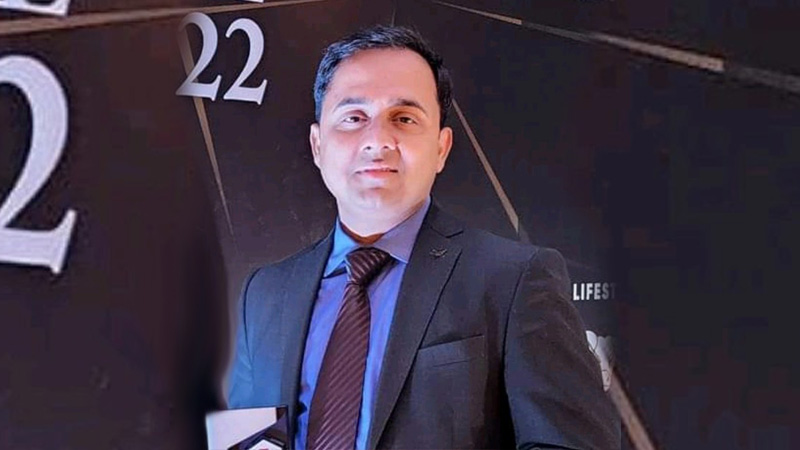
Noida: Haldiram’s has tapped a seasoned brand builder to sharpen its quick-service ambitions. Rajiv Singh has joined the snacks-to-sweets giant as vice president and head of marketing and growth for its QSR business, signalling a sharper, more aggressive play in organised food retail at home and overseas.
Singh announced the move on LinkedIn, calling Haldiram’s “an extraordinary legacy in Indian food and hospitality” and adding that he looks forward to “driving brand-led growth, accelerating the QSR business, and building scalable, consumer-first marketing engines in partnership with the leadership team.” He described himself as “grateful for the trust” and “excited about the journey ahead.”
The appointment places a 15-year marketing veteran at the helm of one of India’s most recognisable food brands as it seeks to deepen its presence in quick-service restaurants, digital commerce and international markets. Singh’s mandate covers brand strategy, growth marketing and expansion of the QSR footprint across India and overseas.
Before Haldiram’s, Singh spent nearly four years at ITC Limited as head of growth and marketing for ITC Food Tech, where he worked on building cloud-kitchen domains and digital-first food ventures. His tenure saw influencer-led campaigns, café launches and celebrity-backed digital promotions for ITC Sunfeast Baked Creations, including collaborations with cricketer Shreyanka Patil and brand integrations with RCB players on delivery platforms such as Swiggy.
Earlier, Singh served as head of brand marketing and strategic alliances at Happilo International, steering D2C expansion, portfolio management, new product launches, ecommerce growth and high-visibility sports partnerships, notably the brand’s title sponsorship association with Rajasthan Royals. Campaigns during this period leaned heavily on influencer marketing, digital content and cross-platform brand collaborations.
His longest corporate stretch came at Blackberrys Menswear, where he rose from brand manager to manager retail marketing over three and a half years. There, Singh worked on brand identity changeovers, seasonal launches and trade shows, and helped grow the company from Rs 443 crore to Rs 1,000 crore within 30 months, according to his profile. He launched Knitalia Khaki, billed as India’s first 100 per cent cotton knitted trousers, and created the intellectual property “India Khaki Week,” a campaign credited with boosting khaki sales by 339 per cent and increasing footfall by 173 per cent. Key partnerships included the film *Race 3* as style partner featuring Salman Khan, the Distinguished Gentleman’s Ride and multiple regional campaigns. He also oversaw the creation of sub-brands such as Blackberrys HOB, Blackberrys Casuale and Urban Blackberrys.
Singh’s earlier career spans agency and retail heavyweights. At Cheil Worldwide, he worked as associate account director handling retail visual merchandising for Samsung India Electronics across north India, managing operations in more than 18,000 stores including over 300 Samsung cafés and 250 Samsung digital plazas, and supervising teams of 350-plus associates during flagship device launches from the Galaxy S and Note series to the Z line. Before that, at Spencer’s Retail, he served as assistant manager marketing overseeing eastern Uttar Pradesh operations, managing in-store communication across nearly 3.93 lakh square feet and conducting the retailer’s first third-party funded “Shopping Carnival” campaign. The region, his profile notes, was EBITDA positive during his tenure.
Across roles, Singh’s experience cuts across FMCG, retail, fashion, consumer durables, digital, ecommerce and D2C, with competencies ranging from brand building and media buying to influencer management, visual merchandising, store design, capacity planning and intellectual-property creation.
For Haldiram’s, the hire is less a routine executive shuffle and more a statement of intent. With organised QSR competition intensifying and consumer attention fragmenting across screens and storefronts, the company is betting on marketing muscle and digital fluency to stay ahead. Singh arrives with a résumé built on scale, speed and spectacle. The brief is clear: grow fast, grow wide and make the brand impossible to ignore.