News Broadcasting
Government expects pay channels to announce prices ‘very soon’


NEW DELHI: The government today expressed optimism that the stakeholders of the industry would come out with solutions to various contentious issues, including the pricing of individual channels, by tomorrow or “very soon” for a smooth transition to the conditional access regime.
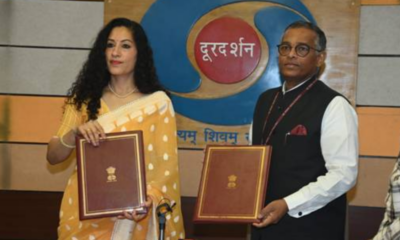
“We are facilitators in this process. If the broadcasters had said they would come back (with the pricing strategy), I have to believe them and think that soon all such issues would get resolved,” information and broadcasting ministry secretary Pawan Chopra today told journalists on the sidelines of a function organised by Doordarshan to launch a new series of CDs to mark 100 years of recorded music in India.
Quizzed on issues of distribution margin and as to who’ll fix the price of the pay channels — the broadcasters or the MSOs — Chopra said, “I am not a marketing person, so I cannot speak on these. But I am sure the people who do business in the industry will sort them out.”

Chopra also said that the government would not mind if some sort of a tiering is done so the consumers get choice at a nominal rate.
“I would say rock bottom price,” the government official added when asked whether the government would prefer tiering of channels or each pay channel being priced at a rock bottom price so as to meet the figure of Rs 200, including the price of the basic tier, that the I&B minister Ravi Shankar Prasad had been quoted as saying would be the monthly cable bill.
Asked specifically whether the government would relent on the transitory phase of six months and allow broadcasters to hold on to invitation price and such similar schemes that long, Chopra said, “Those things have to be looked into as they (the industry players) have been doing business in a certain way that cannot be upset suddenly.”
He also expressed the hope that there would be adequate number of set-top boxes available in the market to see through the transition phase to CAS.
As reported by indiantelevision.com earlier, the I&B ministry officials would meet up with the various stakeholders of the industry tomorrow, including independent cable operators, to take stock of the CAS situation.