MAM
Old, rich, married Americans give telemkting the thumbs down

WASHINGTON: Here is a piece of information that should make people in the business of telemarketing goods and services sit up and take notice. Two-thirds of Americans have indicated their willingness to sign up for the newly established “Do not call” registry. This is a single registry which will exempt US households from many types of telemarketing calls.
These results are contained in a survey of 1,000 Americans which was conducted from 27-30 June 2003 by WirthlinWorldwide, a strategic opinion research and consulting firm. A Centre For Media Research report indicates that households that say they are most likely to sign up are older and higher-income Americans as well as those that are married.
Older Americans have had more than their fill of telemarketing calls. 56 per cent have said they definitely will sign up for the new “Do not call” registry. In addition, 83 per cent of America’s highest income households, those with more than $60,000 in household income and a disproportionate amount of buying power, indicate they are considering registration (63 per cent definitely will, 20 per cent might).

The survey also confirms that married consumers, especially those with children, are more likely than the average to put their name on the list. Nearly six in ten married consumers say they definitely will sign up, while those that are single or without children are less likely to register. The percentage figure for both is in the thirties.
A related Reuters report states that telemarketing companies will have to pay over $7,000 per client to purchase the new nationwide “do-not-call” list of phone numbers. The US Federal Trade Commission(FTC) set the $7,345 fee that helps fund the do-not-call list. The restrictions on telemarketers starts from 1 October.
From that date the FTC can start taking legal action against companies that make telemarketing calls to registered consumers with penalties of up to $11,000 per call. Meanwhile telemarketers are challenging the list in court. America’s Direct Marketing Association has said the list is too expensive and telemarketers should have to pay only once.
The do-not-call registry has grown to nearly 29 million phone numbers since the FTC started letting consumers sign up last month, and the agency expects the list eventually will grow to 60 million numbers. Telemarketers that buy the list will have access to the numbers starting on 1 September says the FTC. They can buy the whole list or pay $25 per area code for part of it.

MAM
VML India lands two finalist spots at Cairns Hatchlings 2026
The Mumbai agency is back in Australia with two teams, a UN brief and 24 hours to impress

MUMBAI: VML India is heading to Australia again. The Mumbai-based creative agency has secured two finalist spots at the Cairns Hatchlings 2026 competition, one in the Audio category and one in Design, making it the only Indian agency to have reached the finals in both editions of the contest since its launch in 2025.
Four people will make the trip. Senior copywriter Shilpi Dey and senior art director Raj Thakkar will compete in Audio. Art directors Shabbir and Shruti Negi will go head-to-head with the world’s best in Design. The finals take place at the Cairns Convention Centre from 13th May, culminating in an awards ceremony on 15th May.
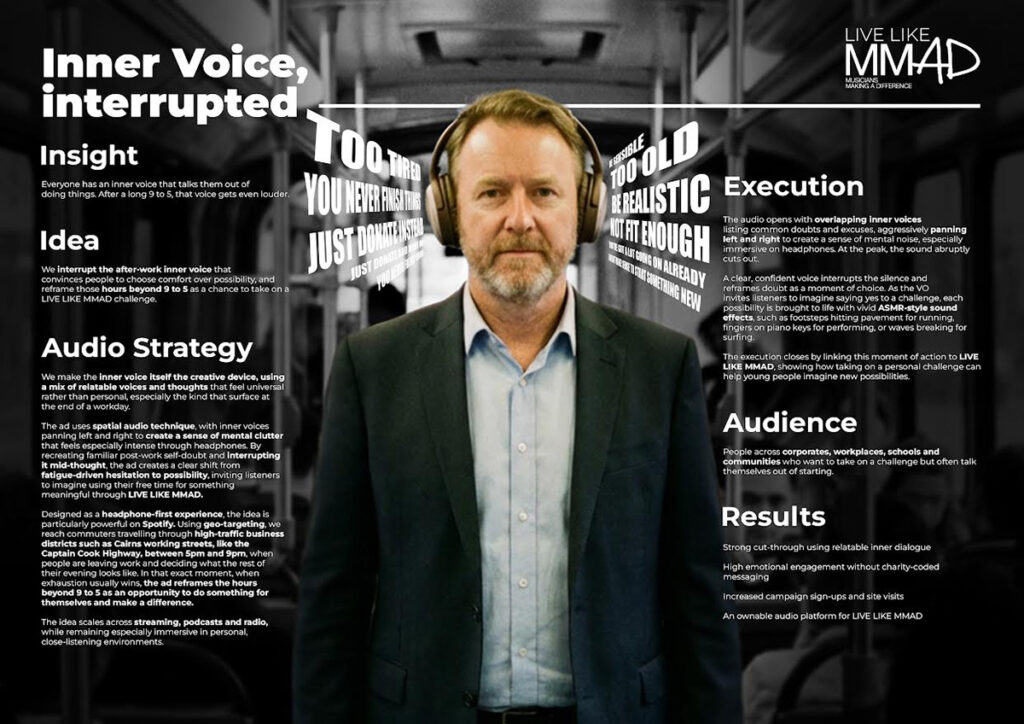
The work that got them there is worth examining. For the Audio category, Dey and Thakkar tackled a brief for LIVE LIKE MMAD with a campaign called Inner Voice, Interrupted. Using spatial audio techniques, the campaign recreates the overwhelming self-doubt that descends after a long workday, physically panning negative thoughts left and right before cutting the noise entirely to reveal a confident inner voice. Strategically targeted at commuters via Spotify during evening rush hours, the campaign reframes the hours after work as an opportunity for personal growth and charitable action.
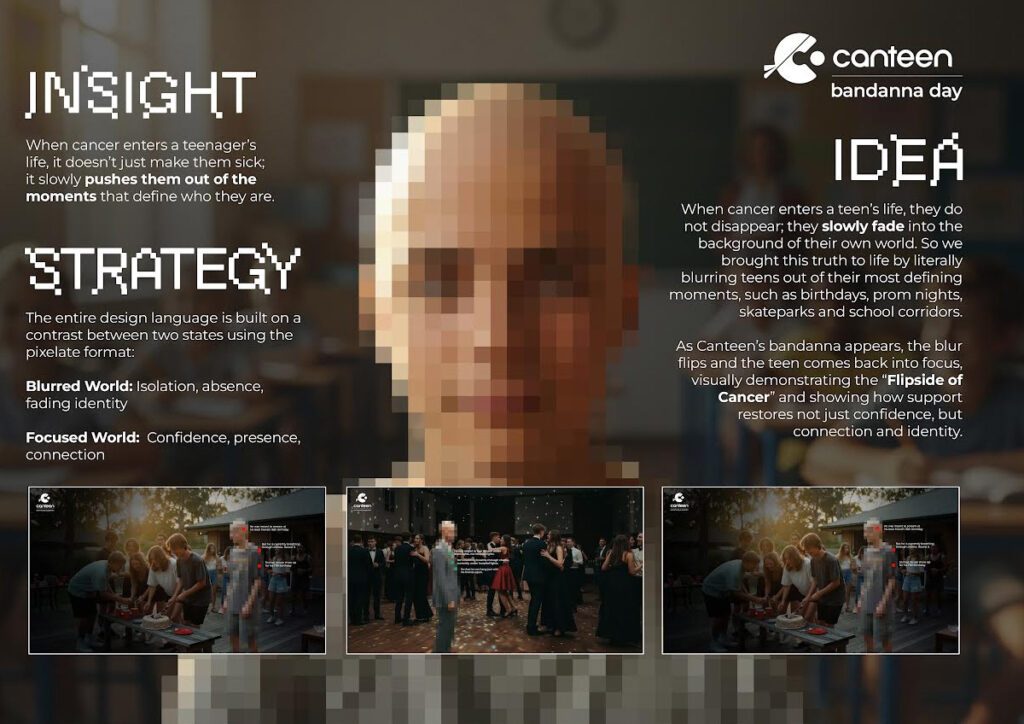
For the Design category, Shabbir and Negi worked on a brief for Canteen’s Bandanna Day, a campaign highlighting how cancer pushes teenagers out of their own defining moments. Using a pixelated design language to create stark contrast between a blurred world of isolation and a focused world of connection, the campaign, titled The Flipside of Cancer, shows teenagers fading into the background of birthdays, skateparks and school proms. As a Canteen bandanna appears, the blur flips and the teenager snaps back into sharp focus.
Kalpesh Patankar, group chief creative officer of VML India, made no attempt to disguise his satisfaction. “We are immensely proud to see our teams consistently excel on the Cairns Hatchlings platform since its inception,” he said. “They have masterfully tackled challenging briefs across diverse categories, demonstrating both layered storytelling and a unique creative approach. This exceptional teamwork is truly inspiring.”
Dey and Thakkar, returning to the finals after last year’s run, were candid about the demands of the audio medium. “It’s one of the most demanding mediums, where we only have a few seconds to capture a listener’s world with sound alone, so absolute clarity is essential,” they said. “The true measure of creative work is its ability to create positive change, and our audio submission was made to help those who need it most while encouraging people to silence the inner voices that hold them back.”
Shabbir and Negi, competing in Design for the first time, described the experience as “a completely different beast.” “We see it as an opportunity to showcase our expertise, raise the bar, and challenge ourselves in new ways, while also learning from creative minds from across the globe,” they said.
In Australia, the four finalists will face a live 24-hour brief from the United Nations before presenting in a live pitch session. Twenty-four hours, one brief, one shot. VML India has been here before. It knows exactly what is at stake.