News Broadcasting
Andrew Gilligan’s resignation statement in full

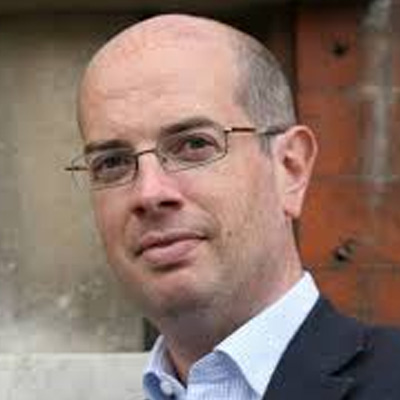
MUMBAI: The following is the full text of Andrew Gilligans resignation statement:
“I am today resigning from the BBC. I and everyone else involved here have for five months admitted the mistakes we made. We deserved criticism. Some of my story was wrong, as I admitted at the inquiry, and I again apologise for it. My departure is at my own initiative. But the BBC collectively has been the victim of a grave injustice.”
“If Lord Hutton had fairly considered the evidence he heard, he would have concluded that most of my story was right. The Government did sex up the dossier, transforming possibilities and probabilities into certainties, removing vital caveats; the 45-minute claim was the classic example of this; and many in the intelligence services, including the leading expert in WMD, were unhappy about it. Thanks to what David Kelly told me and other BBC journalists, in very similar terms, we know now what we did not know before. I pay tribute to David Kelly.
“This report casts a chill over all journalism, not just the BBCs. It seeks to hold reporters, with all the difficulties they face, to a standard that it does not appear to demand of, for instance, Government dossiers. I am comforted by the fact that public opinion appears to disagree with Lord Hutton and I hope this will strengthen the resolve of the BBC.
“The report has imposed on the BBC a punishment far out of proportion to its or my mistakes, which were honest ones. It is hard to believe now that this all stems from two flawed sentences in one unscripted early-morning interview, never repeated, when I said that the Government ‘probably knew’ that the 45-minute figure was wrong.
“I attributed this to David Kelly; it was in fact an inference of mine. It has been claimed that this was the charge which went round the world, but a cuttings check shows that it did not even get as far as a single Fleet Street newspaper. Nor did the Government mention it in its first three letters of complaint.
“In my view, this helps explain why neither I nor the BBC focused on this phrase as we should have. I explicitly made clear, in my broadcasts, that the 45-minute point was based on real intelligence. I repeatedly said also that I did not accuse the Government of fabrication, but of exaggeration. I stand by that charge, and it will not go away.
“In Greg Dyke the BBC has lost its finest director general for a generation. He should not have resigned, and I am extremely sorry to see him go.
“I would like to thank the BBC for its support throughout the extraordinary and terrible ordeal that has been the last seven months. It has defended the right to investigate and report accurately on matters about which the public has a right to know. Save for the admissions I and the BBC have made, my reporting on the dossiers compilation fulfilled this purpose.
“I love the BBC and I am resigning because I want to protect it. I accept my part in the crisis which has befallen the organisation. But a greater part has been played by the unbalanced judgments of Lord Hutton.”