News Headline
Curbing ‘offensive’ poll ads: EC chief indicates ‘can’t do’

MUMBAI / NEW DELHI: A day after the Supreme Court outlined the rules of engagement on political advertising and declared the Election Commission would be the referee in the matter, the EC has indicated it is not up to the task.
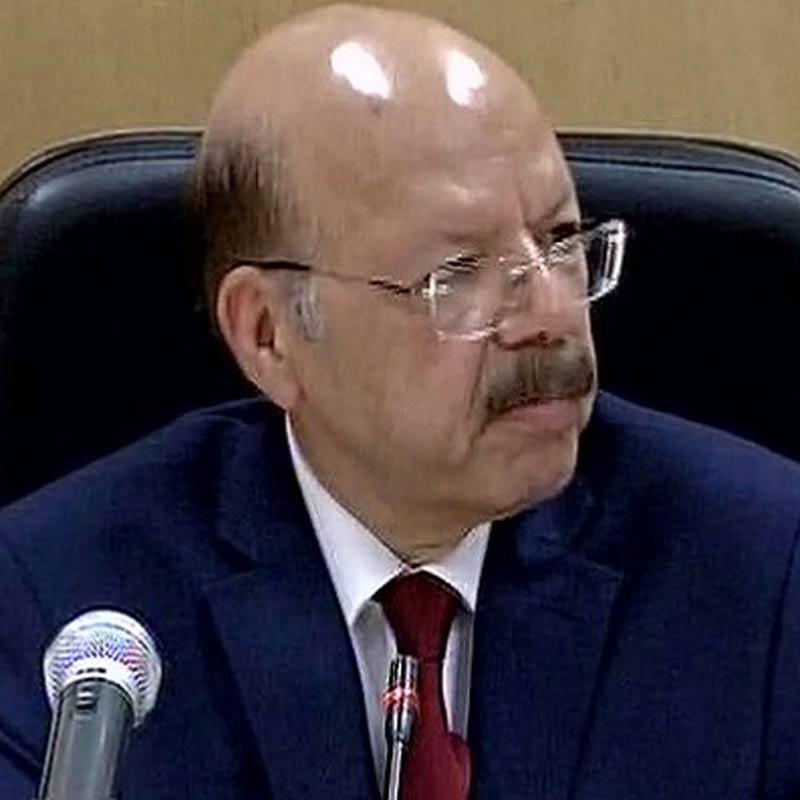
Chief Election Commissioner TS Krishna Murthy, speaking to the media in Jammu (he is currently touring the border state of Jammu & Kashmir to review ongoing preparations for the upcoming general elections) said there were no provisions to rein in erring parties.
In its order, the SC observed that, ”no cable operator or television channel will telecast any advertisement, which does not conform to the law of the land and offends morality, decency and religious susceptibility of the viewers and are shocking, disgusting or revolting.”
“We do not have much power to suspend the candidates or even get them disqualified or take steps to remove them from the election process,” the CEC was quoted as telling a news channel.
It is not just the difficulty in defining the grounds under which it can crack down, that is at issue here. The EC does not have the apparatus required to keep tabs on channels, especially since even small towns have indigenous cable networks. This is an aspect that is likely to come to the fore even more strongly in communally polarised states such as Gujarat.
The full commission is meeting in the capital and a the EC’s response to the apex court’s directive will be made then. An affidavit would be filed in the SC on Monday in which “we will clear our stand over the issue,” the Press Trust of India quoted Election Commissioner BB Tandon as telling reporters in Jammu.
However, inquiries by indiantelevision.com to the EC’s offices in the capital drew a blank as there was no senior officials available. The information coming through the EC’s office in the capital was that the entire commission team was in Jammu & Kashmir.
Yesterday’s interim observation from the apex court came after a hearing on a Special Leave Petition filed by the information and broadcasting ministry earlier this week seeking a stay on an Andhra Pradesh high court order that lifted the ban on political advertising on the electronic medium, which had been put in place through clauses in the Cable TV Network (Regulation) Act, 1995.
On 23 March, the Andhra HC, based on a petition filed by Gemini Television Network, ETV and Maa TV which challenged rule 7 (3) of the Act invoked by the information and broadcasting ministry and Election Commission to ban telecast of political advertisements, had quashed the ban.
The HC had also observed that the ban order amounted to discrimination between the two media (print and electronic) and was violating the right to freedom of trade and business.
Interestingly, the apex court said that its present directives would “substitute” the Andhra Pradesh high court ruling. Legal experts interpreted this as SC’s indication that it has not taken a final call on the fate of political advertising on electronic medium or Clause 7(3) of the Cable Act.
The I&B ministry’s SLP was a result of deliberations that took place in the government and at the highest level in the Bharatiya Janata Party on Monday after a surrogate ad cast aspersions on prime minister AB Vajpayee’s political antecedents and threatened to tarnish his squeaky clean image.
A three-judge Bench, comprising Chief Justice VN Khare and Justices S B Sinha and S H Kapadia, accepted the submissions of Attorney General Soli J Sorabjee in putting in stopping “political mudslinging” through surrogate advertisements.
The Bharatiya Janata Party, which had bowled the first ball in this Bodyline series of political advertising, has welcomed the efforts of SC to formulate guidelines on the content.
According to a BJP spokesperson, Mukhtar Abbas Naqvi, the party has always been in favour of media campaigns based on issues affecting the people. “The people of the country found the Congress ads to be unacceptable and there should be a code of conduct on what should be the content of such ads and what should not be,” a PTI reported Naqvi as saying.
The Congress, however, was quick to point out that it was the BJP that started such mud slinging. A senior party leader and a member of the Congress’ media cell said, “We welcome the court’s suggestions. But when it started hurting them (BJP), then only they went running to take legal shelter.”