MAM
Bad Ad Review 2003?

Can a review of the highlights of the advertising business in 2003 be based principally on a survey done on advertising that appeared on air and in print in the month of December? That is the principle quibble that one has about an otherwise interesting “critique” organised by The Ad Club of Mumbai as part of its annual review of advertising series.
The Nehru Auditorium in Mumbai was the venue yesterday for Ad Review 2003 – a look at how 2003 was for the advertising fraternity.
More often than not it is one of the ad ‘gurus’ who present this review. This year though, to get a different perspective, someone from the client’s side – Hindustan Lever Ltd executive director personal products Arun Adhikari – was asked to take the podium. More than focusing on the good ads of 2003, Adhikari pulled no punches over the ‘waste and rubbish’ that was thrown out last year or, should we say, in December 2003.
 |
|
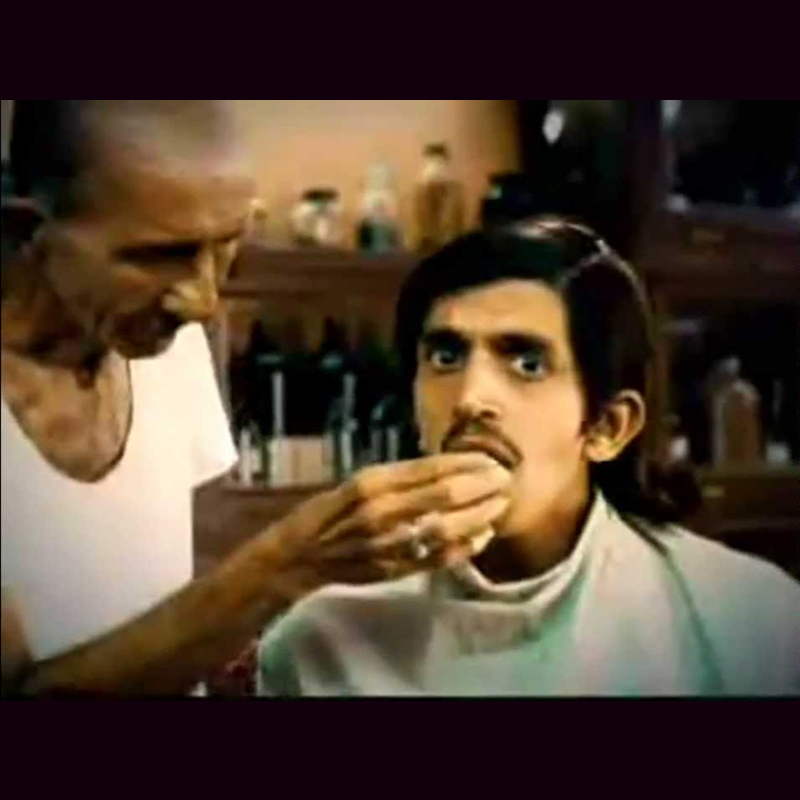
Wonderfully shocking!! – Center Shock chewing gum ad
|
Attended by the likes of O&M’s Ranjan Kapur and Piyush Pandey, Leo Burnett’s Arvind Sharma, Madison India’s Sam Balsara, to name a few, the review was intended to “make people uncomfortable when they left the room.”
Adhikari started by saying, “I will take the opportunity to offend the entire industry, get thanked for it at the end and also get a memento for doing just that! And if people do feel uncomfortable at the end of this talk then I will be more than successful in my efforts.”
 |
|
Coca Cola’s Yaara da Tashan
|
He started with showing the best TVCs (television commercials) and print and outdoor campaigns for the year 2003. Among the best TVCs were O&M’s ad by Fevicol, Center Shock chewing gum and Amaron Batteries and McCann Erickson’s ad for Coca Cola featuring Aamir Khan and the ‘kudis’. The best print and outdoor ads in 2003 were that of Tata Sumo, Cancer Cures Smoking, Orange, Ariel, Coca Cola, The Economic Times and that of the Abby Awards.
 |
| Age old Tortoise-Hare story depicted in the ad of Amaron Batteries |
Referring to the ads mentioned above, Adhikari said, “No doubt these ads are a source of pride for us and are a proof of what we do. They also help us in setting standards. But the truth is that very little of the work created in the industry is worthy of such credit.”
Adhikari carried out a survey with the help of his team at HLL and other professionals from the advertising industry. The team of 40 advertising and marketing professionals evaluated ads that appeared on air and in print for the month of December 2003 and the review was based on those results.
 |
|
The Ariel hoarding… impressive!
|
Seventy-seven TVCs of the big spenders of December 2003 aired on Doordarshan and the other Hindi satellite channels and 50 print ads that featured in leading English news, film and business magazines like India Today, Outlook, Business Standard, Stardust, Femina were evaluated.
Once assessed, these ads were categorised as Outstanding – one which scored six points and was described as a fantastic ad (surprisingly no ad featured in this category). A Good ad (five points) was one which had a sound message, creative flair and was well produced. The same ad became only Worthwhile (four points) if it had the qualities of a good ad but was not well produced. A Basic ad (three points) was one which had a sound message. A Wasted ad (two points) said nothing at all and was forgettable. And an Appalling (one point) one deserved to be rubbished and it would have been better if the client hadn’t run it all.
 |
 |
|
One of the ‘Waah’ ads of December 2003
|
Sunil Babu in all his glory (Asian Paints ad)
|
Television ads that scored between four and five were ICICI Prudential Retirement Solutions, Asian Paints (Sunil Babu ad), Ponds Cold Cream, Raymonds and DeBeers Diamond jewellery. These comprise eight per cent of the 77 ads that were surveyed.
One third (40 per cent) of the ads scored between three and four. John Players, Tata Tea and Boro Soft Soap fell under this category. The bottom pile weighed as much as 17 per cent with ads like those of MDH Masala, Bridgestone Radials, Sanket pan masala, Kamla Pasand pan masala and Microtek – these could be totally forgotten.
What our ad industry really produced
|
Type
|
Percentage
|
| Outstanding | Zero per cent |
| Good | Eight per cent |
| Worthwhile | 35 per cent |
| Basic | 40 per cent |
| Wasted & Appalling | 17 per cent |
 |
|
One of the finer print ads – Mahindra’s Scorpio
|
Among the print campaigns, the highest score any ad got in the survey was a four (which is lower than that of the TVCs). The top print ads were that of World Gold Council, Palmolive Aroma Therapy and Mahindra’s Scorpio. Blender’s Pride, Royal Stag and Wagon R were examples of those that scored between two and three on the survey – the completely forgettable ads – comprising two thirds (66 per cent) of the print ads. Among those that scored between one and two (the appalling creations) were Charagh Din and Racold.
 |
|
Definitely forgettable ! |
“Therefore, 57 per cent of the big spending television ads and 80 per cent of print ads didn’t have a hope in hell of doing anything,” said Adhikari. The figures speak volumes don’t they…?
Going on to explain about the waste produced in advertising, Adhikari said, “Maybe the agencies aren’t really affected because their reputation is already built on great show reels and the penalty of losing an account is only an extreme as the blame can always be put on the ‘fickle and dumb’ client.”
From the marketers’ perspective, Adhikari said, “Maybe marketers don’t know better because of the lack of understanding of effective communication. Also a reason could be that consumers never see the ads either by physically zapping channels / flipping pages or by forgetting them even if they are exposed to them.”
 |
|
The Economic Times – Ruling!
|
A greater revelation was that 30-40 per cent of the appalling and wasted ads were made by none other than the big agencies – and by big we mean those that are among the top 20 agencies and provide almost 80 per cent of the ad business in India.
While the total ad spend for the year 2002 was Rs 95 billion, the growth rate of advertising in India was only six per cent, Adhikari said, citing figures for the previous year for want of the latest numbers being validated and available.
The reason for the poor performance? “Poor advertising which leads to wasted spend and in turn the client loses faith in the agency and therefore spends less,” said Adhikari. In conclusion, Adhikari had this to say, “Good advertising was less about skill and more about will.”
 |
|
One of the appalling TVC was that of Sanket pan masala
|
The Q&A session that followed predictably had some missiles thrown back in defense of the ads. The question was that some ads that were shown (eg: the TVC of Sanket pan masala) may not have been good from an “creative” perspective, but the end result was that it gave the brand leader in that genre a run for its money and was very effective vis-?-vis the target audience. To this Adhikari said, “We have not done a consumer assessment here. As advertising professionals we feel that these ads were not creative enough.” Agreed, but isn’t the basic aim of an ad that it should move more of the product it is highlighting?
Madison India’s Sam Balsara wanted to know on a scale of one to 10 how much responsibility would Adhikari attribute to the advertiser and how much to the agency for the bad ads that were made. “It’s a shared responsibility. It depends, if it was a first time advertiser then the onus would fall on the agency more than the advertiser,” said Adhikari.
On the other hand, since the presentation focused more on the bad ads, Leo Burnett boss Arvind Sharma jokingly suggested that along with the Abby Awards a ‘Baddies Awards’ should be initiated by the industry!
Not a bad idea after all!