News Broadcasting
Qatar’s Al-Jazeera TV: In the spotlight for all the right reasons

There is one television network that all major news networks are sourcing for any worthwhile footage on the world’s most wanted man – Osama Bin Laden. Need actual footage from inside the heart of the Taliban’s Afghanistan’s and it is Al-Jazeera that is providing it. It is the first 24-hour satellite news network in the Arab world. It is also the first Arab news outlet that offers uncensored information and free interpretation of political events.
Qatar may be one of the smallest states in the world, with a population of only 690,000, but its state-funded Al-Jazeera satellite television network is certainly big on the news front.
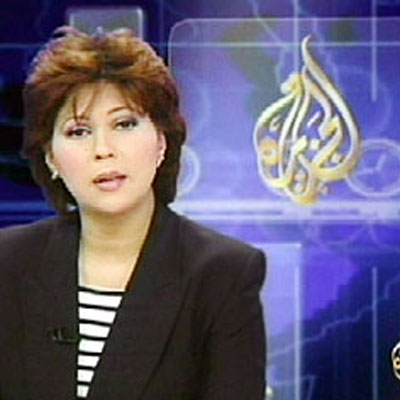
Algerian anchor Khadija Ben Guenna on Al-Jazeera.
(Courtesy Time)
Consider what it has had to contend with over the last few months: In April, Libya abruptly withdraw its ambassador after Al-Jazeera broadcast an interview with a Libyan opposition figure. Shortly thereafter, the Iraqi government lodged a complaint with Qatari officials when Al-Jazeera reported the enormous expenses of Saddam Hussein’s lavish April 28 birthday celebration. On May 2, Tunisia’s ambassador complained to Qatar’s foreign ministry about a programme on Al-Jazeera that accused his government of human rights violations.
A week later, the Iranian daily Jomhuri-ye Eslami, a conservative newspaper aligned with Ayatollah Khamenei, accused the station of “attributing false news to the esteemed leader of the revolution” after it reported that Khamenei favoured the annulment of Iran’s February parliamentary elections.
Post-11 September, it is the Bush administration that has been seeing red. It is pressuring Qatar to restrain Al-Jazeera saying it is unbalanced and encourages anti-American sentiment in the Middle East.
The issue was raised by Secretary of State Colin Powell on 3 October at a meeting in Washington with the emir of Qatar, Sheikh Hamad bin Khalifa al-Thani.
By far the most popular satellite news channel in the Middle East, it is programmes such as “The Opposite Direction” and “The Other Opinion,” modeled on CNN’s Crossfire, featuring debates on controversial issues, pitting Islamist militants against secular liberals, supporters of the peace process with Israel against its opponents, etc., that have earned it such enormous cachet with its viewers. The station frequently interviews political dissidents of every imaginable persuasion.
The first interview that Bin Laden gave after the 1998 bomb attacks on US embassies in Kenya and Tanzania that killed 224 people, and which he has been implicated of masterminding, was to Al-Jazeera in June 1999. During Israel’s elections last year, the station sent its star correspondent, Muhammad Kreishan, to interview representatives of all major political parties, including an David Bar-Illan, an adviser to former prime minister Benjamin Netanyahu.
Since it was started in 1996 by Sheik Hamad, Al-Jazeera has revolutionized the media scene in the Arab world with its vibrant and lively debates. Although Al-Jazeera, which means “the Peninsula” in Arabic, receives a $30-million annual subsidy, the Qatari government does not exercise direct control over the channel’s policies. The station is also supported by advertising and subscriptions.
Technical Specifications:
Satellite : Arabsat IIA
Ku Band at 26 East
Downlink Polarisation : Horizontal
Frequency : 12521 MHz
Satellite : Eutelsat II F3
Ku Band at 16 East
Downlink Polarisation : Horizontal
Frequency : 11808 MHz