News Headline
3 new contracts for Arianespace

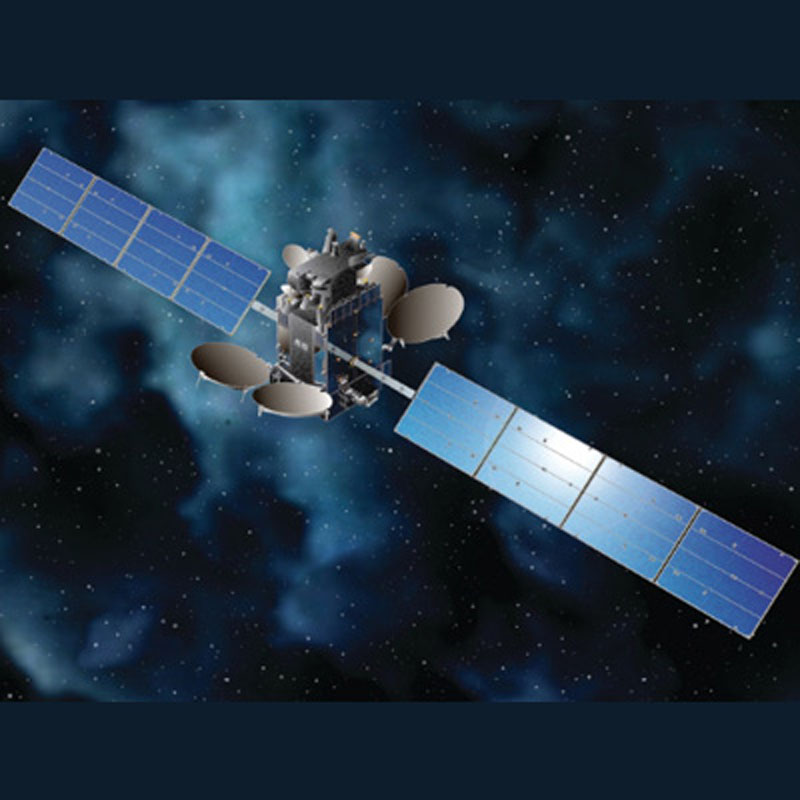
Arianespace yesterday announced three new contracts for Ariane launches of the DIRECTV-7S, iPSTAR-1 and STAR ONE C1 satellites.
“We are pleased that despite the market downturn, we were able to sign these three orders – two of which are with repeat customers, and the third involving a new operator,” Arianespace chairman and CEO Jean-Marie Luton, was quoted as saying in an official release. “These customers’ choice underscores the ability of Arianespace to make competitive offers, which are backed by the success and efficiency of our launches. I would like to express my thanks to DirecTV and Shin for their renewed confidence, and to Star One for our new partnership.”
iPSTAR-1
iPSTAR-1 will be the fourth satellite launched by Arianespace for private Thai operator Shin Satellite Public Company Ltd (formerly Shinawatra Satellite). It follows Thaicom 1 (orbited in December 1993), Thaicom 2 (launched in October 1994) and Thaicom 3 in April 1997.
Built on a new-generation Space Systems/Loral FS 1300 platform, iPSTAR-1 will weigh over 6,700 kg at launch. It will be positioned at 120 degrees East, and will mainly provide broadband Internet and multimedia services. Its footprint will cover not just Thailand, but all countries in the Asia-Pacific region. iPSTAR-1’s launch is scheduled for early 2004 on an Ariane 5 heavy-lift vehicle. With its 5-meter diameter fairing, Ariane 5 is the only commercial launch vehicle in operation today capable of launching such hefty 5-tonne class satellites.
DIRECTV-7S
After Ariane launches of DIRECTV-1, DIRECTV-3 and DIRECTV-4S, US direct-to-home television provider DIRECTV has again chosen to launch its satellite with Arianespace.
DIRECTV-7S will operate from 119 degrees West longitude but is also capable of operating from orbital 101 degrees West longitude, the primary orbital slot for DIRECTV, and will provide customers in the United States with local channel service to additional markets and new services. The Space Systems/Loral-built satellite will operate with 37 spot-beam transponders for regional broadcasting and 7 super-high power beam transponders for national coverage from the 119 degrees West longitude location. DIRECTV-7S’ launch is scheduled for early fourth quarter 2003 and will have a separated mass of 5,550 kg.
Star would have to restrict its shareholding in Space Television to 20 per cent, in accordance with the policy guidelines on DTH. The total foreign investment including foreign direct investment, and investment by Non-Resident Indians, overseas corporate bodies and foreign institutional investors should not exceed 49 per cent. Also, a broadcasting or a cable company cannot hold more than a 20 per cent stake in a DTH venture.
STAR ONE C1
STAR ONE, an operator of satellite capacity, based in Brazil, is a subsidiary of Embratel in which SES Astra holds 20 per cent of the capital. This spacecraft, also named Simon Bolivar F1, is the result of the cooperation between Brazil and 5 Andean countries (Colombia, Peru, Bolivia, Ecuador and Venezuela). With this programme STAR ONE will become a regional operator and key provider of telecommunications services for Latin America. STAR ONE C1 will be lofted by an Ariane 5 in the fourth quarter of 2004 from Europe’s Spaceport in French Guiana. It will be positioned in geostationary orbit at 67 degrees West, above the Atlantic Ocean. Built by ALCATEL SPACE in Cannes, France, this Spacebus 3000-based platform will be optimized to provide direct television, telecommunications and Internet services. With a liftoff mass of about 4,100 kg., STAR ONE C1’s 44 Ku-band transponders will provide coverage over South America and the area south of Florida.
In November 2000, the Cabinet had given a formal nod to the reception of Ku band television signals direct to Indian homes. Various restrictions were put in as a safeguard against the creation of monopoly and cultural invasion.
Since then, however, the response to the DTH policy had been lukewarm. Till Space TV came along to apply for a licence.
The delays on the DTH front has created concern in certain sections of the government. The Planning Commissions Tenth working group on the information and broadcasting ministry had said sometime back: The policy on DTH has not encouraged any player to come so far and promote the growth of digital set-top boxes. This needs to be reviewed. The policies to treat DTH services as the source of revenue are counter-productive. They limit the growth of the market and defeat the very objective of reaching out to consumers.