Executive Dossier
‘”I will pursue CAS as zealously as my predecessor” : Ravi Shankar Prasad Information & broadcasting minister

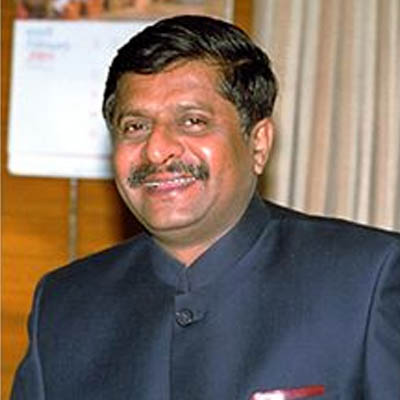
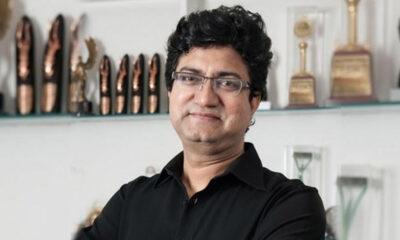
Ravi Shankar Prasad, the new minister of information and broadcasting is a no-nonsense man. He speaks haltingly, in a measured manner, mulling, chewing and pondering over every word before he lets it past his lips. The man is obviously not given to flamboyance.
Since he has taken over just few days back at a high-profile ministry – regarded for long as the graveyard of some of the best of politicians (evn for an equally high-profile media-loving person like Sushma Swaraj) – Prasad has been trying his best to keep pace with the fast changing scene in the media, entertainment and broadcasting sectors.
But his disarming ways can be infectious. He candidly admits:
“I am new in this office and am still acquainting myself with the setup and this includes even taking calls on the phone sets (conveniently located at various places in the spacious Shastri Bhawan office of the I&B minister in Delhi).” As if on cue he ambles to another section of the office to receive a call with a smile on his face.

Prasad, a lawyer by profession prior to his entry in politics and subsequently into the Union Cabinet, is one of the rising stars of the Bharatiya Janata Party (BJP) that leads the coalition Indian government.
Indiantelevision.com’s executive editor Anjan Mitra caught up with Prasad on the morning of 5 February at his office for his first ever interview as a minister to the media. (That is, if one doesn’t take into account the interview that was telecast of the minister on Doordarshan last week.)
|
What are your priorities ? The idea is to make it a people’s plan. In this whole plan, the public broadcaster is an important element and effort would be to make the public broadcaster competitive so that it can give quality fare. |
|||
|
|||
|
Where competitiveness is concerned, the public broadcaster, Prasar Bharati, is found wanting at times in rising to the occasion vis-?-vis private satellite channels. Your comments. But competitiveness does not only mean entertainment. I agree it is an important aspect, but development (news and information) also sells. That is information like the spread of floriculture, steps taken in the agricultural sector and so on. Information and news like this will have to be taken to the masses. The government’s achievements and works done for the public will have to be spread in a constructive manner. |
|||
|
Your predecessor believed that the ‘E’ of ICE (information, communication and entertainment) should be given a fillip. Do you also subscribe to similar beliefs? |
|||
|
|||
|
There are still nagging doubts about the rollout of conditional access system in India as expressed by the industry. Do you feel that conditions aren’t right for CAS in the country? |
|||
|
That’s exactly one of the concerns; that CAS may not ensure full transparency for the stakeholders of the industry. What do you have to say on this aspect? |
|||
|
|||
|
Would you pursue as zealously the implementation of CAS like your predecessor did ? |
|||
|
What about the issue of uplinking foreign news channel from India? |
|||
|
Why do you think the issue of Star’s proposal to uplink from India has been hyped? What is so unique about it as it falls within the existing policy on uplinking ? |
|||
|
Is it possible that Star News proposal could get a provisional nod and would be subject to future policies on the issue as and when they are finalised? |
|||
|
Is there a deadline for the I&B ministry to take the Star proposal to the Cabinet? Photographs by Sanjay Sharma |
|||