MAM
Design maestro Dick Powell on reimagining design and never giving up

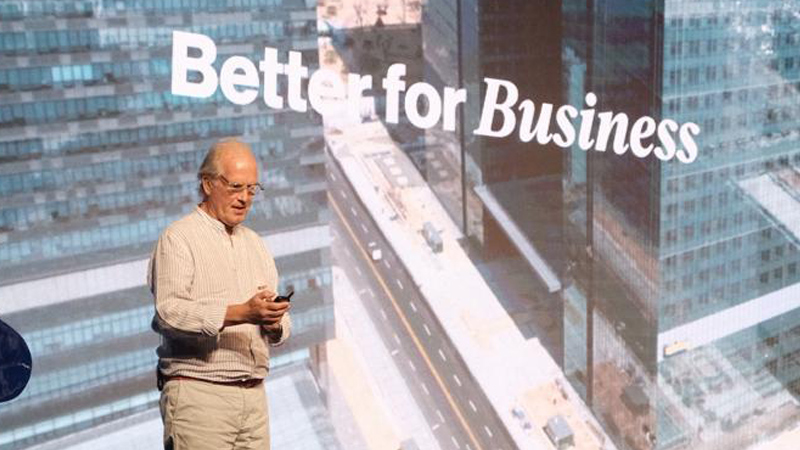
Mumbai: Since the last in-person Designyatra in 2019, the world has spun on its head.
The pandemic prompted a re-evaluation of not just how we work, but the kind of work we’re creating as well. With massive shifts in nearly every aspect of life, it triggered the need for new design narratives to match the flux of life. We had to reimagine how we engage and communicate with everything from brands and business to art, entertainment, and activism. Mindsets changed. And so did the tools available to us. It was time for a reset.
A reset. It’s not just about starting over; it’s about reimagining, realigning, and redrafting some of the rules. It’s about rethinking conventions, challenging norms, and creating fresh narratives. All to remain relevant.
Indiantelevision.com caught up with Dick Powell on the sidelines of the Kyoorius Design Yatra 2023.
Dick Powell, co-founder of Seymourpowell, a top-notch design company has almost 40 years of experience. Recently Powell’s team designed the inside of Virgin Galatic’s spaceship.
He is a big supporter of creative folks shaping our future, spending a decade as chairman at D&AD and serving on boards like the Design Council and Samsung’s International Design Advisory Board.
On elaborating on the topic of design being more than just aesthetics
If you ask anybody in the street, what design is, they would tell you that it’s about aesthetics, form, color, shape, and the soft, emotional aspects of things. But for me, it’s also about making things better and we all have a duty to make things better. So fundamentally, when we’re creating new products and services, our primary focus should be improving the lives of people; there’s always a customer. Design is not art; it’s not about self-expression, it’s a commercial act. The companies that we work for have to make money from what we do, better for the world, We strive for sustainability in sourcing, design for repair, and ensure recyclability and reusability whenever possible. We’re not always successful at that, let’s be honest, but as somebody else yesterday said, you try and make small changes, you try and have the influence you can and that way, gradually, step by step, you can change things.
On the ‘reset’ in your life in the context of this year’s Designyatra theme being ‘Reset’
Well, I think I’m the odd person out here when it comes to reset, because during the pandemic, my business had to keep going because we had big projects for clients that couldn’t be stopped. There was no option to drop the ball during that period, so we were all working right through that. So I never had that feeling of stopping and starting again. It was just always, we were just continuing. So I didn’t have that reset feeling. Actually, a designer is resetting every time you start something new. Whether you’re designing a spaceship or a spinal insert, you begin with a clean slate because you don’t have prior knowledge in that specific area. This continuous renewal is a vital aspect of the profession, as it ensures you never cease to learn. The moment you stop learning, you cease to truly be a designer. To remain effective, you must maintain a spirit of exploration and ongoing learning.
On some of your memorable works
I believe one of our noteworthy innovations was the world’s first cordless kettle, a concept introduced at a time when people were content with manually unplugging kettles. This seemingly simple solution addressed a potential safety hazard, as cords could inadvertently end up in sinks, posing dangers. If we had sought public opinion at that time, many might not have recognized it as a problem. It’s a product that resolved an issue most individuals hadn’t even realized they had. If I had received royalties for that idea, I’d probably be sailing on a yacht in Monaco Harbor right now. This is one of the projects that people associate with us. More recently, we gained recognition for designing the interior, seats, and overall experience for Virgin Galactic’s Spaceship. It’s a remarkable endeavor. These are the achievements that stand out for me. Although many everyday products may seem ordinary when they appear on high streets, they have been part of my mission. I recall my mother pointing out items on the high street, saying, “We did that, and we did that, and that too.” Enhancing everyday household items has always been a personal goal. The same principle applies to transportation – whether it’s designing the interior of a train or creating a motorcycle, the objective is clear: make it better than its predecessors.
On the feeling of speaking at the Designyatra and addressing the best of minds in design in India
The first thing to be absolutely clear is, I love India and have always loved it. I’ve been here quite a lot. I’ve had the privilege of visiting India on numerous occasions, and when the opportunity arose to speak here, my eagerness was unquestionable. Over the years of my visits to India, I’ve witnessed a remarkable transformation in the field of design. The creative landscape has soared to new heights in terms of creative endeavors, activities, and education. It’s truly astonishing. We consider our Indian colleagues to be on par with designers from any part of the world, be it the United States or elsewhere. India hosts industries that are exceptionally productive, and they rely on the expertise of designers and creative minds to drive this progress. It’s a transformation I’ve observed. When engaging with people here, you’re essentially conversing with like-minded individuals who share a common passion for design and creativity. It’s that straightforward.
On your mantra to succeed in life and the message you’d like to convey to the audience reading and listening to you
Reflecting on what I mentioned earlier, the core principle I’ve upheld is the relentless pursuit of improvement. Life offers the opportunity to introduce change, but for me, it must inherently result in something better. While many designers find their work as a form of self-expression, akin to artists, and it’s a valid approach, my perspective leans heavily on ensuring functionality and effectiveness. Creating a chair that appears aesthetically pleasing but lacks stability when sat upon is simply unacceptable in my view. Making things better is my mantra, and I believe that striving to enhance life is a noble guiding principle.
On your advice to the young minds
Never give up! I think because it’s actually quite hard to be successful in the creative industries. There are a lot of people competing for places in the creative industries. It’s quite easy to just think it’s impossible, but you know, if you keep going, and you keep doing great things, and you keep trying to improve yourself, you can get there. So making yourself better, I suppose as well as making the world better is important. Never stop learning.
On the other reason for you to want to accept to come to Designyatra
We touched on the topic of ‘Reset’ earlier. The entire landscape of design conferences underwent a significant transformation due to the pandemic, with most of them vanishing. These conferences used to offer a wonderful chance to travel abroad, connect with people, and engage in discussions about such issues. With this event at Designyatra, it marks the first conference I’ve participated in since the pandemic. It presents a valuable opportunity to re-engage with the global community. While we often travel to various locations, there’s something uniquely energising about bringing together a diverse group of people in a single forum.