MAM
Government okays FII investment in news ventures

NEW DELHI: The Indian government today formally decided to allow publication of facsimile edition of foreign newspapers in the country as also investments by non-resident Indians (NRIs) and foreign financial institutions (FIIs) in news ventures in print and TV.
However, the total foreign investment, including FDI, NRI, overseas corporate bodies (OCBs) and FIIs, in a news venture in both the media remains capped at 26 per cent.
At meeting today, chaired by prime minister Manmohan Singh, the Union cabinet allowed publication of facsimile editions of foreign newspapers and journals in India, minus local ads or content.

This would mean that London’s Financial Times, for example, could re-print an edition in India without covering local Indian news or advertisements.
However, if there’s a report filed by the India correspondent of FT for the London edition, that report could be carried.
Briefing journalists today after the Cabinet meeting, information and
broadcasting minister Jaipal Reddy said it has also been decided to increase the syndication limit of the total printed area from the present 7.5 per cent to 20 per cent under the automatic route.
The minister added that the changes would be incorporated through amendments in the PRB Act with a view to give legal backing to the Cabinet decisions.
Asked whether allowing facsimile editions would mean a threat for the Indian newspapers, Reddy ruled out any such thing happening as the facsimile editions of foreign newspapers would have access to local news and ads.
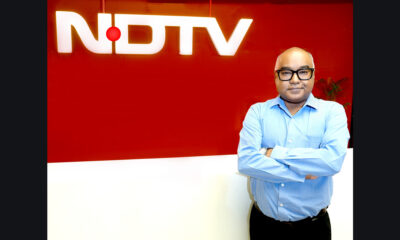
Listed media companies like Television Eighteen Ltd, Zee Telefilms and NDTV have been lobbying with the government to clarify its position on the issue of FII investments in broadcast ventures.
This has been one of the reasons why companies like Zee Telefilms and TV 18 have not yet managed to restrucuture their news operations. Government norms for uplink state that in any TV news venture, uplinking from India, total foreign investment should be capped at 26 per cent, which is not yet the case with Zee News and CNBC TV 18.
Contrary to expectation, proposed changes in the FM radio broadcast policy, which is pending with the Cabinet secretariat, could not find a place on the agenda of today’s meeting.
Reddy could not give a time frame for the radio policy to be taken up by the Cabinet, though he admitted that a note has been sent by the ministry for the Cabinet’s consideration.





Brands
Samsung India elevates Aditya Babbar to lead mobile business
Exec takes charge of MX sales and marketing after Raju Pullan’s exit

NEW DELHI: Samsung India has elevated Aditya Babbar to lead its mobile phone business, following the exit of Raju Antony Pullan.
Babbar, who previously served as vice president within the mobile division, has been appointed head of sales and marketing for the MX (mobile experience) business, effective May 1. In his new role, he will oversee the company’s sales and marketing operations for smartphones and related categories in India, reporting to the executive vice president of the MX business.
A long-time Samsung executive, Babbar brings over a decade of experience within the organisation, having held multiple leadership roles across product, marketing and category management. Most recently, he led product marketing and e-commerce for the mobile division, following earlier stints as head of product and marketing and senior director roles.
His career within Samsung Electronics and its India operations has also included responsibilities for flagship devices, tablets and wearables, giving him a broad view of the company’s premium and mass-market portfolio.
Babbar succeeds Pullan, who stepped down from the role, marking a leadership transition at a time when India remains a key battleground for global smartphone makers.
The appointment signals continuity within Samsung’s leadership bench, with an internal candidate stepping up to steer one of its most critical business units in a highly competitive market.