iWorld
Second time mobile buyers prefer upgraded handsets: Study

|
MUMBAI: According to the IDC India Mobile Handsets Study 2005, current mobile users are willing to spend Rs 7500 on an average, while buying the next handset. The value added handset features are present in a fewer number of current handsets, but for a high proportion of handset users, some of these features are must have while buying the next handset. |
|
The features most likely to drive up gradation of mobile handsets are integrated digital camera, FM radio and speaker phones, as per the study. “The average amount spend on the current handset is Rs 4500; thereby an additional Rs 3000 is likely to be spent while upgrading, a good news for the mobile manufacturers,” says User Research Group senior analyst Nikhil Pant.  |
|
Mobile vendors are taking care to market the upgraded handsets among niche segments. Though service cost and relevance factor play a crucial role in the buying decision, marketers are increasingly targeting the specific user segments and the results are positive. “Most of the handset vendors are following the right communication mix by using these aspired features to sway the target audience,” observes head of User Research and Communication Research in IDC India Parijat Chakraborty, . “The value added services like MMS, WAP, GPRS, Tri-band etc., have also observed growing demand, but it is yet to develop any mass appeal. According to Parijat Chakraborty, “The wide-spread hype around these services is coming down among the mass, primarily due to high service cost and low relevance. However, among specific segments, these services are exhibiting high to very high demands. The handset marketers need to focus on segmented communication approach for these niche segments.”
The study also reveals some interesting facts on the handsets usage front. Average handset is used for one hour in a day for voice communication (incoming and outgoing calls). The average number of incoming calls received in a day is 12 while the average numbers of outgoing calls made are 8. It indicates the continuation of the dominance of landline-to-mobile calls vis-?-vis the other-way, as observed in previous studies as well. “The unsolicited calls from call centers for selling services and goods are also responsible for higher number of incoming calls,” Parijat comments. On the second most commonly used service, SMS, some changes were observed as compared to previous years. Average SMS users send 4 SMS in day on an average, while the number of SMS received is higher, at 6 in a day. The number of incoming SMS is high due to number of messages from Mobile service providers giving information about various downloads like ring tones and various contests. Other reason is the SMS received from Banks, Railways, and Airlines etc. IDC Mobile Handsets Study 2005 was conducted by taking a sample of 2,245 mobile users (both GSM and CDMA) spread across A/B and C Category circles. The study covered all the four metros and 10 other major cities from A/B and C circles. Socio-Economic Class A, B and C were covered in this study. Gurgaon-based IDC India provides technology intelligence, industry analysis and market data to builders, providers and users of IT. It is regarded as one of the industry’s most comprehensive resources on worldwide IT markets, trends, products, vendors, and geographies. IDC delivers insights and advice on the future of e-business, the Internet and technology to help its clients make sound business decisions. IDC is a subsidiary of IDG, the world’s leading Technology, Media, Research, and Event Management company. |





iWorld
Uber spotlights Rs 25 bike rides with music led IPL campaign
Uber uses 15 second music films with Divine and Roll Rida to push Rs 25 rides
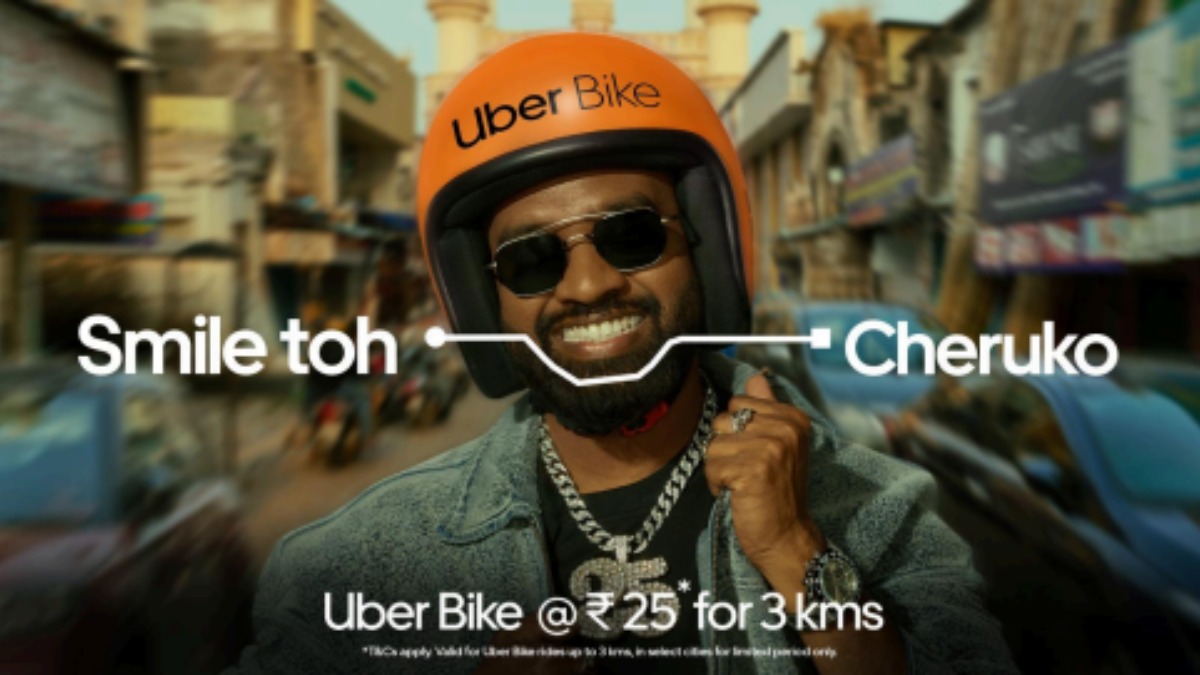
MUMBAI: In a season where ads usually swing for sixes with celebrity spectacle, Uber has chosen to play a clever single sharp, fast, and straight to the point. Uber has rolled out a distinctly stripped-down IPL campaign, putting its product Uber Bike rides starting at Rs 25 for up to 3 km front and centre, rather than leaning on big-budget storytelling. The campaign features hip-hop artist Divine in Mumbai and Roll Rida in southern markets, using music as the primary vehicle for recall.
IPL advertising has long been dominated by high-production narratives packed with cricketers and film stars. Uber’s approach flips that playbook. Instead of elaborate storytelling, the brand opts for 15-second music-led films quick, rhythmic bursts designed to mirror the pace of urban mobility itself.
The message is deliberately simple, affordable, fast rides that cut through city traffic. No layered plots, no extended build-up just a functional promise delivered with cultural flair.
In the Mumbai-led film, Divine zips through traffic on an Uber Bike, turning the Rs 25 price point into a hook with his signature wordplay around “pachisi”. The campaign cleverly reframes affordability as a moment of delight, the kind that leaves commuters with a “32-teeth smile” after beating traffic at minimal cost.
Meanwhile, Roll Rida’s version leans into southern sensibilities, blending Telugu and Tamil influences with high-energy visuals. Set to the beat of tape drums, the film celebrates how low-cost rides can unlock a more connected and vibrant city experience. Together, the films reflect a conscious push towards regional authenticity, rather than a one-size-fits-all national narrative.
The campaign also signals Uber’s sharper focus on India’s growing bike taxi segment. While the company offers multi-modal services spanning cars, autos, metro integrations and intercity travel, this push zeroes in on two-wheelers as a key growth lever in dense urban markets.
By anchoring the campaign around a Rs 25 entry price for short distances, Uber is targeting everyday commuters, particularly younger users navigating congested cities where speed and cost matter more than comfort.
With IPL advertising clutter at its peak, even the most straightforward message risks getting lost. Uber’s answer is to embed the proposition within culture using music, regional nuance and repeat-friendly short formats to drive recall. The creative team has also layered subtle visual cues including multiple references to “25” within frames encouraging repeat viewing and reinforcing the core message without over-explaining it.
The campaign reflects a broader shift in advertising priorities. As attention spans shrink and media environments get noisier, brands are increasingly favouring clarity over complexity and speed over scale.
Uber’s IPL play may not shout the loudest, but it lands where it matters in the everyday commute. Because sometimes, in a marketplace full of grand narratives, a Rs 25 ride is story enough.