News Broadcasting
BBC DG Mark Thompson optimistic about broadcaster’s ability to do justice to religion,


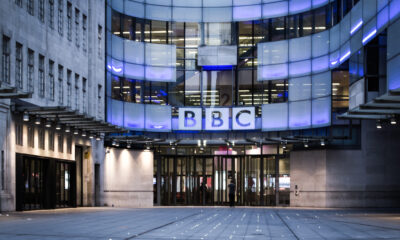
MUMBAI: In the recent past UK pubcaster the BBC has had to face fire from religious groups over shows like Popetown. The BBC ended up withdrawing the show last year. Notwithstanding this, BBC DG Mark Thompson is optimistic about the broadcaster’s ability to do justice to the topics of religion and spirituality.
Delivering a speech at the British Churches’ media conference a few days ago he said that he was full of hope too about the potential of the broadcasting media to do justice to religion and the spiritual life. Talking about the issue of how religious broadcasting would fare in an exhilarating but uncompromising future he noted that encouraging developments over the past few years had happened. There had been a return of religious landmarks to BBC One with more ambitious pieces like Robert Winston’s The Story of God still to come. There is a significant commitment to religion from BBC Two for the first time in its history and a special focus on religion as it is lived in programmes like Seaside Parish. “There is a growing recognition, I think, of how central religion is to our relationship with radio audiences at both local and network levels; and a rich and developing presence on the web.
“Nonetheless, this is a moment to raise our sights. We need the big cross-media ideas which are transforming other specialist subjects. We need more confidence in mixing genres and in particular drawing on drama and comedy techniques. We need more boldness in what we cover: we’ve rather fought shy of theology even though experience tells us that when we do take it on – I think of two Channel 4 programmes, Testing God and Tom Wright’s exploration of the Resurrection – audiences come with us.
“At Channel 4 and the BBC, we’ve brought considerable flair to our treatment of the UK’s minority religions. We need to direct more of that creativity and sense of freedom to Christianity as well. But not only is all of this possible – I would say that some clear signs of renewal are already visible. It will need a rather different, richer relationship with the UK’s faith communities: one in which we show more consistency and commitment than we have sometimes done in the past; one in which the communities themselves focus more on creative potential than on old battles about entitlement.”
Thompson went on to say that while there has been a fall-off in the volume and impact of some serious genres: arts and religion would probably top the list other serious genres are in the ascendant. History has enjoyed a famous revival over the past decade. There are more specialist factual programmes – science, natural history, religion, documentary – on BBC One today than there were in the Eighties or Nineties he argued.
Thompson noted that while there has been a glut of reality and leisure on British television recently it is not as if these programmes replaced documentary and current affairs – they took over from other forms of light factual and entertainment output.
Thompson addressed a charge made against the BBC by certain sections of the public that not just has it deserted the natural order of culture, it’s that the BBC is actively spreading a subversive, destructive alternative. He argued that on the BBC over the past decade there’s been a progressive rebalancing of the cultural agenda to include more of the classical canon. For instance there is Beethoven week on Radio 3. On BBC Two on Friday Charles Hazlewood began a three-part exploration of Beethoven’s life and work.
” Broadcasting too has seen a multiplication of subjects and perspectives. We take the cultures and concerns of minorities and different groups more seriously than our counterparts did 30 or 50 years ago. The experience and perspective of women here and around the world. The perspective of ethnic minorities, the disabled, the marginalised. This broadening and opening of the airwaves to all these new voices and ideas probably has meant less space for received majority culture but from Start The Week to Newsnight to The Antiques Roadshow majority attitudes are also continuously proudly on show – as they should be.”