MAM
MTV Asia Pacific head Frank Brown calls it quits


MUMBAI: MTV has announced that after a long tenure of 18 years with the company, Frank Brown has decided to leave his post as MTV Asia Pacific president.
Brown will relocate to Australia and join his familys business, the International investment and consultancy company, The Laura Group. Brown will remain at MTV Networks in Singapore through a transition period until the end of the year. The broadcaster has not announced his replacement. It has to also announce a head for India following Alex Kuruvilla’s resignation in June 2005.
Brown took on the role of president for the Asia Pacific region a couple of years ago. MTV Networks vice chairman Bill Roedy said, Frank has been a leading force in building our International businesses since joining the launch team in Europe 18 years ago when we set up our International operations. In Europe, he drove the creation of a pan-regional advertising market, enabling MTV Networks Europe to consistently exceed business plan.

“Since he moved to Singapore to create MTV Networks Asia Pacific in 1994, he has launched 20 MTV, VH1 and Nickelodeon channels and has forged important partnerships for the company across the Asia-Pacific region. With his creativity, passion and vision in driving our Asian expansion strategies, he has built a vibrant Asian business that will be a growth engine for MTV Networks for years to come. Frank has been a trusted, invaluable colleague and friend through the years, and I wish him and his family much happiness and success in Australia.
Brown said, I feel extremely privileged to have had such a wonderful experience with MTVN Asia Pacific, one of the most amazing companies in one of the most amazing industries anywhere in the world. I have also loved being part of helping to build the companys network of channels around the world. After seven fantastic years in Europe and 11 in Asia Pacific, I will be leaving the company at the end of this year to focus on family priorities in Australia.
“Our businesses are now in an excellent position for continuous further growth and success, thanks to the efforts of an incredible group of creative, talented, passionate and committed people. I have no doubt that the increasing momentum of MTV Networks Asia Pacific will continue to roll on and rock youth culture more than ever around the region.
Brown joined MTV back in 1987 to set up MTVs ad sales and marketing operations across Europe. He also led the launch of VH1 UK before relocating to Singapore in 1994 to establish MTV Networks Asia Pacific. In the past 11 years, Brown has led the launch of 20 MTV, VH1 and Nickelodeon channels across the Asia Pacific region, creating the companys most widely distributed regional portfolio of brands, which reach over 200 million TV households in 26 territories in the region.
Brown was also responsible for setting up the companys digital media and consumer products businesses across the region, and negotiated many successful joint ventures for the company in markets such as Indonesia, Thailand, Korea, Philippines and Australia.






MAM
VML India lands two finalist spots at Cairns Hatchlings 2026
The Mumbai agency is back in Australia with two teams, a UN brief and 24 hours to impress

MUMBAI: VML India is heading to Australia again. The Mumbai-based creative agency has secured two finalist spots at the Cairns Hatchlings 2026 competition, one in the Audio category and one in Design, making it the only Indian agency to have reached the finals in both editions of the contest since its launch in 2025.
Four people will make the trip. Senior copywriter Shilpi Dey and senior art director Raj Thakkar will compete in Audio. Art directors Shabbir and Shruti Negi will go head-to-head with the world’s best in Design. The finals take place at the Cairns Convention Centre from 13th May, culminating in an awards ceremony on 15th May.
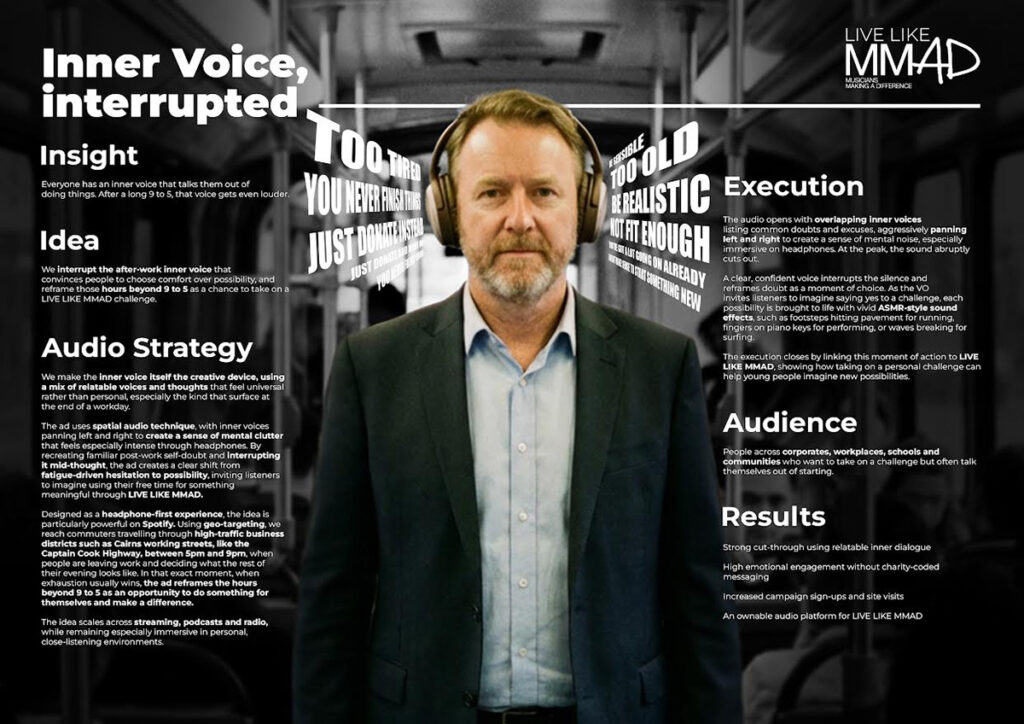
The work that got them there is worth examining. For the Audio category, Dey and Thakkar tackled a brief for LIVE LIKE MMAD with a campaign called Inner Voice, Interrupted. Using spatial audio techniques, the campaign recreates the overwhelming self-doubt that descends after a long workday, physically panning negative thoughts left and right before cutting the noise entirely to reveal a confident inner voice. Strategically targeted at commuters via Spotify during evening rush hours, the campaign reframes the hours after work as an opportunity for personal growth and charitable action.
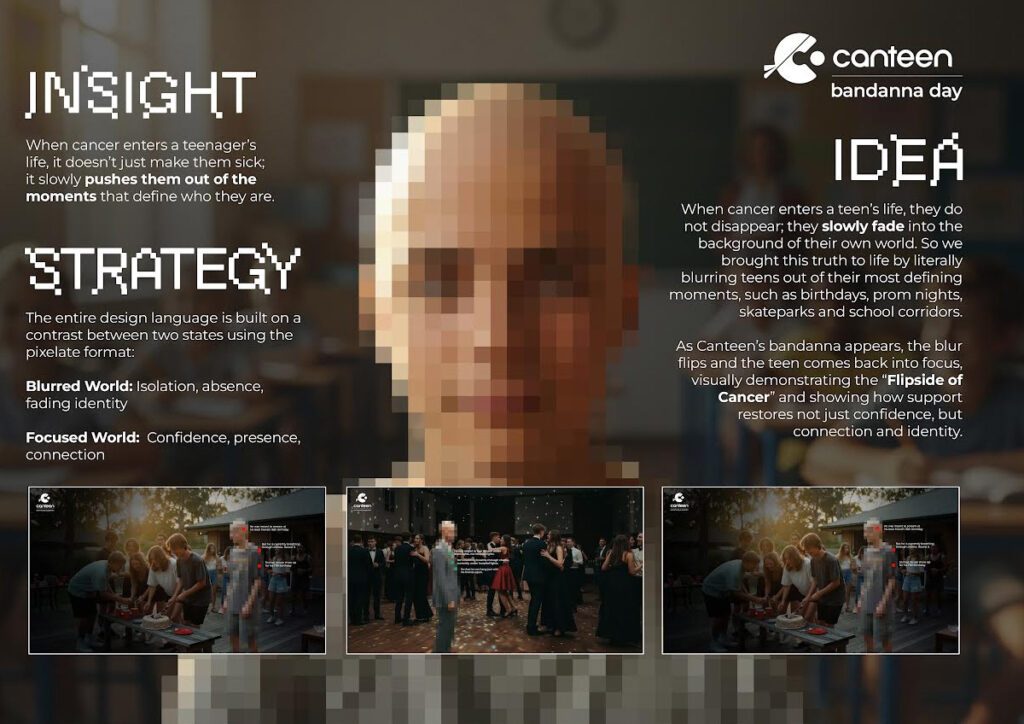
For the Design category, Shabbir and Negi worked on a brief for Canteen’s Bandanna Day, a campaign highlighting how cancer pushes teenagers out of their own defining moments. Using a pixelated design language to create stark contrast between a blurred world of isolation and a focused world of connection, the campaign, titled The Flipside of Cancer, shows teenagers fading into the background of birthdays, skateparks and school proms. As a Canteen bandanna appears, the blur flips and the teenager snaps back into sharp focus.
Kalpesh Patankar, group chief creative officer of VML India, made no attempt to disguise his satisfaction. “We are immensely proud to see our teams consistently excel on the Cairns Hatchlings platform since its inception,” he said. “They have masterfully tackled challenging briefs across diverse categories, demonstrating both layered storytelling and a unique creative approach. This exceptional teamwork is truly inspiring.”
Dey and Thakkar, returning to the finals after last year’s run, were candid about the demands of the audio medium. “It’s one of the most demanding mediums, where we only have a few seconds to capture a listener’s world with sound alone, so absolute clarity is essential,” they said. “The true measure of creative work is its ability to create positive change, and our audio submission was made to help those who need it most while encouraging people to silence the inner voices that hold them back.”
Shabbir and Negi, competing in Design for the first time, described the experience as “a completely different beast.” “We see it as an opportunity to showcase our expertise, raise the bar, and challenge ourselves in new ways, while also learning from creative minds from across the globe,” they said.
In Australia, the four finalists will face a live 24-hour brief from the United Nations before presenting in a live pitch session. Twenty-four hours, one brief, one shot. VML India has been here before. It knows exactly what is at stake.