News Headline
UK’s secretary for culture, media and sport Jowell addresses role of pubcasters in a digital world

MUMBAI: “Digital television is no longer a probability, it is a certainty. And I believe it can leave us with a legacy of more choice, for more people, than anywhere else in the world.”
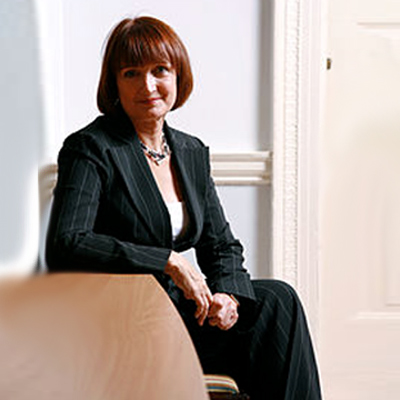
UK’s secretary for culture, media and sport Tessa Jowell delivered the keynote speech at the Royal Television Society’s Cambridge Convention. She addressed the issue of public service broadcasting in the digital world. The digital switchover she said will happen gradually throughout the ITV regions between 2008 and 2012, with the Border region switching first in 2008 and the Meridian, Carlton/LWT, Tyne Tees and Ulster switching in 2012. Nearly two-thirds of UK households already have digital television. The reason for the complete switchover to digital is because the current system of jointly broadcasting in analogue and digital is inefficient. Currently, only 73 per cent of households can get access to the full range of digital TV services, while one fifth cannot access Five. Access can only be increased by switching off the analogue signal.
She said, “Broadcasting in this country is going through a revolution. The rapid growth of broadband and new media providing audiences with new ways to access content. The expansion of digital radio on DAB and other platforms. And, of course, the continued success of digital TV. The digital television revolution is one that 6 out of 10 of us have already bought into.
“But digital switchover and wider technological change are only part of the story. They need to be understood in the context of our distinctly British broadcasting market. A market that is, in many ways defined by our public service broadcasting tradition—the BBC of course, but also ITV and Channels 4 and 5, S4C and Teletext.. The BBC will remain at the heart of PSB. But the future of PSB is not just about the BBC. As a nation our commitment to competition in broadcasting can and does sit comfortably with a commitment to public service. So we need strong public service broadcasters-4,5, ITV as well as powerful, innovating companies like Sky, dynamic independents, and bustling new entrants like Top-Up TV. These are the principles that underpinned the Communications Act and the BBC Green Paper alike. Our approach is consistent because the values that underpin our policies are constant. And our ambition is bold.”
Jowell went on to state that as the pubcaster cannot guess the future, and also wants to maximise consumer choice it is not wedded to any single platform or technology. “We want a broadcast environment in which a thousand technological flowers can bloom. History is littered with examples of those who thought they could second guess technology or consumers desires.” She gave the example of the Beta Max in the 1980’s. This she said is just one case where apparently superior technology was undone by a combination of consumer unfriendliness, cost and poor marketing. VHS emerged as the winner in that format war.
“So we are not telling people which technology to adopt. What we are saying is that choice, universality and quality remain the cornerstone of our approach, and that we need to make sure that the benefits of a changing broadcast environment are available to as many people as possible.”
Although modes of delivery may change, the case for public service broadcasting will remain as strong as ever in the future. Moving forward she says the BBC will remain the bedrock—at the heart of public service broadcasting. In pure competition terms, the BBC is an intervention in the market, and one of very large scale. “But it is an intervention that, time and time again, in survey after survey, the public tell us they want. They want it strong and independent, with the flexibility to adapt to an uncertain future—but not unfettered, and not at any cost. So the Green paper published earlier this year set out a vision for a new BBC, whose mission—and boundaries and relationship with its pay masters—the license fee payers—are defined more clearly than ever before. We set out some firm decisions: the BBC will have a 10-year Charter, and will continue to be funded by the licence fee. And we will replace its current governance structure with the Trust and Executive Board . But there were many other issues on which we sought views.”
Jowell went on to state that in framing proposals on production the focus is firmly on what is best for the viewer. The aim is to find a system that gets the best programmes on the screen, whatever the source. The licence fee iventure capital for the nation’s creativity she says.
The BBC has had great success both from in-house production (Dr Who, The Office) and independent commissions (Spooks, Casanova, Catherine Tate). It is important to get the balance right for the future: we are not yet at the end of the debate, and Ofcom are doing their own review of the TV production sector.
The BBC should be creative and entertaining. But it must also be highly sensitive to its potential impact on the wider market—another issue which has featured prominently in the consultation responses. “I am clear that the new structure must incorporate robust mechanisms for ensuring this. Proposed new activities must be subject to rigorous market impact assessment. The Fair Trading arrangements need to be reformed and new, more transparent complaints procedures established.
“But in championing public service broadcasting the BBC is not the only game in town. We must be equally robust to ensure that the corporation’s activities do not prevent other broadcasters from bringing high quality PSB or other programming to market.
“Channel 4 has consistently shown its ability to innovate, to take risks, and to provide competition for the BBC in quality PSB programming. Its innovative cricket coverage, Jamie’s School Dinners; The Boy Whose Skin Fell Off; Green Wing; and Grand Designs to name but a few. I want that kind of programme-making to continue, irrespective of the technology that broadcasts it. I want Channel 4 to have a secure future, because I believe it is an important part of securing a healthy future for PSB in the UK.
“Channel 4 is doing fantastically well at the moment but, like all public service broadcasters, it will need to adapt to the challenges of an all-digital world. I do not believe that this warrants any direct intervention by Government at this point in time, after all the Channel 4 schedule is in good shape, but it does mean we need to keep our options open and retain the regulatory levers to enable us to react appropriately according to future circumstances.”