MAM
POP Asia: Can Visual Merchandising lead the way?

MUMBAI: The second day at POP Asia 2005 kick started with the Titan head, CEO Bijou Kurien addressing the seminar on visual merchandising- challenges in specialty stores.
Titan, which has retail outlets in 170 locations has to keep engaging in clever visual merchandising (VM) to ensure excitement and freshness of the product. Flashing back Kurien pointed out that in 1987 watches as a category were need driven. Retail outlets were very small and extremely poor presentation of point of purchase (POP) merchandise.
Today, although is a different scenario. Customers of today are driven by desire and latest trends. Stores have become a lot more glamorous. In the current day and age, VM will become increasingly significant with more and more international design trends entering the Indian market.
Coming to pointers on VM, Kurien pointed out that if a product was small, the focus has to remain on the product. Too much usage of props will divert the customers’ attention and the product will get lost. Secondly, educating the customer and creating a luxury feel that is commensurate with the product identified target audience is very important. Products need to be segregated into clusters to differentiate one from another so as to seduce the customer.
Titan also changes its positioning and evolved from ‘Titan’ to ‘The World of Titan’ which Kurien averred made a world of a difference. Another point in note for store design specifically was that what was correct today might not be relevant tomorrow. Also, showing less did not mean selling less. Clusters of product is a definite no-no. On the display window, it is essential only to showcase a few and the rest to be displayed on the counter. Kurien’s ending words were that VM in India is going to be the link between brand communication and the product.
Up next was R Kannan, director and president RAMMS India who threw light upon how to grow the POP business and how to build long term strategies for tomorrow. Citing HLL’s example, Kannan pointed out that POP was the central theme of HLL’s entire brand communication plan . He said the return on investment (ROI) from POP is a lot higher than the ROI on advertising.

Delving into viewpoints both of the client and the players in POP business, Kanan highlighted that a lot of brand managers today still look at POP as a last minute post-launch promotional activity. He stressed on the fact that today companies have to look at POP as an integral part of the launch. Brand managers also felt that the POP players lacked credibility, innovation and understanding of the holistic business. On the other hand the POP players felt that POP was always a last minute rush, where delivery and cost were the most important factors rather than quality.
Kanan said that to formulate a long term strategy for growth, one needs an integrated solution which will lead to the emergence of POP agents. The need of the hour was also stated as the POP business to develop their skill sets and get out of the rut of taking orders from their clients. There is a need for players in this space to demonstrate more accountability, understanding of customer behavior and marketing skillsets. The POP players need to give broader solution and finally evolve as one stop shops for POP.
HLL’s head (personal wash) Gopal Vittal talked about a marketers perspective on POP advertising at work and the power of below the line. Stating that there was more to advertising than television, Vittal said it is getting increasingly important to influence your customer in multiple ways. Stating some current market realities, he pointed out that today the battle for the wallet was not just within the category his product was in but, across varied categories. Forty per cent of advertising today is ignored and 60 per cent is surfed upon superficially. Differentiation among products is getting more difficult and today’s consumer is influenced by a wide variety of stimuli. The message was clearly to move beyond eye-balls to making products talking points. And to move from traditional media to more innovative non-traditional ways.
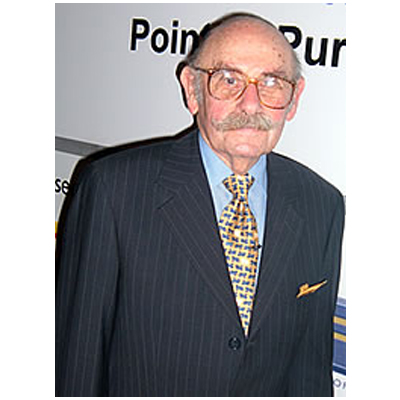
The most awaited session of the day was Martin Pegler’s workshop on VM. Referring to a retail store as above the water line. A question that Pegler asked the audience was that do the retailers in India realize that they are dealing with the new age shopper? Mapping current trends Pegler pointed out the teen boys and the metrosexual man as the new shopper.
What does today’s shopper need?
The today’s shopper needs to be stimulated. The stimuli needs to come from entertainment and interactivity that appeals to the customers.
Stating key pointers in clever VM, Pegler pointed out the following:
1) Fixtures within a store need to be movable & dismantable
2) Ambience plays a very big role in ensuring value for money to customers.
3) There is an increasing trend of stores beginning to warm up and get friendly
4) Effort needs to be made to integrate commercial with community, ensuring customer spend longer hours at the store.
5) Bright strong colours and illuminated back light are interesting concepts
6) Use of graphics which compliments your display and design
7) Bringing in of subtle smells
8) Freedom for customers to touch and feel the product.
9) Daylight being brought back into the stores via skylight.
10) Mannequins used a fashion runway to make a statement.
11) Use of colours, sizes, style in a logical sense while arranging products.
All in all, Pegler’s parting words were VM is nothing but a lot of common sense. It is essentially arranging merchandise in an alluring and accessible manner which keeps it simple for the customer. “You have to know how your shoppers shop.”