Digital
Ravi Shastri shines in Britannia’s industry-first AI campaign

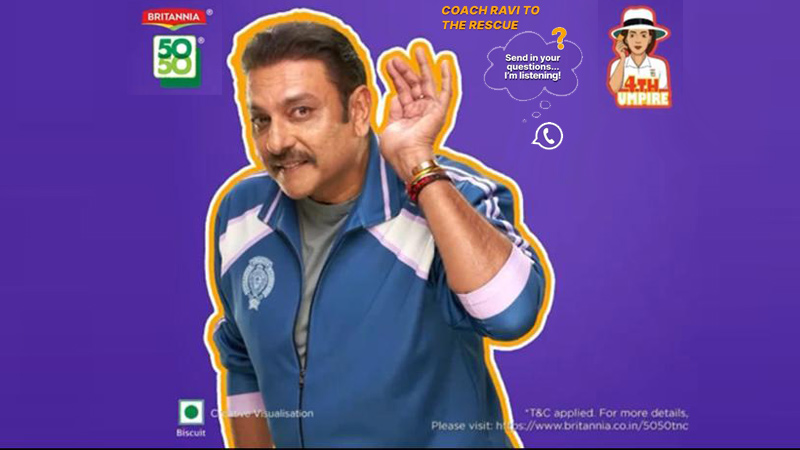
Mumbai: Britannia on its way to revolutionize the way of connecting with the audiences by seamlessly integrating AI technology, introduced another campaign with cricketing legend Ravi Shastri. Britannia 50-50 Golmaal presents an innovative approach that allows users to engage with the cricket legend Ravi Shastri during the ongoing cricket season and receive Golmaal advice through personalized video responses. Embarking on an innovative journey, Britannia is ushering in a new era of audience connection reflecting the brand’s unwavering dedication to continuous innovation, all with a singular aim: to deliver unparalleled and unforgettable experiences to our cherished consumers.
In collaboration with Mindshare India, Britannia brings together India’s passion for the sport with Ravi Shastri’s expertise offering witty and amusing responses to fans’ quirky questions. The core of this campaign is the brand’s commitment to celebrating its enduring connection with cricket and extending to the audience a heartfelt invitation to unleash their inner curiosity. With this the brand offers consumers an exciting platform to ask cricket-related questions to the legend, eventually elevating the personalization experience. By immersing the audience in the context of cricket during the peak of this cricket season’s fervor, Ravi Shastri’s digital avatar comes to life, fulfilling fans’ desires to hear from a cricketing legend in an entirely novel way.
Britannia has consistently harnessed the power of AI to create exceptional consumer experiences. On World Biscuit Day, Britannia embarked on a journey to transport audiences in the magical world of Britannia biscuits with the power of cutting-edge Generative AI and meticulous design to bring to life a fantasy land filled with Jim Jams, Bourbons, and other Britannia biscuits. In a similar vein, on Independence Day, Britannia launched the ‘1947% More History’ campaign. This heartwarming initiative breathed life into the inspiring narratives of India’s few remaining freedom fighters. Through an Augmented Reality (AR) experience triggered by Britannia products found in households across the nation, the campaign film utilized generative AI technology to vividly depict the freedom movement’s historical visuals and recreate the youthful profiles of these heroic figures who shared their own stories.
The new Golmaal AI chatbot campaign also distinguishes itself through its unique capability to generate fully AI-powered text-to-video responses of Ravi Shastri for user queries. This campaign represents a significant milestone in Indian advertising, as it seamlessly combines ChatGPT4 with a Text-to-Video engine, marking a novel approach where a consumer-facing marketing campaign provides AI-powered video responses from a celebrity for the first time. The campaign’s innovative team delicately crafted and trained a digital avatar of Ravi Shastri, allowing it to create automated videos based on text input, complete with voice and facial expression modulation offering a fun and personalized way for consumers to connect with the digital avatar of Ravi Shastri.
Commenting on the campaign, Britannia CMO Amit Doshi said “Britannia’s commitment is to embrace new horizons and provide valuable experiences that resonate deeply with our audience. A mission that has been exemplified through our integration of AI across diverse campaigns, ensuring that consumers continue to enjoy innovative and unforgettable experiences. Bringing alive this vision of innovative user engagement, we are thrilled to launch Britannia 50-50 AI Chatbot. Britannia’s profound connection with cricket and its rich history is woven into the fabric of our brand. This campaign is a celebration of our enduring dedication to the sport that unites the nation. This endeavor made possible through our strategic partnership with Mindshare India and the pioneering integration of AI technology, marks a remarkable journey towards forging an entirely novel connection with our valued consumers.
He further added ‘The involvement of the legendary cricket icon, Ravi Shastri, in Britannia 50-50 Golmaal adds an exhilarating dimension to the campaign. Ravi Shastri’s digital avatar, powered by AI, allows us to seamlessly engage with our consumers, offering them insights and entertainment in a manner previously unexplored. We hope to continue exploring the transformative power of AI across all our campaigns.”
Amin Lakhani, Chief Executive Officer, Mindshare South Asia, “In a world where AI is playing an important role across the marketing funnel, this campaign is truly a differentiated way of enhancing consumer experiences to drive brand growth.
What makes this really innovative, is the bringing together of technologies and partnerships to tell the Britannia story. The content expertise of Mindshare and the giant strengths of ChatGPT4 and ‘Text-to-Video Engine’ has made this campaign really enduring and not just a passing fad.”