News Broadcasting
Bollywood embraces Autodesk Technology for moviemaking

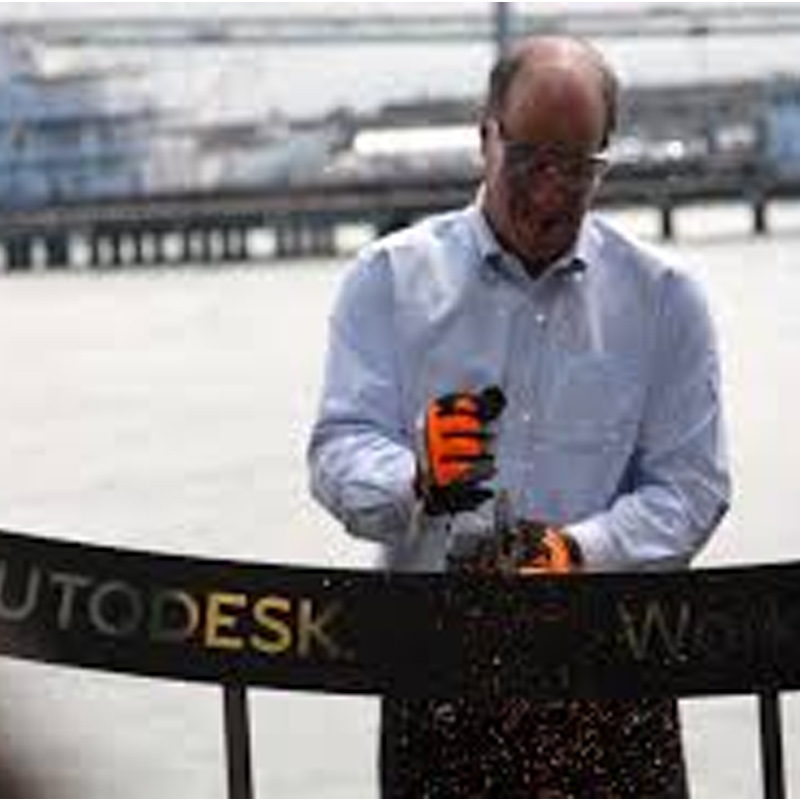
| Bangalore, March 1, 2006- As the Indian entertainment industry continues to flourish, many film studios and post-production facilities are turning to digital color grading technology from Autodesk, Inc. Five Indian studios and post-production facilities recently adopted Autodesk’s Discreet Lustre system, which is used to realize “look and feel” ideas in movies around the globe.
According to PricewaterhouseCoopers, the Indian entertainment industry is one of the fastest growing sectors of the Indian economy. It is valued at more than $4.65 billion USD today and is expected to grow at an 18% compound annual growth rate to reach more than $10.46 billion USD in 2009. Pankaj Kedia, director for South East Asia and India, Autodesk’s Media & Entertainment Division, said, “The increase in Indian films’ overseas box office revenues has fuelled the production of films with cross-over themes. Maturing audiences also dictate the creation of Indian films with an international ‘look and feel’ that enhances the narrative. These factors have contributed to a greater use of Autodesk technology in the filmmaking process.” In Bollywood, the Discreet Lustre system has shaped groundbreaking films such as Kaal, Lakshya, Black, The Rising and Chocolate, and has been used by Prime Focus and Pixion for several years. In addition, the following Indian studios and post-production facilities recently adopted the Discreet Lustre system: Autodesk’s Discreet Lustre system is employed as part of a digital intermediate (DI) process, in which film is converted to high-resolution digital files and then back to film. Converting to a digital format gives filmmakers greater control over a film’s color manipulation and visual effects. Moreover, using a DI process often increases production efficiency since shoots can be completed faster, with lighting, creative decisions and finishing being perfected in the Discreet Lustre system during post production. Ramesh B. Agarwal, chairman of Raj Taru Studios, said, “The digital intermediate process strengthens a film’s ability to connect with its audience by augmenting the narrative, as well as making it more appropriate for international distribution. With the Discreet Lustre system, Autodesk is establishing the DI standard in Bollywood.” Autodesk estimates that only two Bollywood films went through a DI process in 2003. This number increased to 17 Bollywood films in 2004 and the company estimates that 60 Bollywood films underwent a DI process in 2005. Kavita Prasad, director at EFX Labs, commented, “The digital intermediate process is gaining acceptance with Indian movie makers, as it provides them with greater control while enhancing creativity and reducing costs. We’ve been working with an Autodesk digital film pipeline for a while now, and recently installed a Discreet Lustre system in our Chennai DI facility to tap the rapidly expanding digital grading market in Southern India.” Prasad EFX’s Autodesk digital film pipeline includes the Discreet Smoke editing system, Discreet Flame visual effects system, Discreet Lustre digital grading system, Autodesk Combustion desktop visual effects software and Autodesk 3ds Max animation software. Siddharth Jain, managing director at Avitel Post StudioZ Ltd., said, “The digital intermediate process has become a necessity in today’s film and broadcast domains because it provides endless creative possibilities. Autodesk’s Discreet Lustre system’s real-time primary color grading, resolution independence and color correction tools have helped Avitel become a state-of-the-art post-production studio.” About Autodesk Founded in 1982, Autodesk is headquartered in San Rafael, California. For additional information about Autodesk, please visit www.autodesk.com. |