Cable TV
Telekom Malaysia acquires 49% stake in Spice Telecom


MUMBAI: Telekom Malaysia Berhad (TM) has secured a critical piece in its regional footprint, with the acquisition a 49 per cent stake in India’s Spice Communications Pvt Ltd (Spice) for a consideration of $178.85 million.
The acquisition, made through TM’s international investment holding company TM International Sdn Bhd (TMI) involved the purchase of the stake held by Deutsche Bank AG and Ashmore Investment Management Limited consortium (DBA).
The remaining 51 per cent remains with the existing shareholders, the Mcorp Global Ltd and its associates (Mcorp).

A statement jointly released in Kuala Lumpur and New Delhi stated that the definitive agreements governing the transaction were executed in Kuala Lumpur today. Completion of the transaction is expected within a month, subject to closing conditions and regulatory approvals. A media conference-cum-briefing explaining the transaction was also held in Kuala Lumpur jointly by senior TM and Mcorp officials.
Spice is a privately held company incorporated in India providing cellular telecom services in the states of Punjab and Karnataka. The company commenced operations in 1997 after receiving its cellular licences from the Government of India.
With the company’s recent decision to migrate to the Unified Acess Licensing regime, the scope of services allowable has since broadened to further include full and limited mobility fixed and wireline services, VAS, as well as broadband services.
Through new applications, the company is also in the process of obtaining licences for 6 new circles (namely Jammu/Kashmir, Haryana, Rajasthan, Himachal Pradesh, Uttar Pradesh West/East), as well as National Long Distance (NLD) and International Long Distance (ILD) licences.
According to TM chairman Tan Sri Mohd Radzi Mansor, the proposed investment is consistent with TM’s objectives of becoming a significant mobile player in the Asian markets, and to participate in the growth opportunities in the Indian cellular market. TM, which has re-strategised its international investments to focus on regional markets closer to Malaysia, has strong presence in the Asia Pacific region, with investments in Sri Lanka, Bangladesh, Indonesia, Cambodia, Singapore and Pakistan.
“India is the missing piece in our regional footprint. Now with Spice as part of the TM family, it strengthens our regional presence and complements our existing presence in Sri Lanka where we are the number one, and Bangladesh where we are the number two mobile operator. We are excited about sharing our experience and learn more about the Indian market from Spice,” he said.
“With Punjab being the most prosperous state in the country and Karnataka dubbed as the “Silicon Valley” of India, there is tremendous potential for mobile telephony in these markets. We are optimistic that Spice will contribute positively to the overall performance of TM in the near future” he added.
TM Group CEO Dato’ Abdul Wahid Omar described organic growth as the key approach for creating shareholder value in Spice. “Apart from growth through new cellular circles expansion, we are excited about the implementation of other services under the Unified Access licensing regime. TM and its partner Mcorp will seek to grow Spice to be a market leader in the geographies it operates in, including attaining a pan-India presence,” he said.
“Spice customers today join TM’s global mobile subscriber base of over 20 million. Apart from TM’s operational and management experience both in Malaysia and key Asian regional markets, Spice customers stand to benefit from through the creation and innovation of new products and services, sharing of technological experience and implementation, and the leveraging of group synergies such as in global procurement,” he further added.
Mcorp Global chairman Dr B K Modi described India and Malaysia as natural allies and which have strong historic cultural ties, and share the same values and aspirations.
“Today, both countries are at the forefront of the revolution in information, communication and entertainment (ICE) technologies and have much to offer each other. Together, they could become a powerful force to take Asian companies to an entirely new globally competitive level,” he said.
“We are totally committed to the principles of enhancing human productivity – boosting the prosperity of the entire Asia Pacific region, and promoting global peace for the sake of all humanity. It is now time to redefine our relationship, rewrite our destiny, and reinvent the future. I am confident our strategic partnership with TM will create a new synergy and help us in maximizing growth in one of the world’s fastest growing markets,” Modi added.
Dr Modi also described Spice as the pioneering brand of mobile telephony in India, committed to becoming the most preferred choice for energetic young minds through synchronised performance in ICE products and services. Spice, he said, has been built on the bedrock of its values: fun, innovation, vibrancy, empathetic, trustworthy and fast to respond. It has a presence in two of the high potential markets of Punjab and Karnataka.
Lazard India were sole financial advisors to TM and TMI on this transaction.







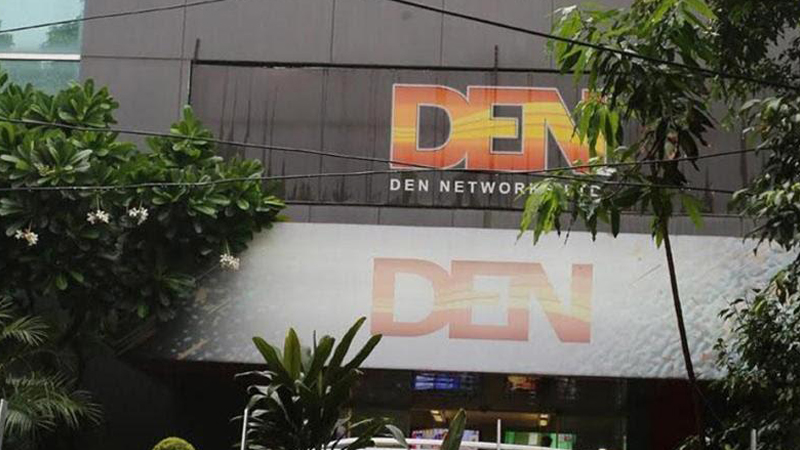
MUMBAI: When margins wobble, liquidity talks and in Q3 FY25-26, cash did most of the talking. Den Networks Limited closed the December quarter with consolidated revenue of Rs.251 crore, marginally higher than the previous quarter but down 4 per cent year-on-year, even as profitability stayed resilient on the back of strong cash reserves and disciplined cost control.
Subscription income softened to Rs.98 crore, slipping 3 per cent sequentially and 14 per cent from last year, while placement and marketing income offered some cheer, rising 15 per cent quarter-on-quarter to Rs.148 crore. Total costs climbed faster than revenue, up 7 per cent QoQ to Rs.238 crore, driven largely by higher content costs and operating expenses. As a result, EBITDA dropped sharply to Rs.13 crore from Rs.19 crore in Q2 and Rs.28 crore a year ago, pulling margins down to 5 per cent.
Yet, the bottom line refused to blink. Profit after tax stood at Rs.40 crore, up 15 per cent sequentially and only marginally lower than last year’s Rs.42 crore. A healthy Rs.57 crore in other income helped cushion operating pressure, keeping profit before tax at Rs.48 crore, broadly stable quarter-on-quarter despite the tougher cost environment.
The real headline-grabber, however, sits on the balance sheet. The company remains debt-free, with cash and cash equivalents swelling to Rs.3,279 crore as of December 31, 2025. Net worth rose to Rs.3,748 crore, while online collections accounted for 97 per cent of total receipts, underscoring strong cash discipline across operations, including subsidiaries.
In short, while Q3 showed signs of operating strain, the financial backbone remains solid. With zero gross debt, steady profits and a formidable cash war chest, the company enters the next quarter with flexibility firmly on its side proving that in uncertain markets, balance sheet strength can be the best growth strategy.